Ebm Ukulele Chord
Ebm is the E flat minor chord. It has three notes: E flat, G flat and B flat. The standard shape uses all four fingers inside the first three frets: index on the A string, middle on the E string, ring and pinky together on the 3rd fret.

All four fingers inside three frets: the Dm shape moved up one fret, with the pinky taking the note the open A used to play.
How to play Ebm on ukulele, step by step
- Index finger: 1st fret, A string
- Middle finger: 2nd fret, E string
- Ring finger: 3rd fret, G string
- Pinky finger: 3rd fret, C string
- Strum all four strings.
The shape is the Dm grip slid up one fret, with the pinky added where the open A used to ring. Building it from Dm one finger at a time is quicker than placing four fingers cold.
More ways to play Ebm
There are 3 common Ebm shapes: the standard one at the top of the page, plus these further up the neck. You only ever need one. Tap any card to hear it.

Round and even, with the root ringing on top of the row.

The fullest Ebm here, with the root at both ends of the shape.
If the shape will not settle
- Four fingers feel crowded
- Land them as two pairs: ring and pinky together on the 3rd fret first, then middle and index behind them. The shape is two stacked pairs, not four separate decisions.
- The A string chokes
- The index has the lightest job but the least room. Keep it upright at the 1st fret so its neighbours do not pin it flat.
- One string always buzzes
- With every string fretted there is no open string to hide behind. Slow the strum down, find the buzzing string, and press that finger closer behind its fret.
What makes it an Ebm
E♭ · G♭ · B♭ 1 ♭3 5
Ebm is a minor triad: E flat, a minor third G flat, and a fifth B flat. It lives in the six flat keys: it is the relative minor of G flat major, which charts usually spell as F sharp, and the ii chord of C sharp.
No open string on a ukulele belongs to E flat minor, so every shape for it frets all four strings. That is why a chord of only three notes carries a Hard label: nothing about the grip is complicated, but nothing is free either.
Ebm vs Eb
Eb major is 0331 with the G string ringing open; Ebm has no open strings at all. That open G is the reason: G natural is the major third of E flat, so the minor chord has to fret everything just to avoid it.
By the notes, the change is the usual one, G in the major against G flat in the minor. On the fretboard the two shapes look unrelated, which makes the pair worth playing back to back until the ear connects them.
Ebm chord questions
Is D#m the same as Ebm?
Yes, the same pitches under two names. Sharp keys write D#m, flat keys write Ebm. On the fretboard nothing changes.
Why is Ebm marked hard?
Every shape frets all four strings, because no open string belongs to the chord. Four fingers for three notes, with no help from the tuning.
Is there an easier Ebm?
Not one that keeps all three notes. The four finger shape at the nut is the easiest of the three here; the 6th fret version trades two fingers for a barre.
How do I remember the standard shape?
It is Dm slid up one fret, with the pinky covering the note the open A string used to play.
What keys use Ebm?
It is the vi chord of G flat major, usually written F sharp on ukulele charts, the ii chord of C sharp, and the home chord of E flat minor.
Chords to learn next
- Ebthe major version of Ebm
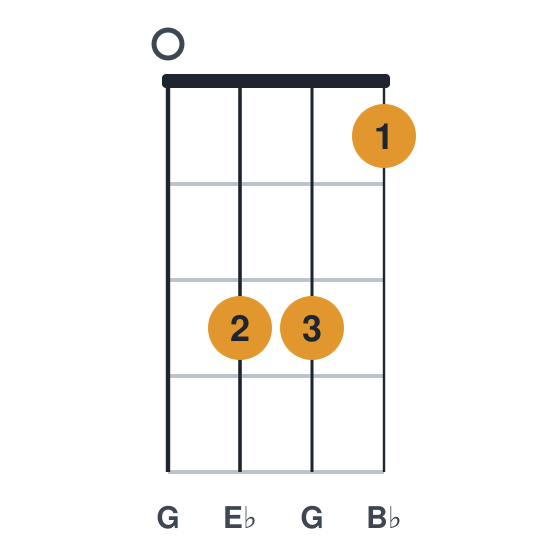
- Ebm7adds a seventh for a softer Ebm
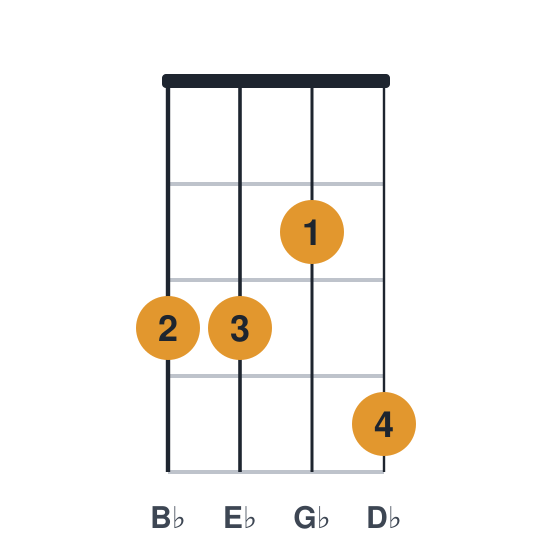
- F#the relative major of Ebm
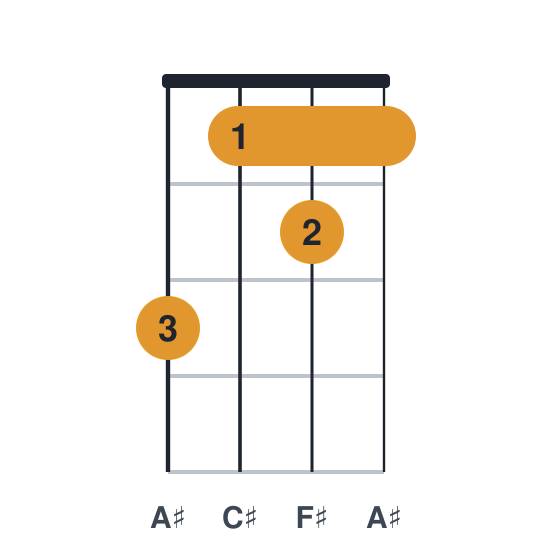
- Ebm6the same minor with an old-fashioned sixth
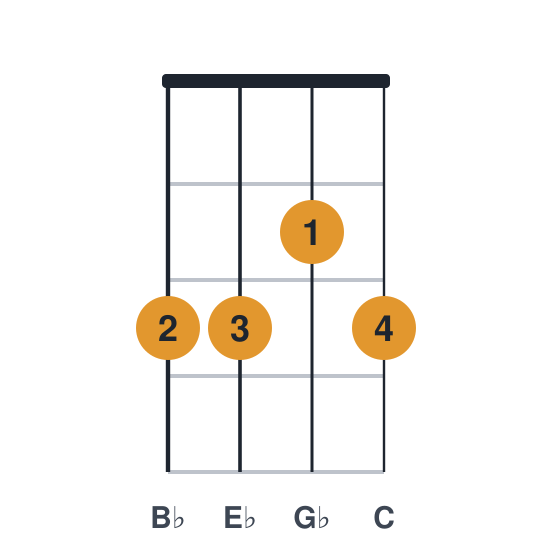


Other Eb chords
Ebm ukulele chord chart (3321) from melodician.com