Eb9 Ukulele Chord
Eb9 is the E flat dominant ninth chord. On ukulele it keeps four of its five notes: E flat, G, D flat and F, with the fifth left out. The standard shape needs three fingers, because the open G string already supplies the third.

Three fingers inside four frets with the open G string ringing as the third: root on the C string, ninth on the E, seventh on the A.
How to play Eb9 on ukulele, step by step
- Index finger: 1st fret, E string
- Middle finger: 3rd fret, C string
- Ring finger: 4th fret, A string
- Leave the G string open. Strum all four strings.
The open G string is the quiet gift in this shape: G is the third of E flat, so the top of the re-entrant tuning hands you one chord note free. Everything else sits inside four frets.
More ways to play Eb9
There are 3 common Eb9 shapes: the standard one at the top of the page, plus these further up the neck. You only ever need one. Tap any card to hear it.

Firmer and more even than the open shape. The one to use when every note has to be under finger control.

Compact and horn like near the body of the instrument. A stab and accent voice for band style playing.
If it sounds uneven
- The open G string gets damped
- The middle finger works the C string next to it. Arch it well; the open G carries the chord's third, and the shape turns grey without it.
- The pinky side note buzzes
- The ring finger holds the A string at the 4th fret, the deepest reach here. Bring the wrist forward a touch so the finger lands on its tip.
- The chord sounds odd next to open key chords
- Nothing is wrong: E flat simply is not a ukulele key, and its neighbours in a song are usually barre or movable shapes. Trust the diagram and tune your ear to the horn key colour.
What makes it an Eb9
E♭ · G · B♭ · D♭ · F 1 3 5 ♭7 9
Eb9 is an Eb7 chord with a ninth added: E flat, G and D flat carry the seventh chord and the F is the ninth. A ukulele has four strings for those five notes, so the fifth, B flat, is left out, the same note guitar ninth grips drop.
It is the V chord of A flat, deep in horn territory, which is why this chord belongs to jazz, gospel and soul charts rather than to strum alongs. When a chart from those worlds asks for it, this page is the shape.
Eb9 vs Eb7
Eb9 adds an F on top of Eb7. Both lean toward A flat, and the ninth does it with the smoother voice.
The seventh chord is the raw change; the ninth is how a band arranger writes the same bar. On ukulele the two shapes even share the region of the neck, so swapping them is easy.
Eb9 chord questions
Is Eb9 the same as D#9?
Yes, one chord with two names. Flat keys are this chord's home, so E flat is the spelling used here.
Why is there no B flat in these shapes?
A ukulele has four strings and Eb9 has five notes. The fifth adds the least to a ninth chord, so it is the note left out.
Is Eb9 hard to play on ukulele?
No. The standard shape is three fingers with an open string in the middle of the chord, gentler than most people expect from a flat key ninth.
What is the difference between Eb9 and Ebadd9?
Eb9 contains D flat, the flat seventh, and pulls toward A flat. Ebadd9 has no seventh and simply brightens E flat major.
Where is Eb9 used?
As the V chord in A flat, in blues in E flat, and across jazz, gospel and soul, where flat key ninths are the house sound.
Chords to learn next
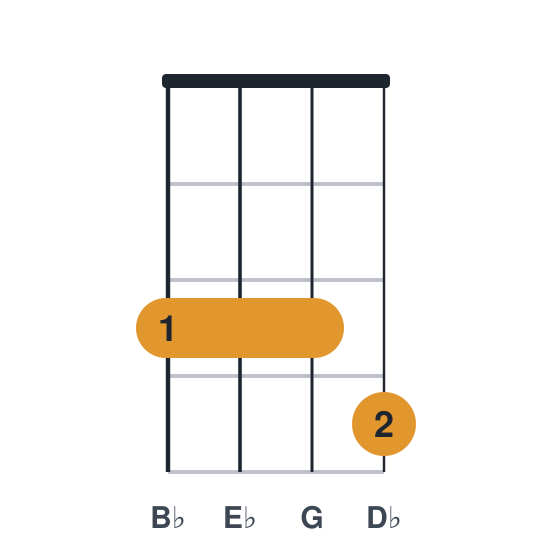
- Eb7the same chord without the ninth
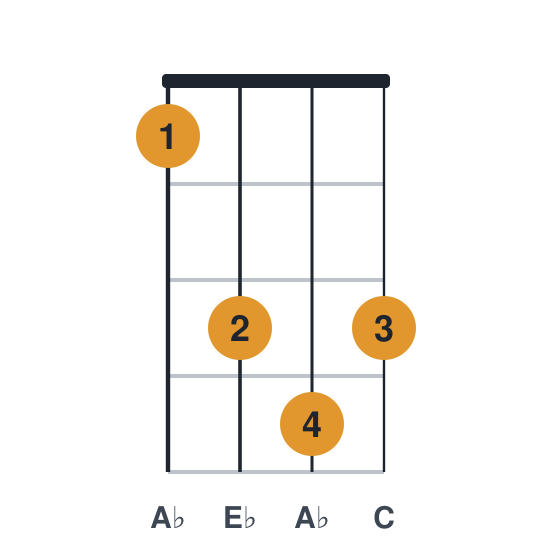
- Abwhere Eb9 wants to resolve
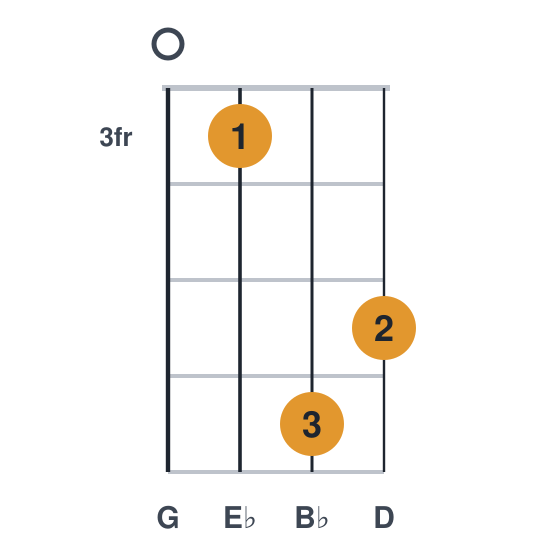
- Ebmaj7the other seventh built on this root
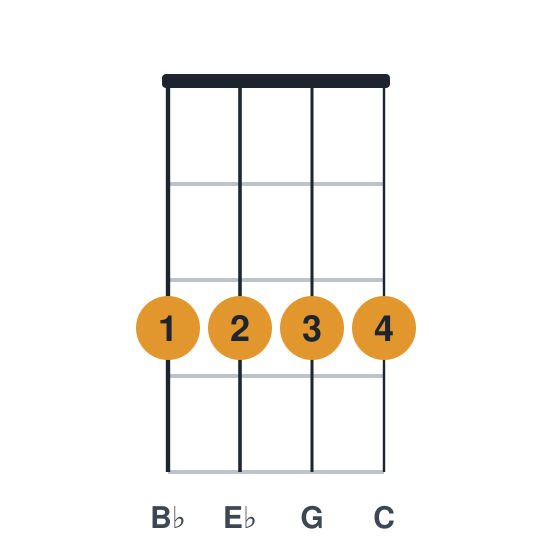
- Eb6the same root with a sixth instead of a seventh


Other Eb chords
Eb9 ukulele chord chart (0314) from melodician.com