Ebdim Ukulele Chord
Ebdim is the E flat diminished chord, a diminished triad. It has three notes: E♭, G♭ and A. You will also see it written D#dim, and that spelling explains the job: D♯ climbs one fret home to E. The standard shape uses three fingers in the first three frets and leaves the A string open.

Three fingers in the first three frets with the open A ringing as the flat five, which also sounds fretted on the G string. The root sits on the C string.
How to play Ebdim on ukulele, step by step
- Index finger: 2nd fret, G string
- Middle finger: 2nd fret, E string
- Ring finger: 3rd fret, C string
- Leave the A string open. Strum all four strings.
The open A pins this shape near the nut. For the same chord anywhere else, the closed diamond at the 8th fret slides to every root.
More ways to play Ebdim
There are 3 common Ebdim shapes: the standard one at the top of the page, plus these further up the neck. You only ever need one. Tap any card to hear it.

Broader and stranger, mixing a high fretted stack with the open string. Worth knowing for variety more than for speed.

Tight and bright at the top of the neck, and silent the instant you release. The strict passing chord voicing.
If it buzzes or sounds dead
- The open A goes quiet
- The middle finger on the E string is leaning over and resting on the A string. Curl it so the open string has room to ring.
- The G and E string notes blur
- Index and middle finger both sit at the 2nd fret on strings either side of the ring finger. Keep each on its tip so no finger leans into a neighbour.
- The C string note is dull
- The ring finger holds the root at the 3rd fret, boxed in by the other two. Arch it and press straight down; the root has to be the clearest note in the chord.
What makes it an Ebdim
E♭ · G♭ · A 1 ♭3 ♭5
Ebdim is two minor thirds stacked: E♭ up to G♭, then up three more frets. The top note is strictly spelled B double flat, the same pitch as A, so charts simply write A. Next to E♭ minor the fifth has shrunk by one fret, and that is the entire source of the chord's suspended, mid air quality.
Spelled D#dim it is the leading tone chord of E: D♯ pulls up to E. That is where you will meet it, bridging chords a fret apart, most famously in the slow climb from D up to E minor that runs through many songbook arrangements.
Ebdim vs Ebm
E♭ minor is E♭, G♭ and B♭. Ebdim keeps the root and third but lowers the fifth to A, strictly B double flat. One fret of difference, two different chords.
E♭m is dark and stable, a chord that can hold a section. Ebdim refuses to sit still: it exists to connect, almost always up a fret to E or E minor. On the ukulele the diminished shape is also the easier grab, three fingers against the minor's four.
Ebdim chord questions
Are Ebdim and D#dim the same chord?
Yes, identical notes and identical shapes. D#dim is the more logical name when it resolves to E, but both appear on charts.
Why does the diagram show A instead of Bbb?
Strict theory spells the flat fifth of E♭ as B double flat, the same pitch as A. Diagrams use A because nobody thinks in double flats mid song.
What is the difference between Ebdim and Ebdim7?
Ebdim is the three note triad on this page. Ebdim7 adds a diminished seventh, C, for a four note sound. Many ukulele songbooks chart the four note grip whenever they write dim.
What does Ebdim resolve to?
E, one half step up, or E minor. Spell it D#dim and the climb reads exactly as it sounds.
Is Ebdim easy to play?
Yes, by diminished standards: three fingers in the first three frets with the open A doing part of the work, and no barre anywhere.
Chords to learn next
- EEbdim pulls up a half step to E
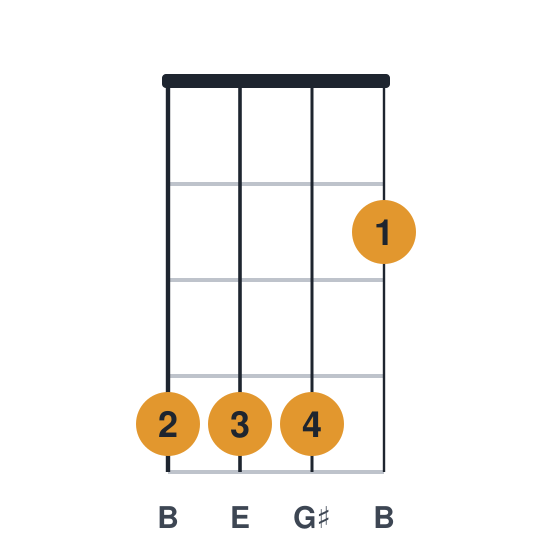
- Emthe minor resolution one fret up
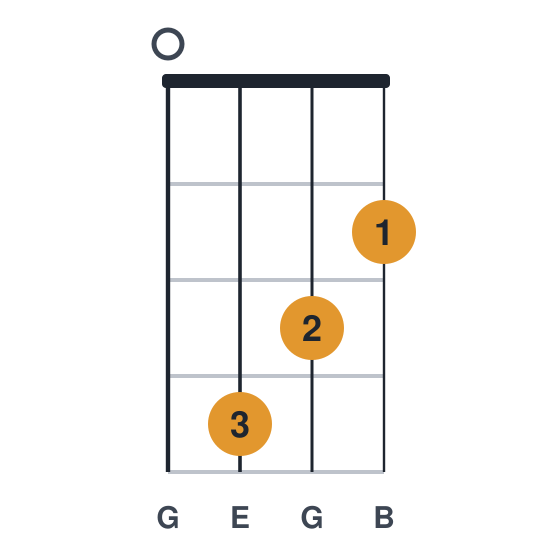
- Ebmone note away from Eb minor
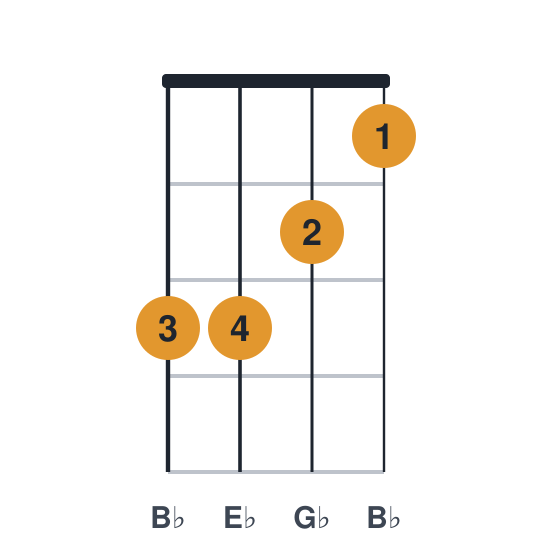
- Ebaugthe other chord built out of equal intervals
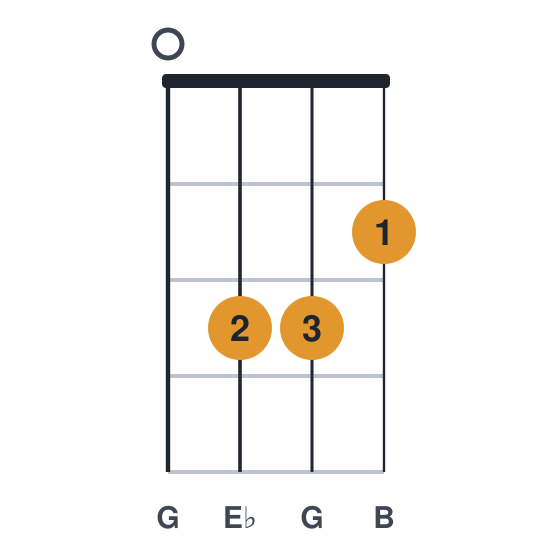


Other Eb chords
Ebdim ukulele chord chart (2320) from melodician.com