Ebadd9 Ukulele Chord
Ebadd9 is the E flat added ninth chord. It has four notes: E flat, G, B flat and F. On a ukulele it is friendlier than most flat-key chords: three fingers at the first three frets with the G string ringing open as the third of the chord.

Three fingers in the first three frets with the G string open. The open string is the third of the chord; the ring finger holds the root on the C string.
How to play Ebadd9 on ukulele, step by step
- Index finger: 1st fret, E string
- Middle finger: 1st fret, A string
- Ring finger: 3rd fret, C string
- Leave the G string open. Strum all four strings.
The open G string is doing the quiet work here: it is the third of the chord, so the shape only has to supply the root, fifth and ninth around it.
More ways to play Ebadd9
There are 3 common Ebadd9 shapes: the standard one at the top of the page, plus these further up the neck. You only ever need one. Tap any card to hear it.

Tighter and more even than the open shape, and it stops cleanly, which suits choppy rhythm playing.

Chiming: the open third rings against notes fretted five frets higher, a spread that sounds bigger than four strings should.
If it buzzes or sounds wrong
- The open G string dies
- No finger belongs on the G string. If it stops ringing, the ring finger on the C string is leaning back into it; curl the finger up onto its tip.
- The two 1st fret notes sound unequal
- The index and middle fingers sit side by side at the 1st fret. Give each its own straight-down pressure rather than letting one prop up the other.
- It sounds like E flat major
- The F on the E string, 1st fret, is the added ninth. If your index has wandered off that string you are back to a plain E flat sound.
What makes it an Ebadd9
E♭ · G · B♭ · F 1 3 5 9
Ebadd9 is an E flat major triad (E flat, G, B flat) with a ninth added: F. The ninth is the second note of the E flat scale moved up an octave, and because the third (G) stays in the chord, Ebadd9 keeps its major character and gains air.
It is the I chord of E flat, the IV of B flat and the V of A flat, all horn-friendly keys, which is why this chord lives mostly in soul, gospel and jazz-leaning pop. The ukulele shape is easier than the key suggests: the open G string covers the third for free.
Ebadd9 vs Ebsus2
Both chords add an F to E flat, but Ebsus2 removes the third (G) to make room for it, while Ebadd9 keeps the third and stacks the F alongside. Ebadd9 stays clearly major with extra shimmer; Ebsus2 is hollow and undecided.
In this position the third is the open G string, so the difference is audible the moment you mute it: damp the G string and the major glow drains out of the chord.
Ebadd9 chord questions
Is Ebadd9 the same as D#add9?
Yes, one chord with two names. E flat is how the flat keys this chord lives in spell it, so it is the name used here.
Is Ebadd9 hard on the ukulele?
No. Three fingers in the first three frets with an open string in the chord. It is considerably easier than most E flat shapes on guitar.
What is the difference between Ebadd9 and Eb9?
Eb9 also contains a flat seventh, D flat, which makes it a dominant chord with a soul and blues flavour. Ebadd9 adds only the F and stays a bright major chord.
What is the difference between Ebadd9 and Ebsus2?
Both contain an F, but Ebsus2 removes the third (G) and floats, while Ebadd9 keeps the third and still sounds fully major.
Where is Ebadd9 used?
Wherever plain E flat wants extra colour: soul, gospel and piano-led pop in the keys of E flat, B flat and A flat.
Chords to learn next
- Ebthe plain major
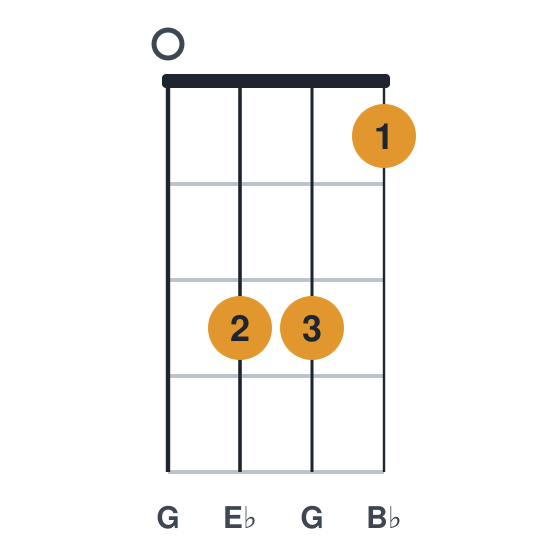
- Ebsus2the 9 without the 3
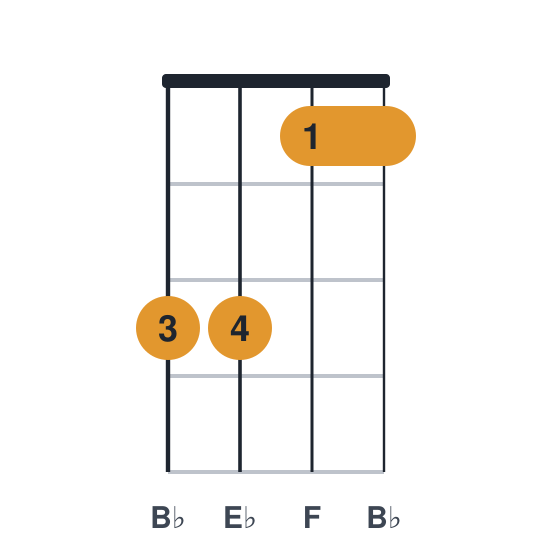
- Ebmaj7another colour on the same major
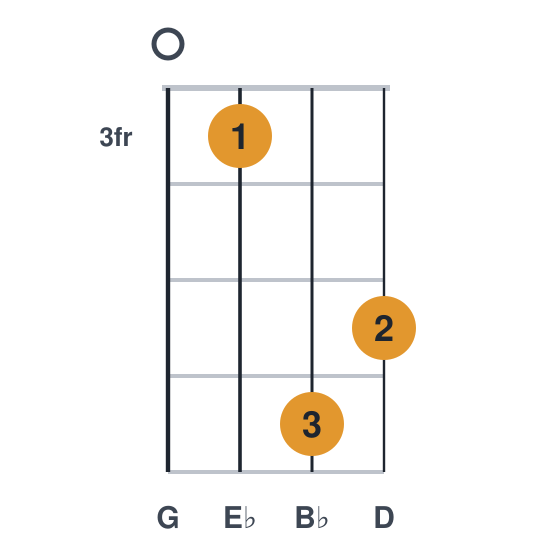
- Ebmaj9the same ninth with the seventh under it
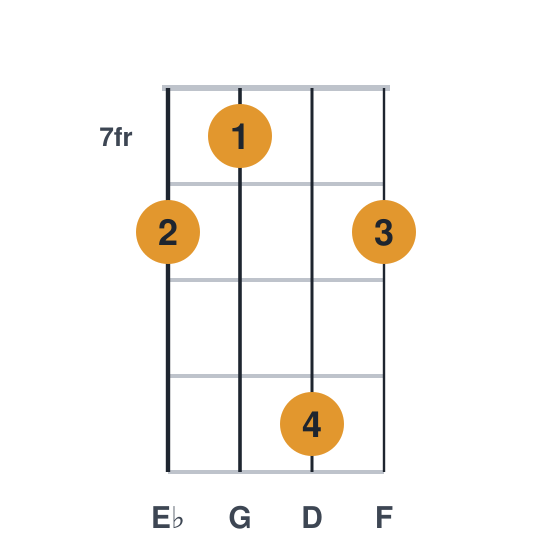


Other Eb chords
Ebadd9 ukulele chord chart (0311) from melodician.com