Eb6 Ukulele Chord
Eb6 is the E flat sixth chord. It has four notes: E flat, G, B flat and C. The main shape is a straight line: every string fretted at the 3rd fret, four fingers or one flattened index.

Every string at the 3rd fret: the straight line sixth, fingered or barred with one flat finger.
How to play Eb6 on ukulele, step by step
- Index finger: 3rd fret, G string
- Middle finger: 3rd fret, C string
- Ring finger: 3rd fret, E string
- Pinky finger: 3rd fret, A string
- Strum all four strings.
This is the same straight line as D6, one fret higher. Lay one finger flat across the 3rd fret and slide it: every position is another sixth chord, which is the fastest tour of the family the instrument offers.
More ways to play Eb6
There are 3 common Eb6 shapes: the standard one at the top of the page, plus these further up the neck. You only ever need one. Tap any card to hear it.

Half open, half fretted, with the G ringing free inside the chord. A picking colour.

Spread and airy, two open strings under two high notes. Best picked, not strummed.
If it sounds muddy or buzzy
- Four fingers feel cramped
- Stagger the tips diagonally so each string gets its own finger, or lay the index flat across all four. At the 3rd fret the flat finger presses more easily than at the 1st.
- The flat finger version buzzes
- Keep the finger straight, right behind the fret wire, rolled slightly onto its edge. The thumb behind the neck does the squeezing.
- The A string is faint
- It sits under the weakest part of either grip. Strum slowly and confirm all four notes ring before playing in rhythm.
What makes it an Eb6
E♭ · G · B♭ · C 1 3 5 6
Eb6 is an E flat major triad (E flat, G, B flat) with a sixth added: the C, nine half steps above the root. Nothing is taken away, so the chord still sounds like E flat, just rounder and older fashioned.
The same four notes read from C spell Cm7. On a ukulele no bass note tips the scale, so the chords around it decide which name the ear picks. E flat is a horn key, and this chord mostly appears in jazz and soul charts.
Eb6 vs Ebmaj7
Eb6 adds a C to the E flat triad; Ebmaj7 adds a D. A whole step below the root against a half step below it, which is the difference between resolved and hovering.
E flat lives with the horns, so both chords turn up in jazz and soul rather than around campfires. The sixth is the resting version, the one a chart in E flat ends on.
Eb6 chord questions
Is Eb6 the same as D#6?
Yes, one chord with two spellings. Flat keys write Eb6, and that is the form people search for, so it is the name used here.
Is Eb6 the same as Cm7?
The four notes are the same: E flat, G, B flat and C. With no bass string on a ukulele, the music around the chord decides the name.
Can I barre Eb6 with one finger?
Yes. Every note sits at the 3rd fret, so one flattened finger plays the whole chord, and at the 3rd fret the press is easier than nearer the nut.
What is the difference between Eb6 and Eb7?
Eb6 adds a C and rests. Eb7 adds a D flat and pushes toward A flat. Eb7 drives, Eb6 concludes.
Chords to learn next
- Ebthe plain major underneath it
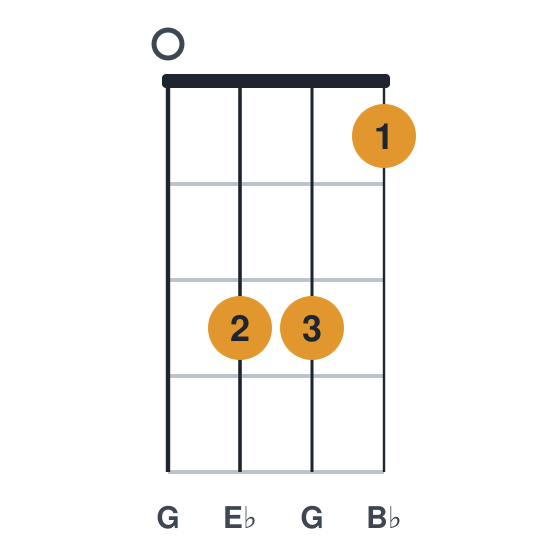
- Cm7the same four notes counted from C
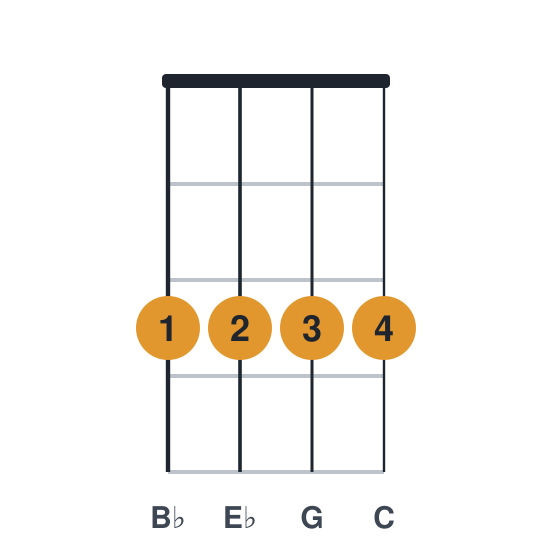
- Ebmaj7the other note people add to a major chord
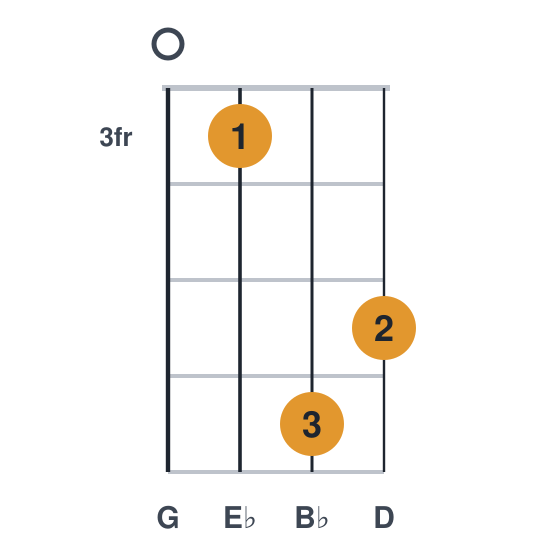
- Ebm6the same sixth over a minor chord
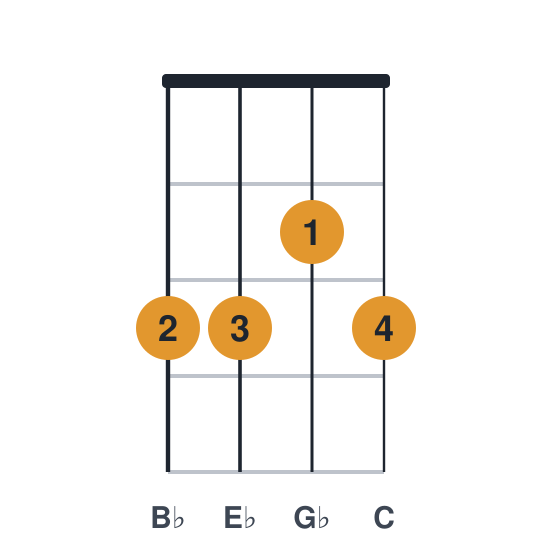


Other Eb chords
Eb6 ukulele chord chart (3333) from melodician.com