F6 Guitar Chord
F6 is the F sixth chord. It has four notes: F, A, C and D. The shape on this page uses only the top four strings, so it gives you an F chord with no barre at all.

Four strings, no barre: root on the D string at the 3rd fret, the third on the G, the sixth on the B and the root again on top. The fifth is left out.
How to play F6, step by step
- Index finger: 1st fret, high E string
- Middle finger: 2nd fret, G string
- Ring finger: 3rd fret, D string
- Pinky finger: 3rd fret, B string
- Strum from the D string down, skipping the two lowest strings.
This shape leaves out the C, the fifth of the chord, which no listener misses. If you want the fifth back, the movable shapes below have it.
More ways to play F6
There are 3 common F6 shapes in total: the standard one at the top of the page, plus these, easiest first. You only ever need one. Tap any card to hear it.

Bright and small, well above the bass. This is the F6 for playing rhythm behind someone else.

Even and close packed, the four notes almost touching. Less bass weight than an open shape, which makes it easy to sit under a singer.
If it sounds cramped
- The B string note is weak
- The pinky holds the 3rd fret of the B string. Keep it curled and press with the tip; a flat pinky mutes the high E next to it.
- The two bottom strings sound
- This shape starts on the D string. Mute the low E and A with the fretting hand or start the strum at the D.
- It does not sound like F
- Check the high E is at the 1st fret and not open. That note is the root doubled on top, and without it the chord loses its centre.
What makes it an F6
F · A · C · D 1 3 5 6
F6 is an F major triad (F, A, C) with a D added, the sixth. This shape keeps the F, A and D and leaves out the C, which is the note a sixth chord can spare without losing its name.
Those notes read from D spell Dm7. F6 and Dm7 are the same set of pitches, distinguished only by the bass, which is why the two chords are often swapped for each other in a progression.
F6 vs Fmaj7
F6 adds a D to F major, Fmaj7 adds an E. The D sits a whole step below the root and sounds settled; the E sits a half step below and sounds soft and suspended.
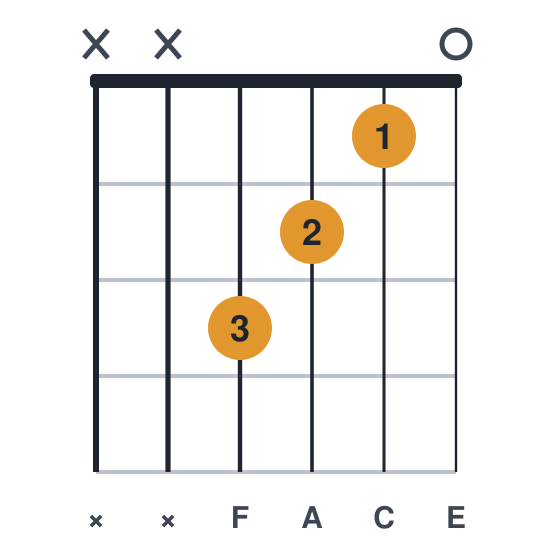
Both are ways around the F barre chord. Fmaj7 as xx3210 and F6 as xx3231 use the same four strings, and either one can stand in for F in a song where the full barre is not ready yet.
F6 in major keys
Every note of F6 sits inside these keys. See how it works alongside the other chords in each one.
F6 chord questions
Can I use F6 instead of F?
Often yes. F6 contains the F major triad plus one extra note, and it needs no barre, so it is a common way to get through a song in C or F before the barre chord is comfortable. It sounds softer than F, so it suits gentler songs better than driving ones.
Is F6 the same as Dm7?
The notes are the same: F, A, C and D. The bass note decides the name. F lowest sounds like F6, D lowest sounds like Dm7.
Why is the fifth missing from this shape?
The C is left out to keep the chord on four strings and free of a barre. The root, the third and the sixth are what make a sixth chord recognisable, so the fifth is the note to drop.
What is the difference between F6 and F7?
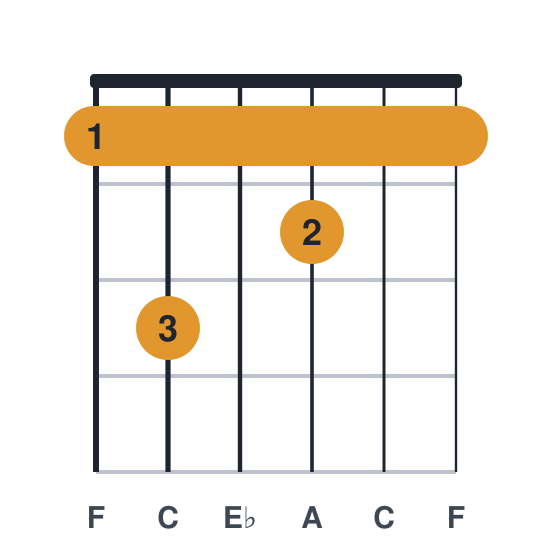
F6 adds a D and rests. F7 adds an E flat and pushes toward B flat. F7 is the blues and dominant chord, F6 is the ending chord.
Which strings do I strum?
The top four, starting at the D string. Keep the low E and A quiet.
Chords to learn next
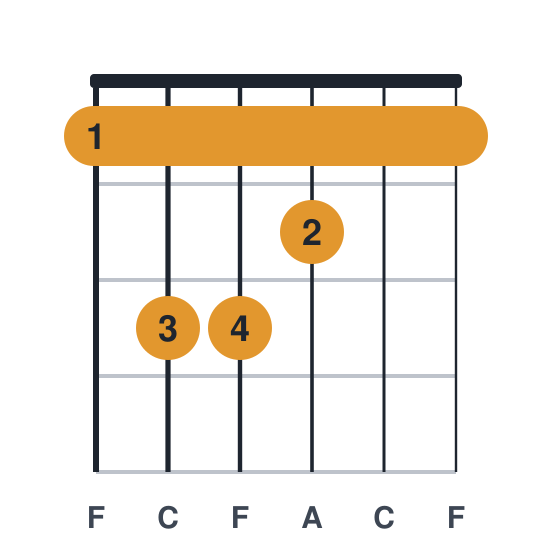
- Fthe plain major underneath it
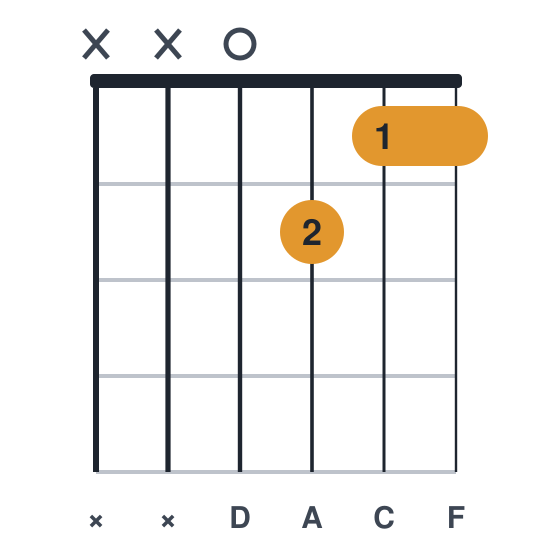
- Dm7the same four notes counted from D
- Fmaj7the other note people add to a major chord
- F7a seventh on the same root instead of a sixth


Other F chords
F6 guitar chord chart (xx3231) from melodician.com