Fm6 Guitar Chord
Fm6 is the F minor sixth chord. It has four notes: F, A flat, C and D. Like most F chords it has no open shape, so the standard form is a full barre at the 1st fret with the root on the low E string.

The full six string minor sixth: index barred across the neck at the 1st fret, root on the low E, and the sixth up on the B string. Movable, so this one grip is any minor sixth chord.
How to play Fm6, step by step
- Index finger: press flat across the low E to high E strings at fret 1
- Ring finger: lay across the A and D strings at fret 3
- Pinky finger: 3rd fret, B string
- Strum all six strings.
This is the Em6 shape moved up one fret with a barre where the nut was. The same grip anywhere on the neck is a minor sixth chord; the low E string names it.
More ways to play Fm6
There are 2 common Fm6 shapes in total: the standard one at the top of the page, plus these, easiest first. You only ever need one. Tap any card to hear it.

Tighter and brighter than the 1st fret barre, and easier to hold: the index only covers two strings.
If the barre fights back
- Notes buzz near the nut
- The 1st fret is where the strings are stiffest, so the barre needs its firmest press here. Keep the index right behind the fret and roll it slightly onto its edge.
- The ring finger only sounds one string
- It lays flat across the A and D strings at the 3rd fret. If the D drops out, the finger is curling; flatten its middle joint deliberately.
- The sixth is missing
- The D on the B string under the pinky is the note that makes it Fm6 rather than Fm. Check the pinky presses the 3rd fret cleanly with its tip.
What makes it an Fm6
F · A♭ · C · D 1 ♭3 5 6
Fm6 is an F minor triad (F, A flat, C) with a D added: the major sixth, nine half steps above the root. A flat third with a natural sixth is a deliberate mismatch, and it is what makes the chord sound unresolved rather than merely sad.
Read from D, the same notes spell Dm7b5, the half diminished chord. Fm6 is also a Bb9 with no B flat in it, and as the iv chord in C it is the classic minor chord that hands a progression back to the tonic.
Fm6 vs Fm7
Fm7 adds an E flat to F minor and relaxes it. Fm6 adds a D, one fret lower, and does the opposite: the chord tightens and wants to move.
Both are barre chords at the 1st fret in their standard forms, so the swap costs nothing physically. Which one a song wants is a matter of mood: m7 for calm, m6 for tension, which is why film scores and jazz standards keep choosing the sixth.
Fm6 in major keys
Every note of Fm6 sits inside these keys. See how it works alongside the other chords in each one.
Fm6 chord questions
What is the difference between Fm6 and Fm7?
One note. Fm7 has an E flat, Fm6 has a D, one fret lower. The seventh settles the chord, the sixth sharpens it.
Is Fm6 the same as Dm7b5?
The four notes are the same: F, A flat, C and D. F in the bass gives Fm6; D in the bass gives Dm7b5, the half diminished chord.
Is there an Fm6 without the full barre?
Yes, the second shape on this page: root on the A string at the 8th fret with only a two string index barre. It skips the low E entirely.
Why does a minor chord have a major sixth?
The sixth is counted from the major scale. A minor sixth chord flattens the third and leaves the sixth alone, and that clash is the sound of the chord.
Where is Fm6 used?
As the iv chord in C, where it follows F and darkens it, on the tonic in F minor, and throughout jazz and older popular song.
Chords to learn next
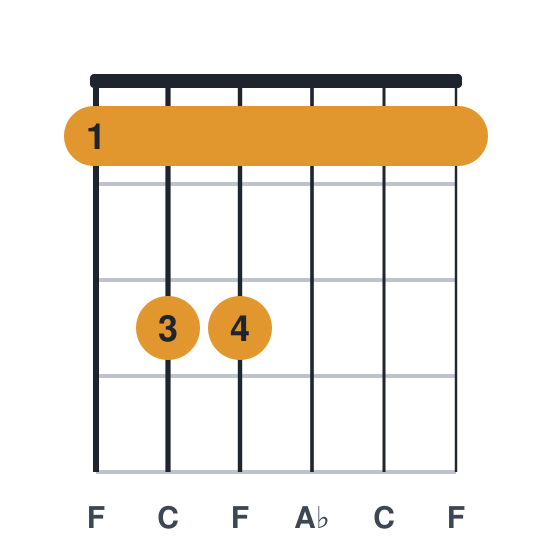
- Fmthe plain minor underneath it
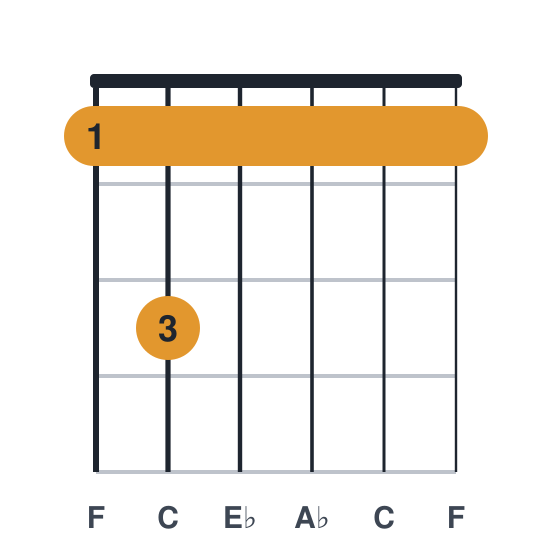
- Fm7a flat seventh instead of the sixth, the softer option
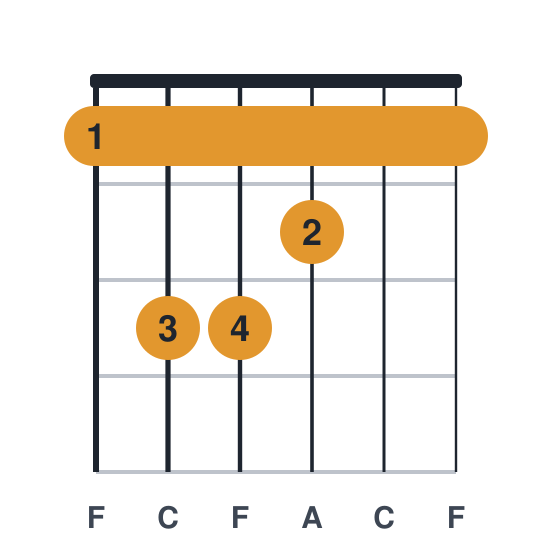
- Fthe major on the same root
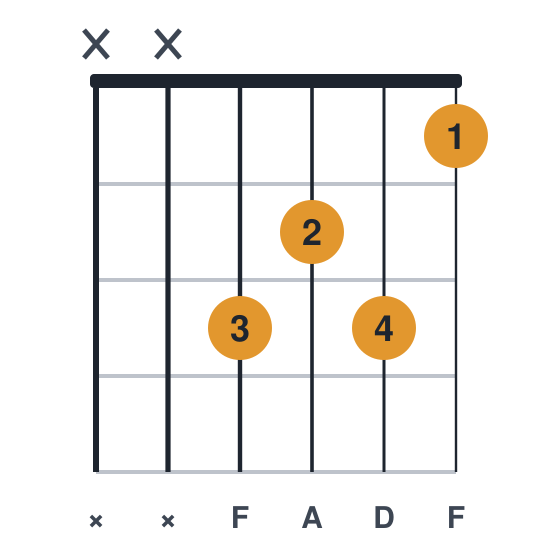
- F6the major sixth on the same root


Other F chords
Fm6 guitar chord chart (133131) from melodician.com