Fm9 Guitar Chord
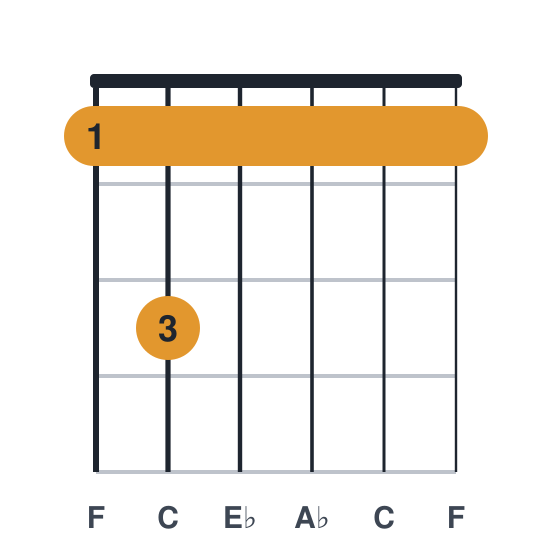
Fm9 is the F minor ninth chord. It has five notes: F, A flat, C, E flat and G. The main shape is a barre at the 1st fret with the root on the low E string, right where the strings are stiffest.

The Em9 barre shape at the 1st fret: index across five strings, root on the low E, and the ninth on the high E string. The lowest, darkest position this movable grip reaches.
How to play Fm9, step by step
- Index finger: press flat across the low E to B strings at fret 1
- Ring finger: 3rd fret, A string
- Pinky finger: 3rd fret, high E string
- Strum all six strings.
The grip is the open Em9 pushed up one fret with the index doing the nut's old job. Keep sliding and every fret is another minor ninth: the note under the index on the low E names it.
More ways to play Fm9
There are 2 common Fm9 shapes in total: the standard one at the top of the page, plus these, easiest first. You only ever need one. Tap any card to hear it.

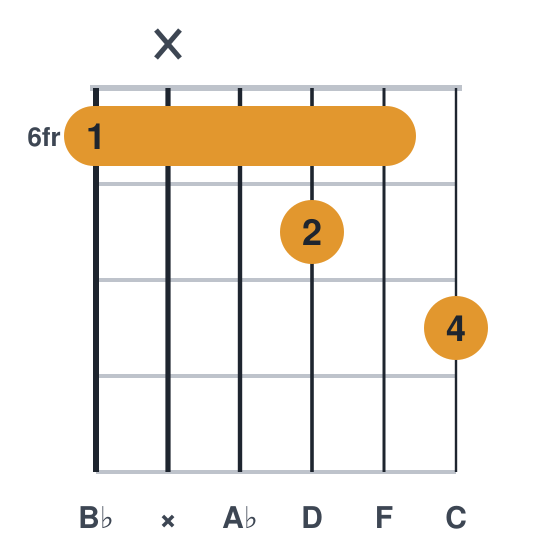
Tighter and brighter than the 1st fret barre, and far easier to hold. This is the working grip for comping through a soul chart.
If the 1st fret defeats you
- Strings buzz under the barre
- The 1st fret is the hardest place on the neck to barre: the strings are stiff so close to the nut. Set the index right behind the fret wire and roll it slightly onto its edge before adding pressure.
- The pinky mutes the ninth
- It reaches to the 3rd fret of the high E for the G, the note that makes the chord a ninth. Arch it so it lands on its tip and does not lean on the B string.
- The hand tires in two bars
- Most of the work belongs to the arm, not the thumb. Let the weight of the arm hang off the neck and squeeze only as hard as a clean chord needs, which is less than it feels like.
What makes it an Fm9
F · A♭ · C · E♭ · G 1 ♭3 5 ♭7 9
Fm9 is an Fm7 chord with a ninth added: F, A flat, C and E flat make the minor seventh, and the G on top makes it a ninth. In the barre shape the G rings on the high E string above the doubled root and fifth.
It is the ii chord of E flat and the vi of A flat, two of the great horn keys, which is why Fm9 sits in so many soul and funk charts. On records the minor ninth is usually what plays where the page just says F minor.
Fm9 vs Fm7
Fm9 is Fm7 with a G added. The minor seventh is settled and a little grey; the ninth adds a whole step of colour above the octave and the chord opens up.
Both are barres at the 1st fret for this root, so the price is the same. If the full six string grip fights back, the five string shape at the 8th fret on this page trades depth for comfort.
Fm9 in major keys
Every note of Fm9 sits inside these keys. See how it works alongside the other chords in each one.
Fm9 chord questions
Is Fm9 hard to play?
It is one of the harder shapes on the site: a barre at the 1st fret, where the strings are stiffest, with the pinky working above it. The five string shape at the 8th fret is the softer way in.
What is the difference between Fm9 and Fm7?
Fm9 has a G, the ninth, added to the four notes of Fm7. It is the same chord with more light in it.
Is there an easier Fm9?
Yes. The second shape on this page puts the root on the A string at the 8th fret with no six string barre, and it is the grip most rhythm players actually use.
Where is Fm9 used?
As the ii chord in E flat, as the vi in A flat, and everywhere in soul, funk and gospel, where flat keys and minor ninths are the house style.
Do you strum all six strings?
In the barre shape, yes: every string sounds a chord tone. In the 8th fret shape the low E stays out and the strum starts on the A.
Chords to learn next
- Fm7the same chord without the ninth
- Bb9the V chord Fm9 leans toward
- Fmthe plain minor
- F9the same ninth built on a major third


Other F chords
Fm9 guitar chord chart (131113) from melodician.com