F#m9 Guitar Chord
F#m9 is the F sharp minor ninth chord. It has five notes: F sharp, A, C sharp, E and G sharp. The main shape is a barre at the 2nd fret with the root on the low E string and the ninth on top.

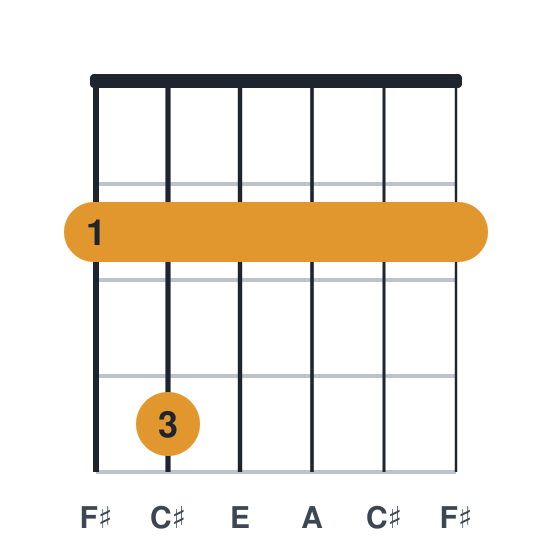
The Em9 barre shape at the 2nd fret: index across five strings, root on the low E, ninth on the high E string. Six strings, movable to any root.
How to play F#m9, step by step
- Index finger: press flat across the low E to B strings at fret 2
- Ring finger: 4th fret, A string
- Pinky finger: 4th fret, high E string
- Strum all six strings.
The grip is the open Em9 moved up two frets, index in place of the nut. It is fully movable: whatever the low E says under the index is the chord you are playing.
More ways to play F#m9
There are 3 common F#m9 shapes in total: the standard one at the top of the page, plus these, easiest first. You only ever need one. Tap any card to hear it.

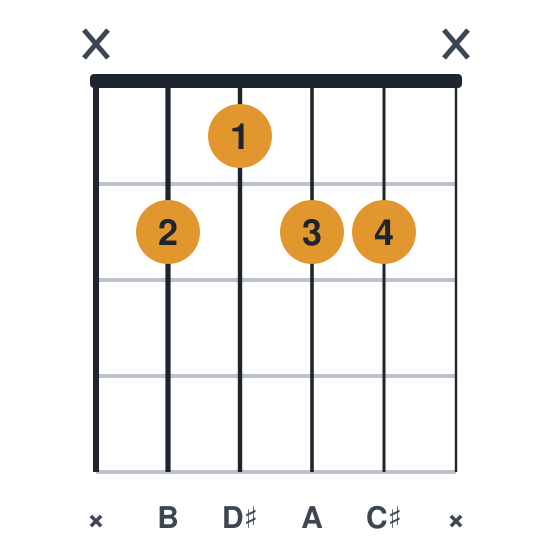
Compact and quick, higher and lighter than the 2nd fret barre. The grip for tucking the chord into a groove instead of letting it ring.

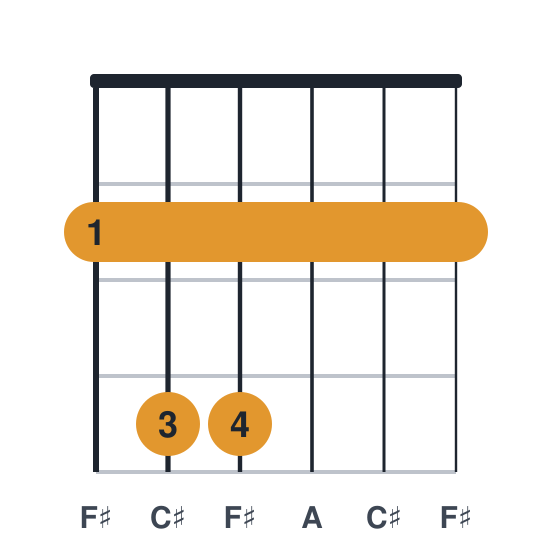
Low and close together. The notes sit near each other, which gives the ninth a soft rub rather than a clear ring.
If the shape will not ring
- Notes under the barre are dead
- The index holds four sounding strings at the 2nd fret. Roll it a little onto its bony edge, keep it just behind the fret, and let the arm's weight do the pressing.
- The pinky flattens onto the B string
- It reaches to the 4th fret of the high E for the G sharp, the ninth. Arch it so only the tip lands; if it grazes the B string the fifth under it disappears.
- The chord sounds like F#m7
- Then the high E is not speaking. The 4th fret note on that string is the only ninth in the shape, so check it rings on its own before strumming the rest.
What makes it an F#m9
F♯ · A · C♯ · E · G♯ 1 ♭3 5 ♭7 9
F#m9 is an F#m7 chord with a ninth added: F sharp, A, C sharp and E make the minor seventh, and the G sharp on top makes it a ninth. In the barre shape that G sharp rings on the high E string above a doubled root and fifth.
It is the ii chord of E and the vi of A, two of the most played guitar keys, so F#m9 slots into an enormous number of songs. Minor ninths are the everyday minor of soul and neo soul, where the plain minor seventh reads as unfinished.
F#m9 vs F#m7
F#m9 is F#m7 with a G sharp added. The minor seventh is calm; the ninth sits a whole step above the octave and gives the chord its floating, lit from inside quality.
For this root both chords are barres at the 2nd fret, so the ninth costs nothing extra. Wherever a chart in E or A writes F#m7, this chord fits, and it is usually the sound the record used.
F#m9 in major keys
Every note of F#m9 sits inside these keys. See how it works alongside the other chords in each one.
F#m9 chord questions
Is F#m9 the same as Gbm9?
Yes, one chord with two names. F sharp is how the guitar keys this chord lives in spell it, so that is the name used here.
What is the difference between F#m9 and F#m7?
F#m9 has a G sharp, the ninth, added to the four notes of F#m7. Same chord, more colour on top.
Is F#m9 hard to play?
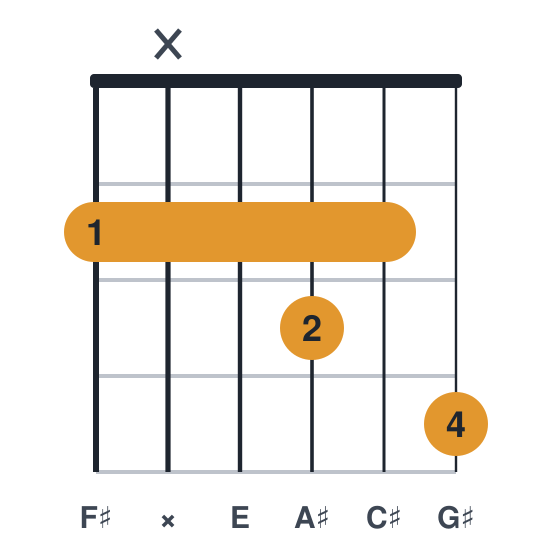
It is a five string barre with the pinky working above it, so it takes some hand strength. The five string shape at the 9th fret on this page skips the full barre.
Where is F#m9 used?
As the ii chord in E, as the vi in A, and as the richer stand in wherever F sharp minor is written, which soul, R and B and jazz players treat as the default.
Do you strum all six strings?
In the barre shape, yes: all six sound chord tones. In the 9th fret shape the low E stays out and the strum starts on the A string.
Chords to learn next
- F#m7the same chord without the ninth
- B9the V chord F#m9 leans toward
- F#mthe plain minor
- F#9the same ninth built on a major third


Other F# chords
F#m9 guitar chord chart (242224) from melodician.com