F#m6 Guitar Chord
F#m6 is the F sharp minor sixth chord. It has four notes: F sharp, A, C sharp and D sharp. The standard shape is a full barre at the 2nd fret with the root on the low E string.

The full six string minor sixth: index barred across the neck at the 2nd fret, root on the low E, and the sixth up on the B string. Movable, so this one grip is any minor sixth chord.
How to play F#m6, step by step
- Index finger: press flat across the low E to high E strings at fret 2
- Ring finger: lay across the A and D strings at fret 4
- Pinky finger: 4th fret, B string
- Strum all six strings.
Nothing in the grip belongs to F sharp alone. Slide the whole shape up two frets and it is G#m6; the note under the barre on the low E string is always the name.
More ways to play F#m6
There are 3 common F#m6 shapes in total: the standard one at the top of the page, plus these, easiest first. You only ever need one. Tap any card to hear it.

Tighter and brighter than the low barre, with the fifth on top. The easier grip once the neck opens up past the 5th fret.

Tight and slightly restless, the sixth sitting right beside the fifth in the middle of the chord.
If the shape will not speak
- The barre loses strings
- The index holds the low E, D and high E at the 2nd fret while the other fingers work above it. Roll it onto its outer edge and pull gently back with the arm rather than squeezing the thumb.
- The ring finger chokes the D string
- It lays across the A and D strings at the 4th fret. Flatten the finger across both on purpose; if only the A rings, the tip has curled up.
- The chord sounds like F#m
- Then the D sharp is missing. It lives on the B string under the pinky at the 4th fret, and it is the one note that makes the chord a sixth.
What makes it an F#m6
F♯ · A · C♯ · D♯ 1 ♭3 5 6
F#m6 is an F sharp minor triad (F sharp, A, C sharp) with a D sharp added: the major sixth, nine half steps up from the root. The flat third says minor, the natural sixth argues with it, and that argument is the sound of the chord.
The same four notes read from D sharp spell D#m7b5, the half diminished chord. F#m6 is also a B9 without its root, which explains why it slips so easily into progressions heading for E.
F#m6 vs F#m7
F#m7 adds an E to F sharp minor and softens it. F#m6 adds a D sharp instead, one fret lower, and the softness is gone: the chord leans, and the ear waits for the next move.
On this root both live as barres at the 2nd fret, so swapping one for the other is a small change of fingers, not of position. Pop songs nearly always want the m7; the m6 is the jazz, swing and film music choice.
F#m6 in major keys
Every note of F#m6 sits inside these keys. See how it works alongside the other chords in each one.
F#m6 chord questions
Is F#m6 the same as Gbm6?
Yes, one chord with two spellings. Guitar keys write this root as F sharp, so that is the name used here.
What is the difference between F#m6 and F#m7?
One note. F#m7 has an E, F#m6 has a D sharp, one fret lower. The seventh calms the chord; the sixth makes it restless.
Is F#m6 the same as D#m7b5?
Same notes: F sharp, A, C sharp and D sharp. With F sharp in the bass it is F#m6; with D sharp in the bass it is the half diminished chord.
Is there an easier F#m6?
The second shape on this page skips the low E: root on the A string at the 9th fret with a two string index barre at the 7th. Higher up, but lighter on the hand.
Where is F#m6 used?
As the iv chord in C sharp, on the tonic in F sharp minor, and in jazz and older songwriting, where minor sixths often stand in for minor sevenths.
Chords to learn next
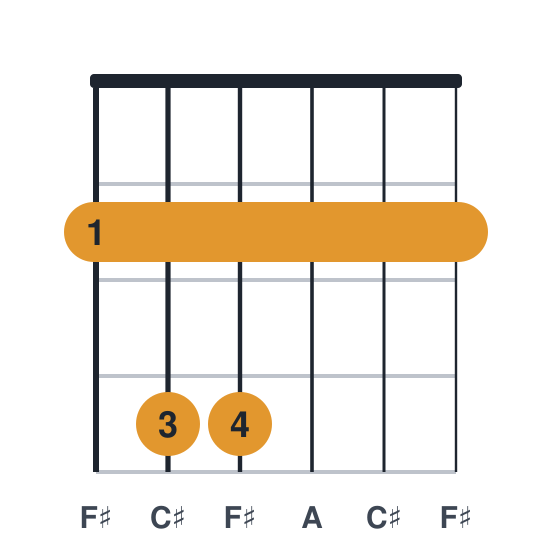
- F#mthe plain minor underneath it
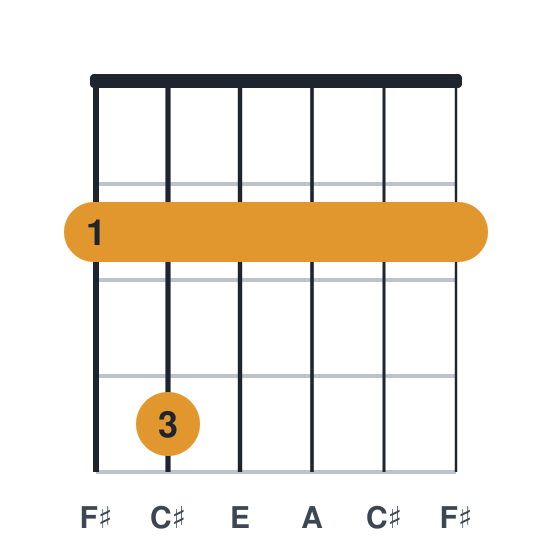
- F#m7a flat seventh instead of the sixth, the softer option
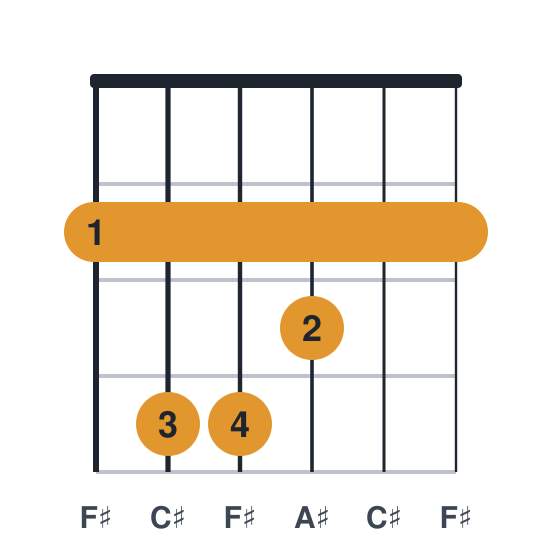
- F#the major on the same root
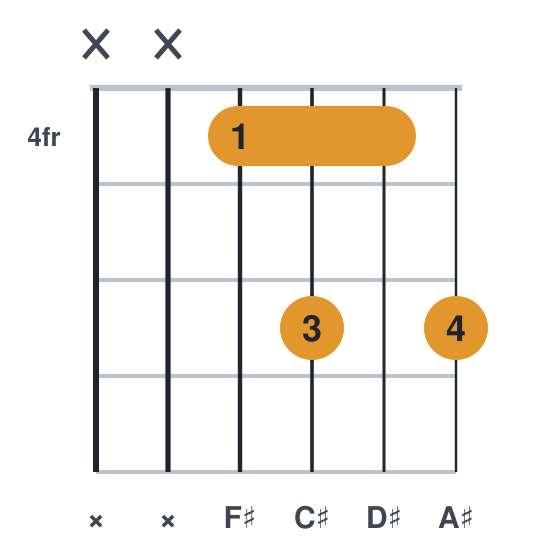
- F#6the major sixth on the same root


Other F# chords
F#m6 guitar chord chart (244242) from melodician.com