Cmaj7 Ukulele Chord
Cmaj7 is the C major seventh chord. It has four notes: C, E, G and B. On a ukulele it is a one finger chord: the plain C shape moved down one fret, so the B rings at the 2nd fret of the A string over three open strings.

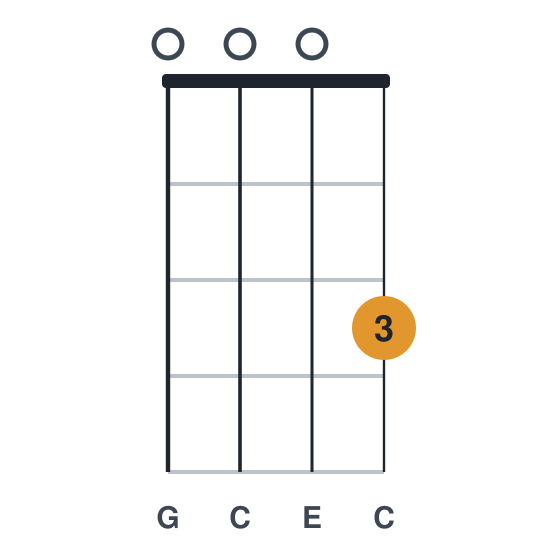
The plain C shape one fret lower: a single finger at the 2nd fret of the A string with the G, C and E strings open.
How to play Cmaj7 on ukulele, step by step
- Middle finger: 2nd fret, A string
- Leave the G, C and E strings open. Strum all four strings.
This shape is the open C chord with its finger moved down one fret, from the 3rd to the 2nd. Practise sliding between the two: C to Cmaj7 and back is a move songs lean on constantly.
More ways to play Cmaj7
There are 3 common Cmaj7 shapes: the standard one at the top of the page, plus these further up the neck. You only ever need one. Tap any card to hear it.

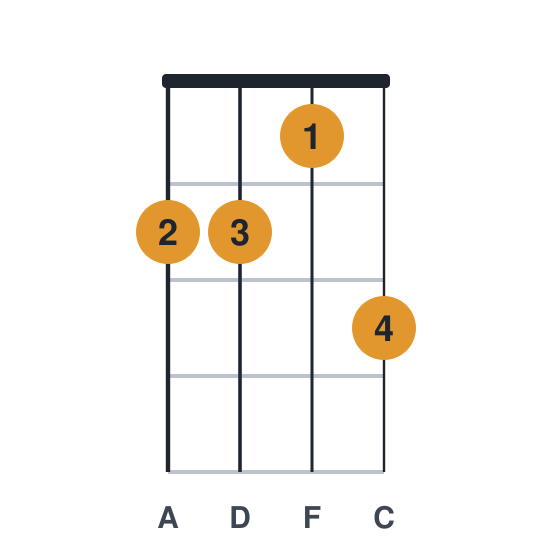
Fuller and rounder than the open shape, with all four notes fretted and no open string sparkle.

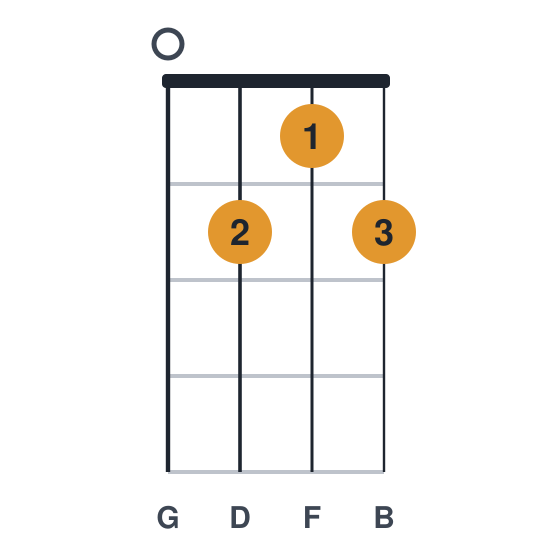
Wide and chiming: low open strings under two high fretted notes, almost like a harp roll.
If it sounds wrong
- It sounds like plain C
- The finger has drifted to the 3rd fret, which is the C chord. The major seventh lives at the 2nd fret; slide back one and listen for the softer landing.
- The E string sounds muffled
- The finger on the A string is leaning across its neighbour. Curl the last knuckle so the finger stands on its tip and the open E can ring.
- The open strings die early
- Strum a little slower and let the wrist stay loose. Three of the four notes are open strings, and they only sing if nothing is brushing them.
What makes it a Cmaj7
C · E · G · B 1 3 5 7
Cmaj7 is a major seventh chord: a C major triad (C, E, G) plus a major seventh (B). The B sits one half step below the root, and that closeness is the whole flavour: soft, settled, slightly wistful. On a ukulele the open G, C and E strings already supply three of the four notes, which is why one finger finishes the chord.
Cmaj7 is the I chord of C major and the IV chord of G major, so it turns up constantly in the keys ukulele songs live in. It is usually the first major seventh a player meets, and its dreamy, unhurried colour fits the instrument so well that many players start substituting it for plain C just to hear it.
C vs Cmaj7
C major is 0003 and Cmaj7 is 0002: the same string, one fret apart. The high C becomes a B, and the chord goes from bright and final to calm and floating. That one fret is the clearest demonstration of what a major seventh does anywhere on the instrument.
Walk the A string to hear the whole seventh family: C7 at the 1st fret, Cmaj7 at the 2nd, C at the 3rd. One finger, three frets, three completely different moods.
Cmaj7 chord questions
Is Cmaj7 easy on the ukulele?
Yes, about as easy as a chord gets: one finger at the 2nd fret of the A string and three open strings. It is exactly as much work as plain C.
What is the difference between Cmaj7 and C7?
One fret on the same string. C7 is 0001 with a B flat, tense and bluesy, pulling toward F. Cmaj7 is 0002 with a B natural, settled and dreamy. They are neighbours on the fretboard and opposites in mood.
Do you strum all four strings in Cmaj7?
Yes. Every string is part of the chord: open G, C and E plus the fretted B on the A string.
What keys use Cmaj7?
It is the I chord of C major and the IV chord of G major. In either key it can stand in for plain C when a softer colour fits.
Is there a Cmaj7 shape with no open strings?
Yes, 5777: root on the G string at the 5th fret with three fingers across the 7th. It is movable, so the same grip two frets higher is Dmaj7.
Chords to learn next
- Cthe plain major
- Dm7the ii chord beside Cmaj7 in the key of C
- G7the V chord of C
- C6the other soft colour on the same major


Other C chords
Cmaj7 ukulele chord chart (0002) from melodician.com