Cm9 Ukulele Chord
Cm9 is the C minor ninth chord. It has five notes: C, E flat, G, B flat and D. Four strings can hold four of them, so every shape drops the fifth. The standard shape is the movable minor ninth grip starting at the 3rd fret.

The movable minor ninth claw at the 3rd to 6th frets, one finger per string, root on the g string. The fifth is left out, as in every ninth shape.
How to play Cm9 on ukulele, step by step
- Index finger: 3rd fret, C string
- Middle finger: 5th fret, G string
- Ring finger: 5th fret, A string
- Pinky finger: 6th fret, E string
- Strum all four strings.
Nothing in this grip is specific to C. It is the movable minor ninth claw with the root on the g string: one fret down is Bm9, one fret up is C#m9.
More ways to play Cm9
There are 2 common Cm9 shapes: the standard one at the top of the page, plus these further up the neck. You only ever need one. Tap any card to hear it.

More open and ringing than the claw, with the root sustained under the fretted notes. A softer landing for the same chord.
If the shape is not clean
- Four fingers feel crowded
- One finger per string, placed in order with the index first on the C string at the 3rd fret. The claw feels odd for a day and then becomes one movement.
- The pinky note is quiet
- The pinky holds the flat seventh on the E string at the 6th fret. Curl it onto its tip; if it keeps collapsing, tip the whole hand slightly toward the floor so the pinky lands more vertically.
- The chord sounds thick and muddy
- All four notes are fretted and close together, so any half pressed string clouds the whole chord. Pick the strings one at a time and fix the one that buzzes.
What makes it a Cm9
C · E♭ · G · B♭ · D 1 ♭3 5 ♭7 9
Cm9 is a Cm7 chord with a ninth added: C, E flat, G and B flat make the minor seventh, and the D makes it a ninth. The shapes here keep the root, flat third, flat seventh and ninth and drop the fifth, the one note a ninth chord can spare.
It is the ii chord of B flat, a horn key, which is why Cm9 turns up in soul, funk and jazz charts more often than in campfire songbooks. Where those charts say Cm7, the ninth is usually the sound the record actually makes.
Cm9 vs Cm7
Cm9 adds a D, the ninth, to the four notes of Cm7. The ninth sits a whole step above the root an octave up and lifts the minor out of plainness without brightening it into major.
On a ukulele Cm7 is a one finger barre across the 3rd fret. Cm9 trades that ease for colour: four fingers, four strings, one extra note that changes the mood of the whole chord.
Cm9 chord questions
What is the difference between Cm9 and Cm7?
Cm9 has a D, the ninth, added to the four notes of Cm7. Same chord, more colour on top.
Why is there no G in the shape?
Four strings sound and the chord has five notes, so one has to go. The fifth adds weight but no character, which is why ninth chords always drop it.
Is there an easier Cm9?
The second shape uses three fingers with the open C string as the root. It sits higher up the neck but asks less of the fretting hand.
Is the standard shape movable?
Yes. The root sits on the g string, so the same claw one fret lower is Bm9 and one fret higher is C#m9.
Where is Cm9 used?
As the ii chord in B flat and all through soul, funk and jazz, where the minor ninth is the default minor sound.
Chords to learn next
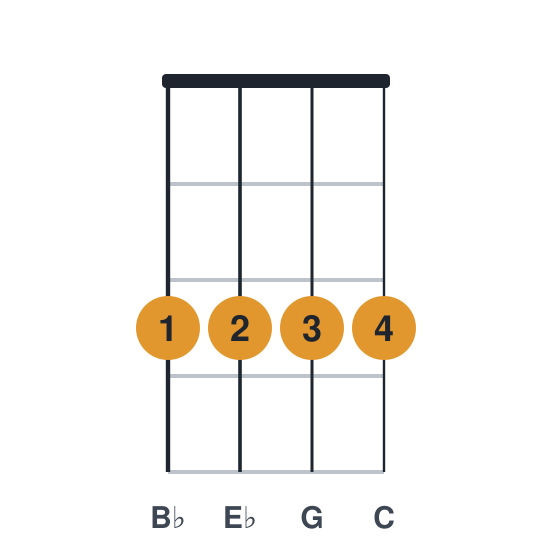
- Cm7the same chord without the ninth
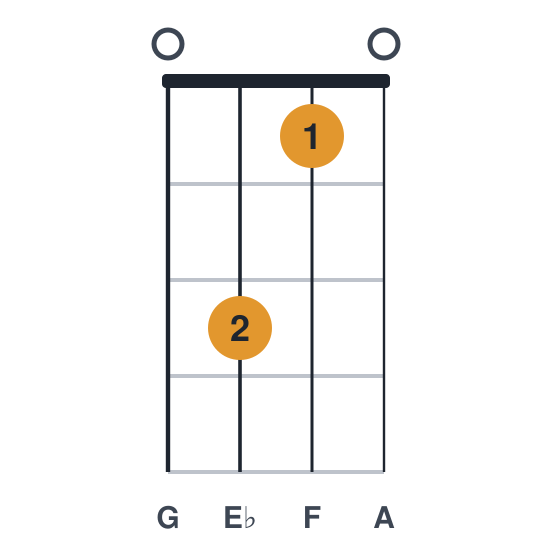
- F9the V chord Cm9 leans toward
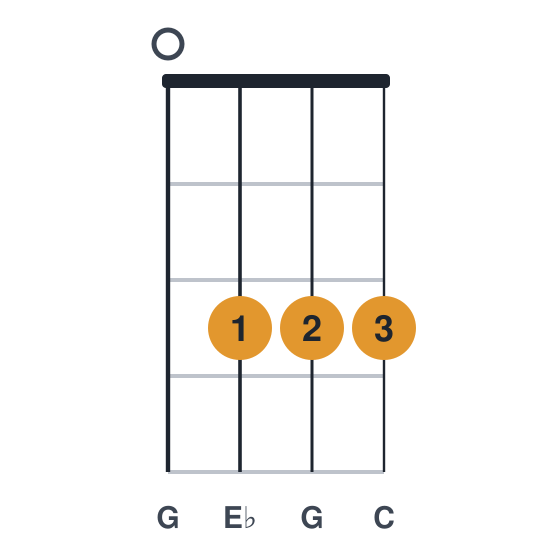
- Cmthe plain minor
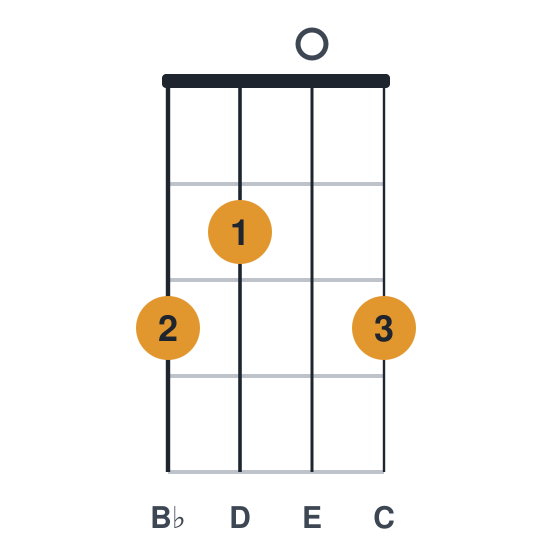
- C9the same ninth built on a major third


Other C chords
Cm9 ukulele chord chart (5365) from melodician.com