Cmaj9 Ukulele Chord
Cmaj9 is the C major ninth chord. It has five notes: C, E, G, B and D, so on four strings the fifth is left out. The standard shape stays inside the first four frets with the open E string as the third, and it is plain C with two notes added.

Plain C plus two: the A string holds the root at the 3rd fret, the index adds the ninth on the C string and the ring finger the seventh on the G string, with the open E as the third.
How to play Cmaj9 on ukulele, step by step
- Index finger: 2nd fret, C string
- Middle finger: 3rd fret, A string
- Ring finger: 4th fret, G string
- Leave the E string open. Strum all four strings.
Play plain C first, the A string at the 3rd fret, then add the other two fingers. Hearing the B and D arrive over a chord you already know is the fastest way to learn what maj9 means.
More ways to play Cmaj9
There are 3 common Cmaj9 shapes: the standard one at the top of the page, plus these further up the neck. You only ever need one. Tap any card to hear it.

Open and piano-like, with the ninth on top of the strum where it can be heard plainly.

High and chiming, the whole chord above the 7th fret. A colour for endings and single held bars.
If it sounds wrong
- The open E string is muffled
- The middle finger on the A string is leaning into it. Arch the finger so the E rings free; it carries the third.
- The reach to the 4th fret is awkward
- The ring finger takes the G string at the 4th fret while the index sits at the 2nd. Turn the wrist slightly toward the nut and the diagonal becomes comfortable.
- It sounds like Cmaj7
- The ninth is the D on the C string at the 2nd fret. If the index presses weakly that note vanishes and the ninth goes with it.
What makes it a Cmaj9
C · E · G · B · D 1 3 5 7 9
Cmaj9 is a Cmaj7 chord with a ninth added: C, E, G and B make the seventh chord, and the D on top makes it a ninth. On a ukulele the fifth, G, is left out of the fretted shape: four strings hold four notes, and the fifth is the note the chord misses least. Root, third, seventh and ninth all sound.
It is the I chord of C major at its softest, the landing chord of a ii V I in C. Major ninths rest without sounding finished-with, which is why jazz ballads and neo soul use them where plain C would sound blunt.
Cmaj9 vs Cmaj7
Cmaj9 is Cmaj7 with a D added. Cmaj7 is already the gentle version of C; the ninth widens it and makes the chord sound deliberately arranged.
Both live in the first frets on a ukulele, one finger apart in cost. Swap between them under the same strum and the ninth is easy to hear: the D sits right next to the C and E, a soft cluster Cmaj7 does not have.
Cmaj9 chord questions
Why is there no G in this Cmaj9?
Four strings hold four of the five notes, and the fifth is the one a ninth chord can spare. The ear fills it in.
What is the difference between Cmaj9 and Cadd9?
Cmaj9 contains the B, the major seventh. Cadd9 has no seventh: it is plain C with a D added. The B is what makes Cmaj9 sound jazzy rather than bright.
What is the difference between Cmaj9 and C9?
C9 has a B flat, the flat seventh, and pulls toward F. Cmaj9 has a B natural and stays put.
Is there an easier Cmaj9?
The two finger shape further down the page keeps the C and E strings open and frets only the seventh and ninth. It sits at the 4th and 5th frets.
Where is Cmaj9 used?
As the I chord of C major in jazz, bossa nova and soul, and anywhere Cmaj7 is written and a wider sound is wanted.
Chords to learn next
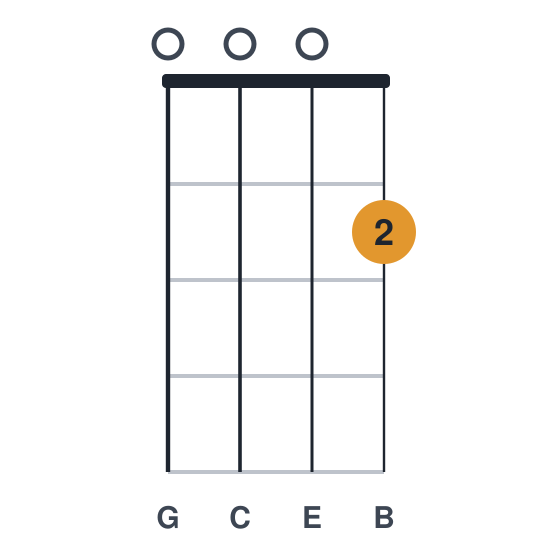
- Cmaj7the same chord without the ninth
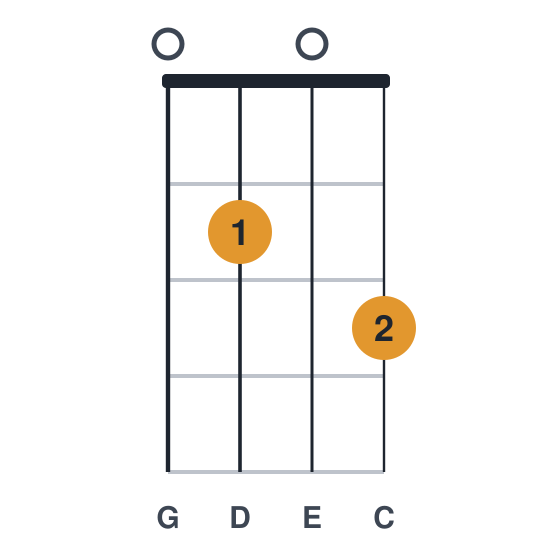
- Cadd9the ninth without the seventh
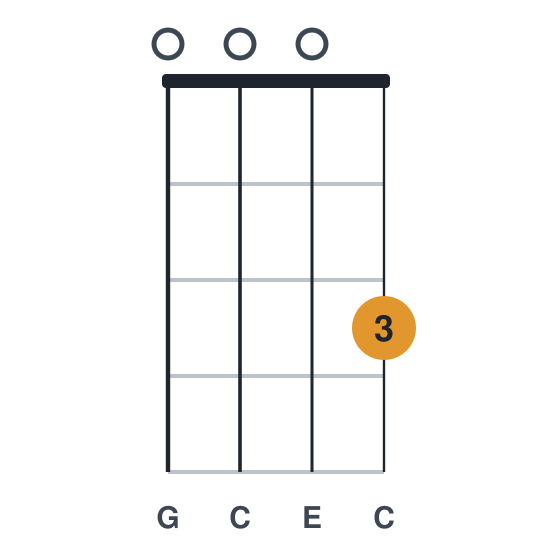
- Cthe plain major
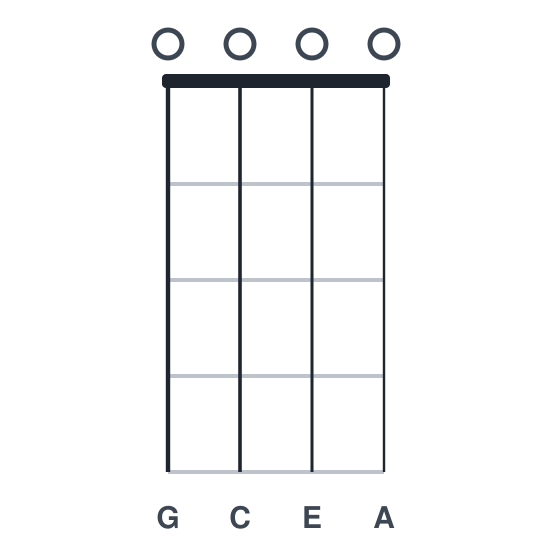
- C6the other soft colour on the same major


Other C chords
Cmaj9 ukulele chord chart (4203) from melodician.com