Cadd9 Ukulele Chord
Cadd9 is the C added ninth chord. It has four notes: C, E, G and D. On a ukulele it is the open C shape with one finger added: the index frets the C string at the 2nd fret, where the D lives, and the other two strings stay open.

The open C shape with the index added at the 2nd fret of the C string, where the D lives. Two fingers, two open strings.
How to play Cadd9 on ukulele, step by step
- Index finger: 2nd fret, C string
- Middle finger: 3rd fret, A string
- Leave the G and E strings open. Strum all four strings.
There is a second trick worth knowing: slide the plain C finger from the 3rd fret up to the 5th and the chord becomes Cadd9 too. That one-finger version is the last shape on this page.
More ways to play Cadd9
There are 3 common Cadd9 shapes: the standard one at the top of the page, plus these further up the neck. You only ever need one. Tap any card to hear it.

Tighter and more even than the open shape. Because nothing rings open, it also stops cleanly, which suits choppy strumming.

Open and chiming, with the D singing above the three open strings. The laziest add9 on the instrument, and one of the prettiest.
If it buzzes or sounds muddy
- The open E string dies
- The index finger on the C string is leaning over its neighbour. Curl it so it presses straight down and the E string next to it has room to ring.
- The D disappears into the chord
- The D on the C string is the whole point of the shape. Press the index right behind the 2nd fret so the note speaks as clearly as the open strings around it.
- It sounds like plain C
- You are probably fretting the C string at the 3rd fret instead of the 2nd. The 2nd fret is D, the added ninth; one fret higher is just another E flat that does not belong here.
What makes it a Cadd9
C · E · G · D 1 3 5 9
Cadd9 is a C major triad (C, E, G) with a ninth added: D. The ninth is the second note of the C scale played an octave higher, and because the third (E) stays in the chord, Cadd9 still sounds fully major, just brighter and more open than plain C.
Its favourite home is the key of G, where C is the IV chord. The added D belongs to that key, so Cadd9 blends smoothly with G and D chords, which is why so many songs in G write Cadd9 where you might expect C. A ukulele gets all four notes with no compromise: four strings, four different notes.
Cadd9 vs Csus2
Both chords add a D to C, but Csus2 removes the third (E) to make room for it, while Cadd9 keeps the third and stacks the D alongside. That one note decides the character: Cadd9 is clearly major with extra shimmer, Csus2 is hollow and undecided, neither major nor minor.
Choose Cadd9 when the chord still needs to feel like C, and Csus2 when you want suspense that resolves a moment later. On a ukulele the two shapes sit close together, so it is easy to try each against the same song and hear the difference.
Cadd9 chord questions
Is Cadd9 easy on the ukulele?
Yes. The standard shape is two fingers: the plain C chord with the index added on the 2nd fret of the C string. Many players learn it in the same sitting as C itself.
What is the difference between Cadd9 and C9?
C9 also contains a flat seventh, B flat, which gives it a bluesy dominant sound. Cadd9 adds only the D and stays a bright major chord.
What is the difference between Cadd9 and Csus2?
Both contain a D, but Csus2 removes the third (E) and floats, while Cadd9 keeps the third and still sounds fully major.
Can I play Cadd9 instead of C?
In songs in the key of G, usually yes, and it often sounds better because the added D belongs to the key. In other keys, listen first: the extra note can clash with the melody.
Is there a one-finger Cadd9?
Yes. Fret the A string at the 5th fret and leave the rest open. It is the plain C shape moved up two frets, and it is the last voicing on this page.
Chords to learn next
- Cthe plain major
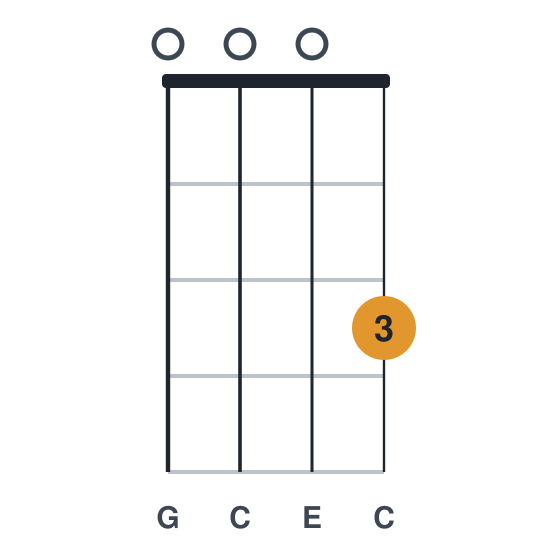
- Csus2the 9 without the 3
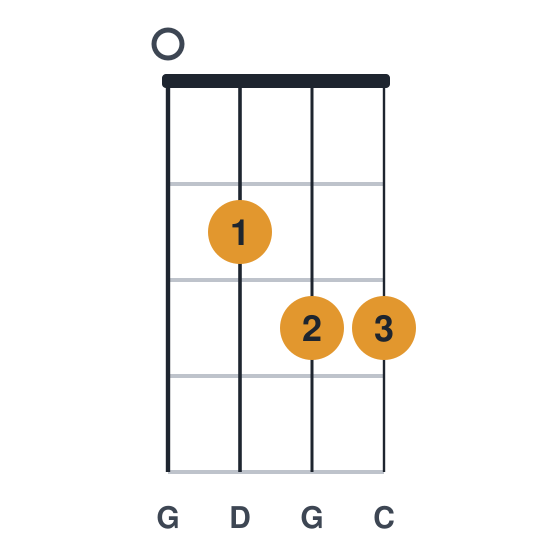
- Cmaj7another colour on the same major
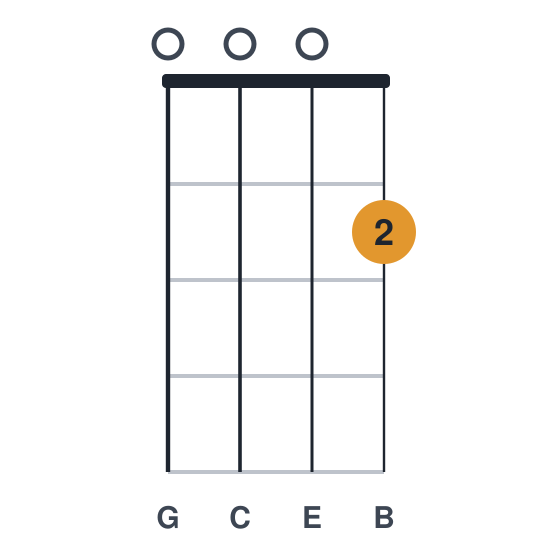
- Cmaj9the same ninth with the seventh under it
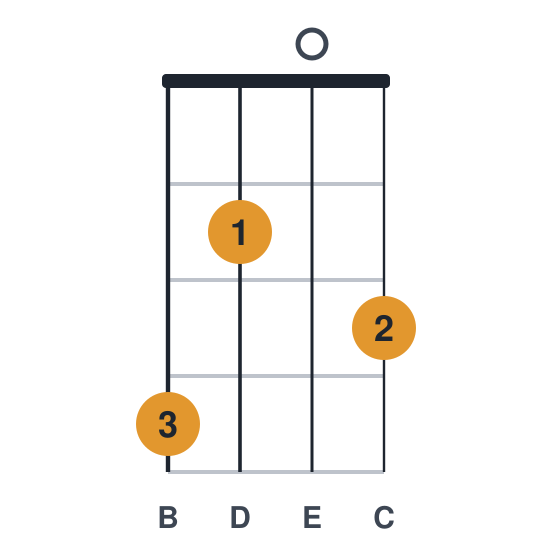


Other C chords
Cadd9 ukulele chord chart (0203) from melodician.com