Csus2 Ukulele Chord
Csus2 is the C suspended second chord on ukulele. It has three notes: C, D and G. The shape keeps the C chord's ring finger on the A string and adds two more at the 2nd and 3rd frets, with the G string still ringing open.

Index at the 2nd fret of the C string, middle and ring at the 3rd on the E and A, G string open. The C chord's top note stays put.
How to play Csus2 on ukulele, step by step
- Index finger: 2nd fret, C string
- Middle finger: 3rd fret, E string
- Ring finger: 3rd fret, A string
- Leave the G string open. Strum all four strings.
The C chord is inside this shape: hold the A string note, lift the other two fingers, and you are back on plain C. Moving between them is the sus2 move a hundred songs use to make one chord breathe.
More ways to play Csus2
There are 3 common Csus2 shapes: the standard one at the top of the page, plus these further up the neck. You only ever need one. Tap any card to hear it.

Sparse and chiming; the D on top makes this the version that sounds most suspended.

Wide and glassy: two open strings underneath two high fretted notes.
If it will not ring
- The 3rd fret notes crowd each other
- Middle and ring sit at the same fret on the E and A strings. Stagger them slightly so each presses on its tip rather than shoulder to shoulder.
- The open G is dull
- The index on the C string is leaning back into it. Curl the finger upright and the open string comes back.
- It sounds like a different chord
- A finger drifting to the 2nd fret of the E string turns the D into a B. Check the middle finger is at the 3rd fret, not the 2nd.
What makes it a Csus2
C · D · G 1 2 5
Csus2 replaces the third of the C chord, E, with D. With no third the chord is neither major nor minor: the D hangs, and the ear waits for it to move, usually back up to E as the chord resolves to C.
The same three notes, C, D and G, read from G spell Gsus4; every sus2 chord has a sus4 twin a fifth up like this. C is the home key of the ukulele, so Csus2 earns its keep everywhere: it is the standard way to make a long C chord move without changing the harmony under a melody.
Csus2 vs Csus4
Csus2 hangs D a whole step below the missing E; Csus4 hangs F a half step above it. On ukulele both start from the plain C shape: the sus4 adds one finger next to it, the sus2 adds two.
The sus4 is the tenser sound and resolves almost immediately; the sus2 is open enough to sit for a full bar. If you want shimmer rather than pull, the sus2 is the one.
Csus2 chord questions
Is Csus2 major or minor?
Neither. The E that would make it major is replaced by D, so the chord hangs until a third returns.
Is Csus2 the same as Gsus4?
They contain the same three notes, C, D and G. If the song treats C as home the chord is Csus2; if G is home it is Gsus4.
Is Csus2 hard to play?
No. Three fingers inside the first three frets with the G string open, and the familiar C chord is hiding inside it.
What is the difference between Csus2 and Csus4?
Csus2 suspends D, a whole step over the root; Csus4 suspends F, a fourth over it. The sus4 pulls harder, the sus2 floats longer.
What does Csus2 resolve to?
C major, when the D steps up to E. It can also fall into C minor, since nothing in the chord blocks the flat third.
Chords to learn next
- Cwhere the suspension usually lands
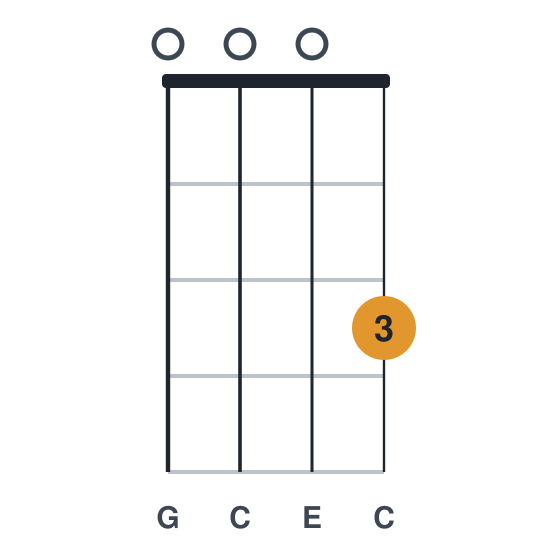
- Csus4the other suspension
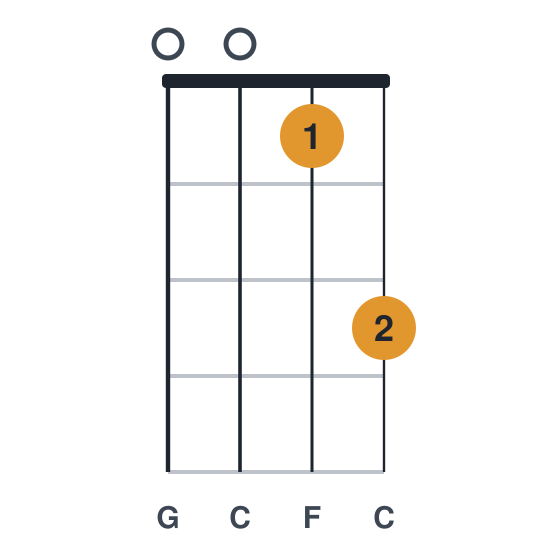
- CmCsus2 sits between major and minor
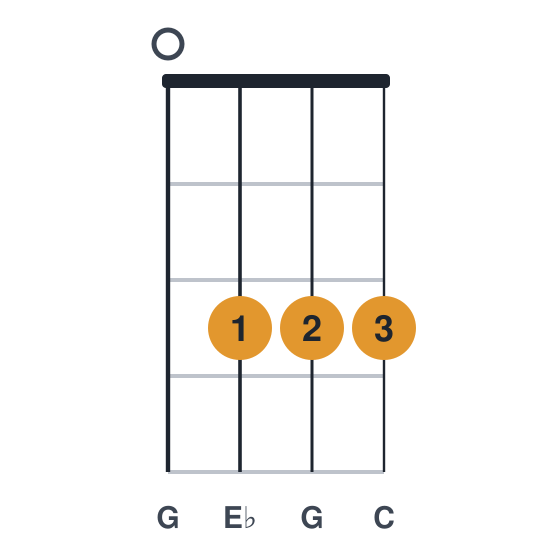
- Cadd9the same colour with the third kept in
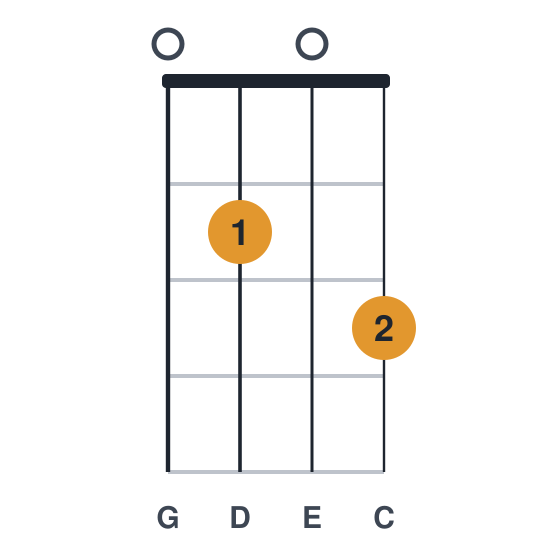


Other C chords
Csus2 ukulele chord chart (0233) from melodician.com