Chords in the Key of G# Minor
The key of G# minor contains seven chords: G#m, A#dim, B, C#m, D#m, E and F#. G#m, C#m and D#m are minor, B, E and F# are major, and A#dim is the diminished chord built on the second note of the scale. Most songs in this key sit on G#m, E, B and F#.
The seven chords on guitar
Each chord below opens its own page, with more shapes up the neck, audio for every voicing and a printable chart. Tap the play button on any card to hear it.


The seven chords on piano
The same seven chords on a keyboard, in root position. Each one opens its own page, with every inversion and the finger numbers for both hands.
iG#mG♯ B D♯ 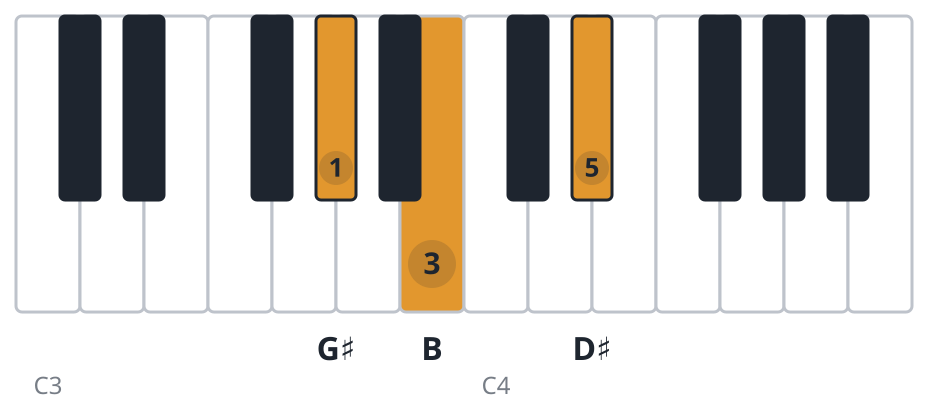
the home chord
ii°A#dimB♭ D♭ E 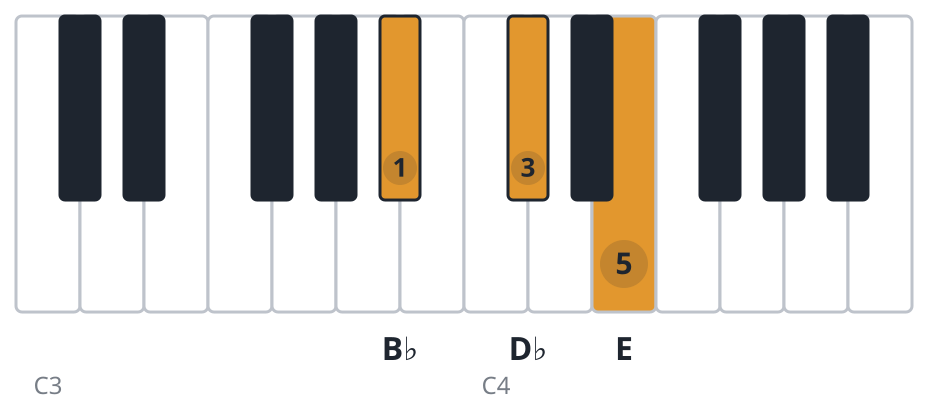
the tense one, used sparingly, filed as Bbdim
IIIBB D♯ F♯ 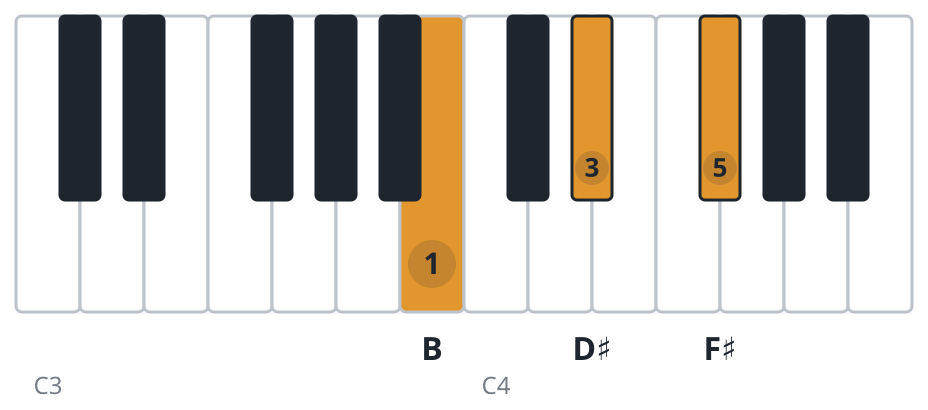
the relative major, the bright lift
ivC#mC♯ E G♯ 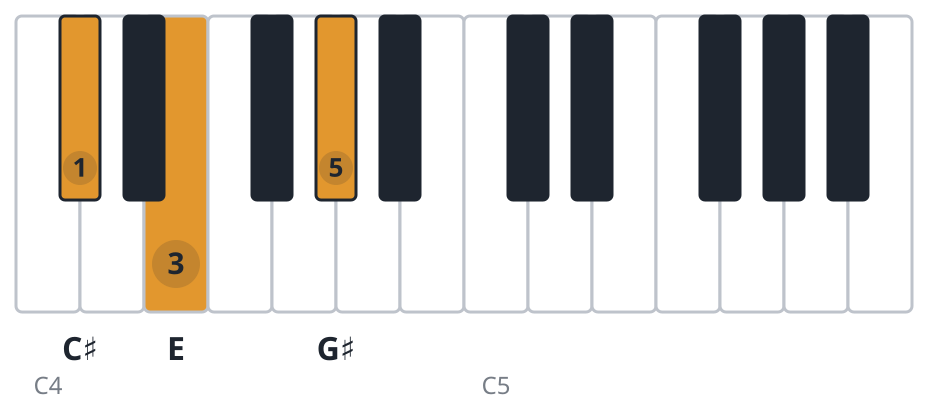
the darker step away from home
vD#mE♭ G♭ B♭ 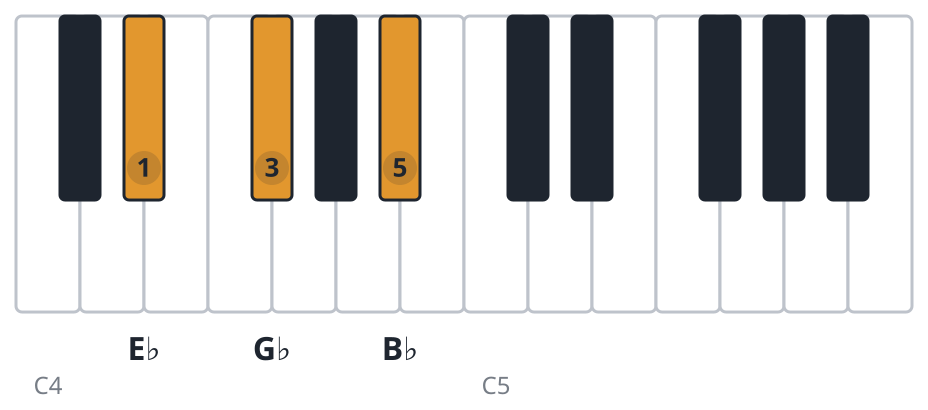
the pull home, usually played major, filed as Ebm
VIEE G♯ B 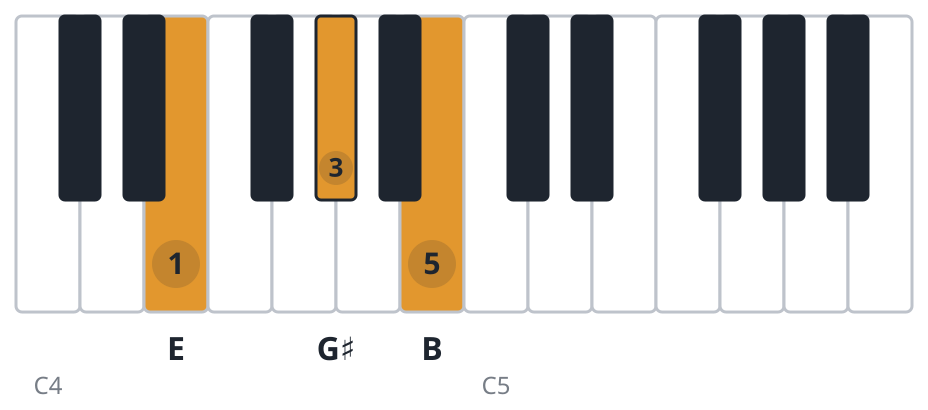
the warm place to rest
VIIF#F♯ A♯ C♯ 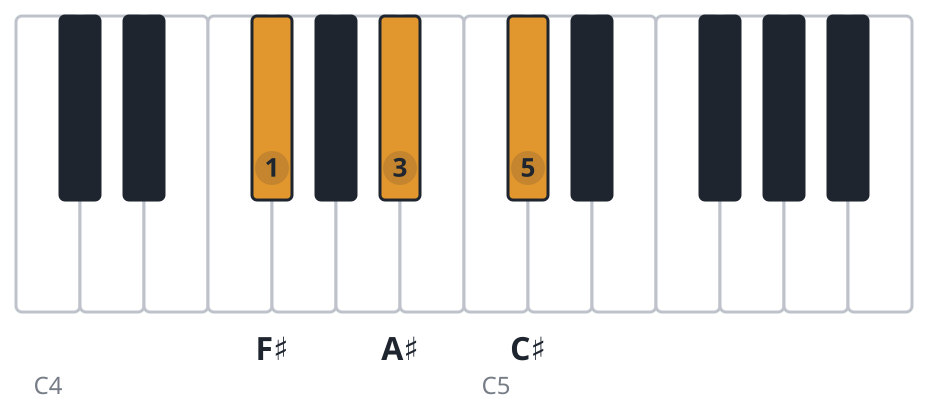
a step below home, the rock cadence


The seventh chords in G# minor
Add one more note to each chord and the key gains its seventh chords, which is where most jazz and a good deal of soul begins.
Common progressions in G# minor
- i - VI - III - VII
G#m E B F#
The most common minor loop in pop music. With a capo at the fourth fret it becomes Em, C, G and D, which is about as easy as four chords get.
- i - VII - VI
G#m F# E
Three chords stepping down, the sound of most minor key rock. Nothing in it pulls back home, so it can loop as long as you like.
- i - iv - v
G#m C#m D#m
The plain sad one, with all three chords minor. Most players raise the last chord to D# or D#7, which is outside the seven but gives the return to G#m its pull.
- i - iv - VII - III
G#m C#m F# B
This one ends leaning on B, the relative major, so the progression brightens on its way round and then drops back to G#m.
Why these seven chords
On a stave, G# minor is written with five sharps, which is how a reader knows the key before playing a note.
G# minor uses five sharps and shares that key signature with B major, its relative major. The two keys hold exactly the same seven chords. The only difference is where the music rests: a song in G# minor keeps returning to G#m, while the same chords return to B in the major key.
The v chord is D#m, which is what the natural minor scale gives you, but songs rarely leave it minor. Raising its middle note turns it into D# major, usually played as D#7, and that raised note pulls hard back to G#m. D# is the one chord you will meet in this key that is not in the list of seven, and it comes from the harmonic minor scale. At the other end, the VII chord F# sits a whole step below the tonic and gives the flat, rock sounding move you hear in i - VII - VI.
On guitar
This is one of the harder keys on guitar. E is the only plain open chord in it. G#m, C#m, D#m and F# are all barre chords, B is normally barred as well, and A#dim is a small three note grip rather than a full shape. That is a fair part of why G# minor turns up far more in pop production and piano writing than in guitar songwriting.
The practical route is a capo at the fourth fret playing E minor shapes. Em, G, Am, C and D under your fingers sound as G#m, B, C#m, E and F#, so nearly the whole key becomes open chords and only the Bm shape, which sounds as D#m, still needs a barre. A capo at the first fret with G minor shapes also lands in G# minor, which is useful if the chart in front of you is written in G minor, but G minor is barre heavy on its own, so the fourth fret is the one to reach for.
On piano
The G# minor scale is G#, A#, B, C#, D#, E and F#. Five of those are black keys and only B and E are white, so the hand sits up on the raised keys with the thumb dropping down for B and E. That is more comfortable than five sharps look on paper, and it is part of why this key is common in music written at a keyboard.
The chords that need care are D#m, which sits entirely on black keys, and A#dim, which mixes A# and C# with a white E. Every triad and seventh here shows all of its inversions with fingering for both hands, so you can choose the voicing nearest to where your hand already is instead of jumping back to root position each time.
Questions about the key of G# Minor
What are the 7 chords in the key of G# minor?
G#m, A#dim, B, C#m, D#m, E and F#. G#m, C#m and D#m are minor, B, E and F# are major, and A#dim is diminished.
What is the relative major of G# minor?
B major. It has the same five sharps and the same seven chords, and only the chord the music rests on is different.
Why do songs in G# minor use a D# chord?
The v chord is D#m in the natural minor scale, but raising its middle note gives D#, usually played as D#7. That raised note leads back to G#m and is the strongest way home in a minor key.
How do I play in G# minor on guitar without barre chords?
Put a capo at the fourth fret and play E minor shapes. Em, G, Am, C and D then sound as G#m, B, C#m, E and F#, and only the Bm shape still needs a barre.
Is G# minor the same as Ab minor?
The same sounds, spelled differently. Ab minor needs seven flats, so charts almost always write G# minor instead, with five sharps.
What do the numbers next to each chord mean?
They are each chord's place in the key, written as Roman numerals. In G# minor the i is G#m, the iv is C#m and the v is D#m. The numbering holds in every key, so the v of A minor is Em. That is why progressions get written as numerals like i, VI, III, VII: learn one and you have it in all twelve minor keys.
Why are some numerals capitals and some lowercase?
The case tells you the chord quality. Lowercase are minor, which in G# minor means G#m, C#m and D#m. Capitals are major: B, E and F#. The small circle on ii° means diminished, and here that is A#dim.
What is the relative major of G# minor?
B major. It is written with five sharps, the same signature as G# minor, and it contains the same seven chords. Only the chord that sounds like home changes, from G#m to B.
The relative major
B major is written with the same five sharps and contains the same seven chords as G# minor. What changes is which one sounds like home, so the same shapes can be played brighter without learning anything new. Chords in the key of B