G#m Piano Chord
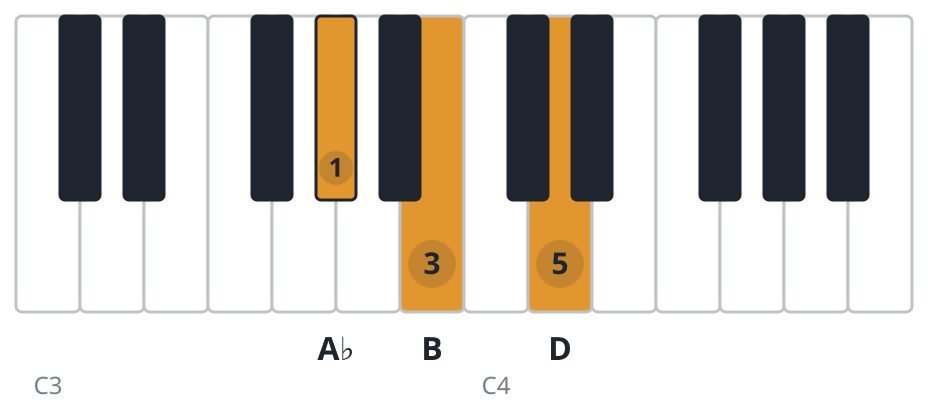
G sharp minor is the G#m piano chord. It has three notes: G sharp, B and D sharp. The outer two are black keys with a white one in the middle.

G♯ at the bottom, then B and D♯. Right hand 1-3-5, left hand 5-3-1. The black keys are G♯ and D♯.
How to play G#m on piano, step by step
- Start on the G♯ below middle C. That is the lowest note of the chord.
- Thumb (1): G♯
- Middle finger (3): B
- Little finger (5): D♯
- Press them together with the right hand. The left hand plays the same notes with fingers 5, 3, 1 an octave lower, or just G♯ on its own as a bass note.
This is the same black, white, black shape as F sharp minor and C sharp minor. Three chords, one hand position, three different starting keys.
Inversions of G#m
The same 3 notes with a different one at the bottom. All of them are G#m; which you play depends on what the hand is coming from. Tap any card to hear it.


If it sounds wrong
- The outer keys are hard to find
- G sharp is the last black key in the group of three; D sharp is the second in the group of two. Locating the groups is faster than counting from a white key.
- The middle note is wrong
- It is B, a white key. Playing B sharp, which is the key everyone calls C, would give G sharp major.
- The chord feels stretched
- The span is only a fifth. If it feels wide, the hand is sitting too far forward and the fingers are reaching back to the black keys.
What makes it a G#m
G♯ · B · D♯ 1 ♭3 5
G sharp minor is the first, flat third and fifth of the G sharp scale: G sharp, B and D sharp.
It is the relative minor of B major, the vi chord of B and the ii of F sharp. Both of those are guitar keys rather than piano ones, so a pianist usually meets this chord accompanying somebody else.
G#m vs Abm
Exactly the same three keys. Sharp keys write G sharp minor and flat keys write A flat minor, and since this chord belongs to sharp keys, G sharp minor is what you will see on a chart.
It is worth knowing both names, because a piece that modulates can switch spelling without changing a note under your hand.
G#m in major keys
Every note of G#m sits inside these keys. See how it works alongside the other chords in each one.
Questions about G#m
Which notes are in a G#m chord on piano?
G sharp, B and D sharp. G sharp and D sharp are black keys; B is white.
What fingers do you use for G#m?
Right hand: thumb on G sharp, middle finger on B, little finger on D sharp. Left hand: little finger on G sharp, middle on B, thumb on D sharp.
Is G#m the same as Abm?
The same keys and the same sound. G sharp minor is by far the more common spelling, because it belongs to the sharp keys B and F sharp.
Is G#m hard on piano?
No. Black, white, black gives the hand a natural resting position, and nothing in the chord stretches.
Where is the G#m chord used?
As the vi chord in B, the ii in F sharp and the iii in E.
Chords to learn next
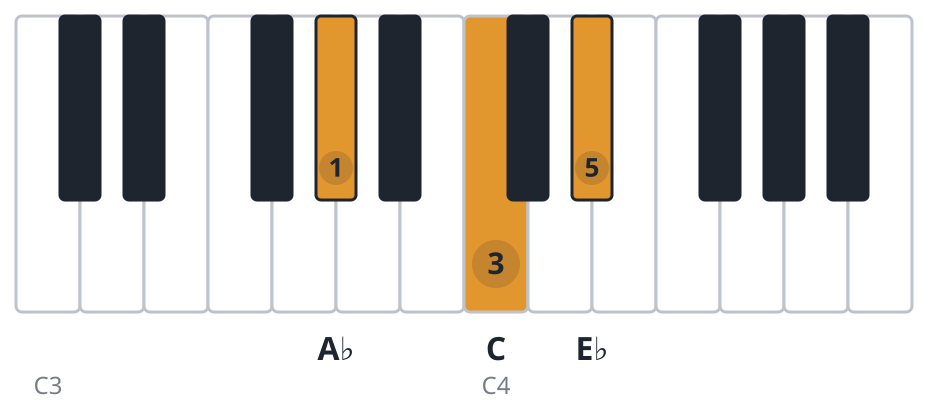
- Abthe major version of G#m
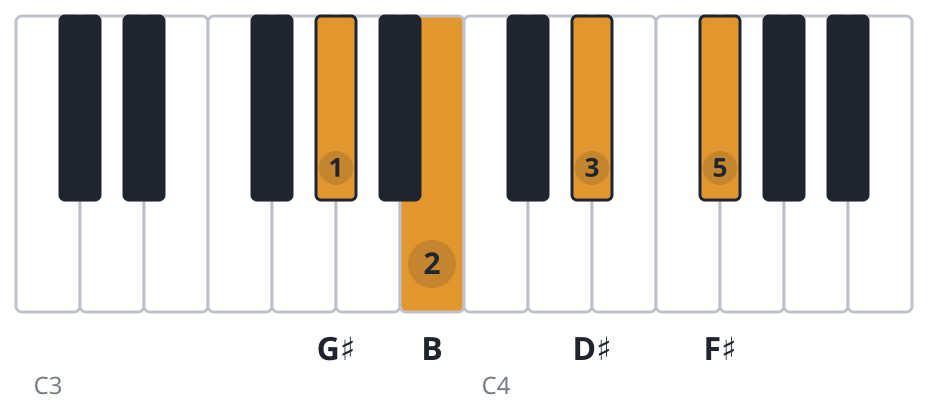
- G#m7a seventh added, which softens the minor
- Bthe relative major of G#m
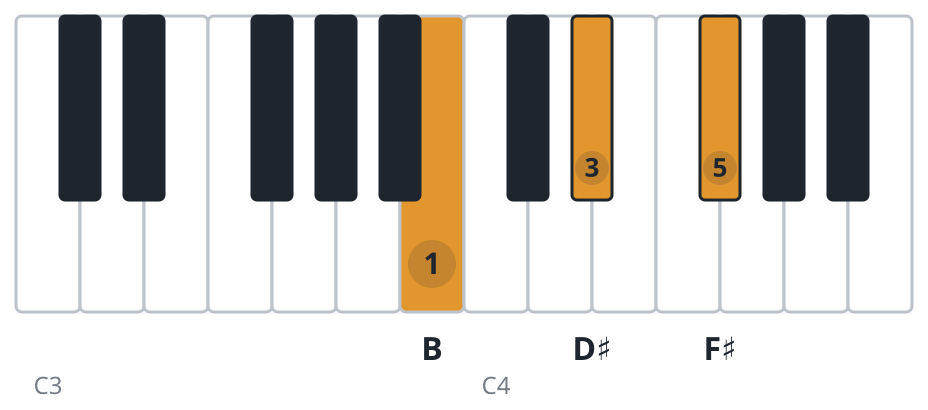
- Abdimthe fifth lowered as well as the third