G6 Guitar Chord
G6 is the G sixth chord. It has four notes: G, B, D and E. On guitar it is the easiest sixth chord there is: an open G with the top three strings left alone, which needs only two fingers.

An open G with the B and high E strings left open, which turns the top of the chord into the sixth. Two fingers, six strings.
How to play G6, step by step
- Index finger: 2nd fret, A string
- Middle finger: 3rd fret, low E string
- Strum all six strings.
This is a plain G with the B and high E strings open instead of fretted. Try it wherever a song asks for G and you want a lighter, less final sound.
More ways to play G6
There are 2 common G6 shapes in total: the standard one at the top of the page, plus these, easiest first. You only ever need one. Tap any card to hear it.

Bright and small, well above the bass. This is the G6 for playing rhythm behind someone else.
If it sounds thin or muddy
- It sounds almost like G
- It should. The only difference is the open high E, which adds the sixth. Play G, then G6, and listen to the top string.
- The low E is unclear
- The middle finger sits at the 3rd fret of the low E. Press with the tip right behind the fret; this note is the root and a weak one makes the whole chord vague.
- Too much ring on top
- Three open strings is a lot of sustain. If it blurs the next chord, damp the top strings with the side of the strumming hand.
What makes it a G6
G · B · D · E 1 3 5 6
G6 is a G major triad (G, B, D) with an E added, the sixth of the scale. All three notes of G major stay, so the chord keeps its identity and gains a slightly wistful edge.
Read from E, those four notes spell Em7. G6 and Em7 are the same pitches with a different bass note, which is why so many folk songs seem to drift between them without anything really changing.
G6 vs Gmaj7
G6 adds an E to G major; Gmaj7 adds an F sharp. The E is a settled, folky sound and needs no resolution. The F sharp sits one fret below the root and leans on it, which is what makes maj7 chords sound soft and unfinished.
On guitar the shapes are almost as close as the sounds: both are a normal G with the top of the chord changed. G6 lifts fingers off, Gmaj7 moves one down to the 2nd fret of the high E string.
G6 in major keys
Every note of G6 sits inside these keys. See how it works alongside the other chords in each one.
G6 chord questions
Is G6 the same as Em7?
The four notes are the same: G, B, D and E. The bass decides what you hear. G lowest gives G6, E lowest gives Em7. In a folk progression the two are often interchangeable.
Is G6 easier than G?
Yes. G6 is a G chord with the ring finger and pinky lifted off the top strings, so it needs two fingers instead of three or four. Many beginners can play G6 cleanly before G.
What is the difference between G6 and G7?
G6 adds an E and sounds restful. G7 adds an F and sounds restless, pulling toward C. They look similar on paper and do opposite jobs.
Where is G6 used?
Everywhere a plain G would go and a softer one is wanted: song endings in G, the IV chord in D, and as standard practice in swing and country, where major chords are usually played as sixths.
Do you strum all six strings in G6?
Yes. Every string in this shape belongs to the chord, so strum from the low E all the way down.
Chords to learn next
- Gthe plain major underneath it
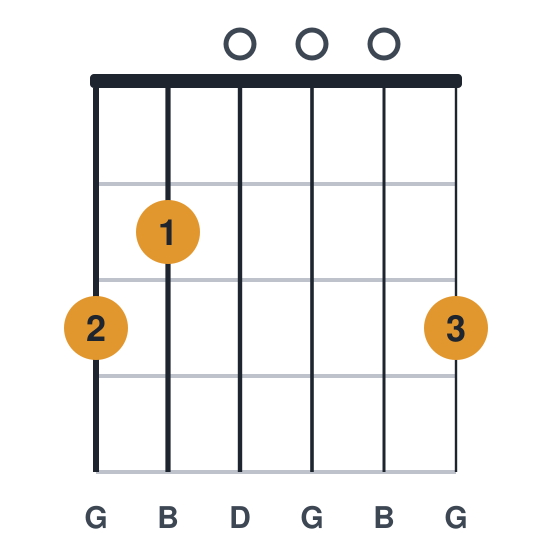
- Em7the same four notes counted from E
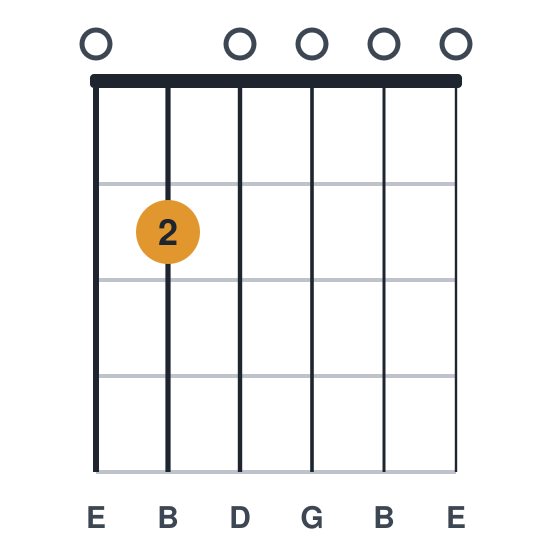
- Gmaj7the other note people add to a major chord
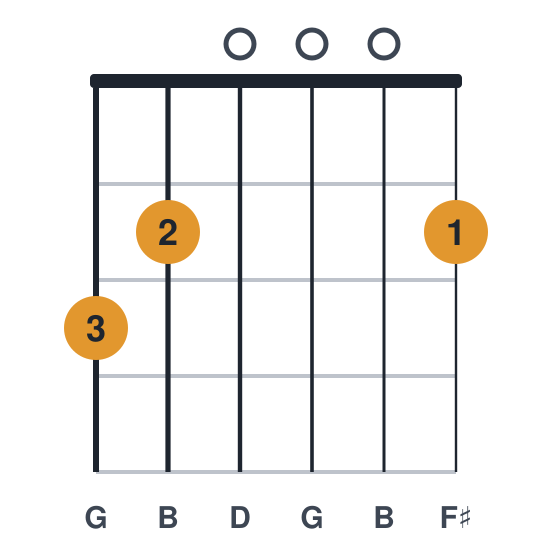
- Gm6the same sixth over a minor chord
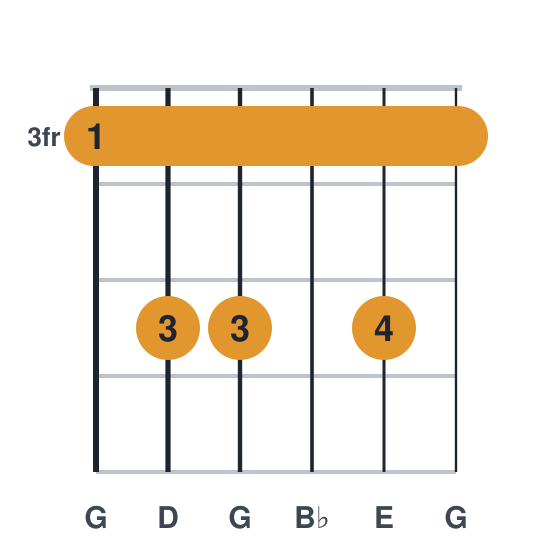


Other G chords
G6 guitar chord chart (320000) from melodician.com