Gmaj9 Guitar Chord
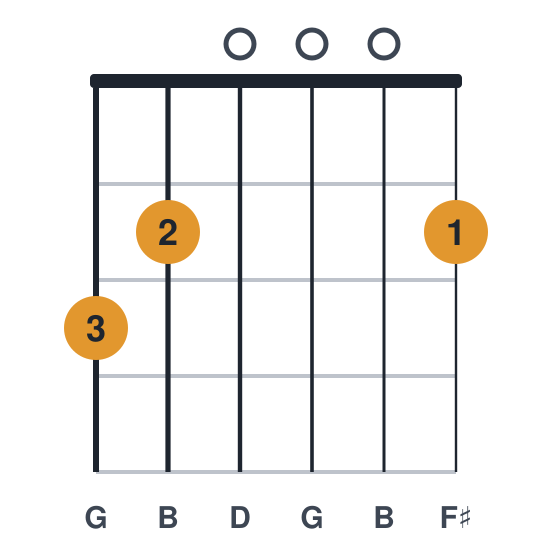
Gmaj9 is the G major ninth chord. It has five notes: G, B, D, F♯ and A. The open shape takes two fingers, one on each outside string, and the four strings between them ring open.

Middle finger on the low E at the 3rd fret, index on the high E at the 2nd, with four open strings between them.
How to play Gmaj9, step by step
- Middle finger: 3rd fret, low E string
- Index finger: 2nd fret, high E string
- Let the A, D, G and B strings ring open.
- Strum all six strings.
The same two finger idea as G9, with the high E one fret higher. Sliding that finger between the 1st and 2nd fret switches the chord between G9 and Gmaj9.
More ways to play Gmaj9
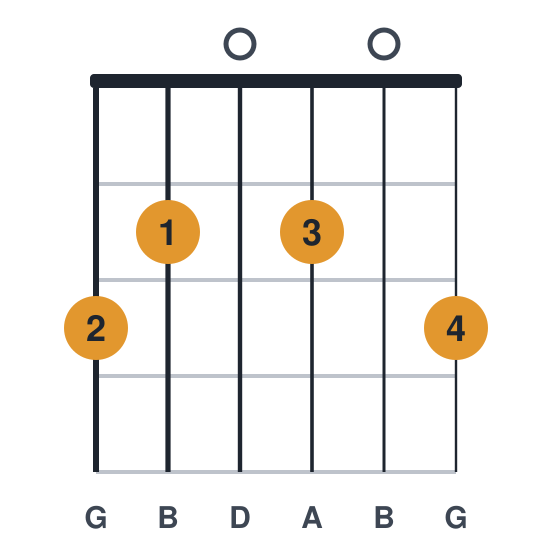
There are 3 common Gmaj9 shapes in total: the standard one at the top of the page, plus these, easiest first. You only ever need one. Tap any card to hear it.

Full and glassy. Every note of the chord is present, which is rare for a five note chord on six strings.

Tighter and higher than the six string shape, and easier to keep clean. The notes sit close together, so the chord speaks quickly.
If the barre is uneven
- Strings under the barre drop out
- Roll the index onto its outer edge so the bone holds the strings, and keep it just behind the 3rd fret.
- The two strings under the middle finger are uneven
- It covers the D and G strings at the 4th fret. Lay it flat and check both notes ring.
- The chord sounds thick
- Five notes on six strings is dense. Strum lightly and let the top of the chord speak rather than digging into the bass.
What makes it a Gmaj9
G · B · D · F♯ · A 1 3 5 7 9
Gmaj9 is a Gmaj7 chord with a ninth added: G, B, D and F sharp make Gmaj7, and the A on top makes it a ninth.
It is the I chord of G major and the IV of D, two keys guitarists live in, so this is one of the more useful major ninths to know. The F sharp sits a half step under the root and the A a whole step above it, and that pair is what makes the chord float instead of settle.
Gmaj9 vs Gadd9
Gadd9 is G major with an A added and no seventh: bright, strummed, and common in folk and rock. Gmaj9 keeps the A and adds the F sharp as well, and the seventh is what turns it into a jazz chord.
In practice they are used in different music rather than as alternatives. Gadd9 opens a strummed song; Gmaj9 ends a quiet one.
Gmaj9 in major keys
Every note of Gmaj9 sits inside these keys. See how it works alongside the other chords in each one.
Gmaj9 chord questions
What is the difference between Gmaj9 and Gadd9?
Gmaj9 contains the F sharp, the major seventh, as well as the A. Gadd9 has no seventh at all. That one note is the difference between a jazz chord and a folk chord.
What is the difference between Gmaj9 and G9?
G9 has an F natural, the flat seventh, and pulls toward C. Gmaj9 has an F sharp and stays put.
Is there a Gmaj9 without a barre?
The five string shape further down the page needs no full barre. It spans the 9th to the 11th frets, where the frets are closer together.
Where is Gmaj9 used?
As the I chord of G major and the IV of D, in jazz, soul and bossa nova, and anywhere Gmaj7 is written and a wider sound would suit.
Do you strum all six strings?
Yes. In the barre shape every string carries a note of the chord.
Chords to learn next
- Gmaj7the same chord without the ninth
- Gadd9the ninth without the seventh
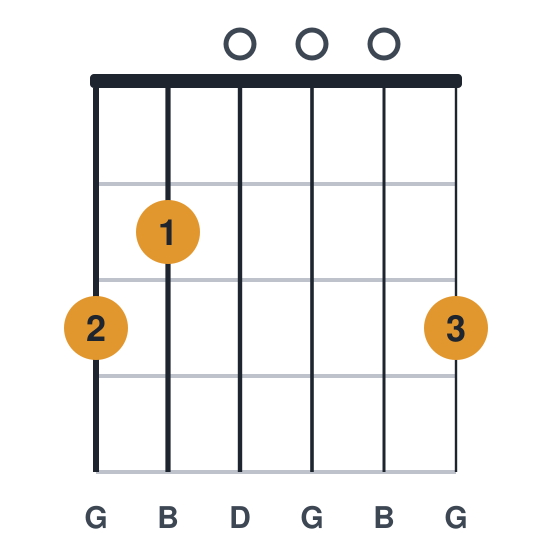
- Gthe plain major
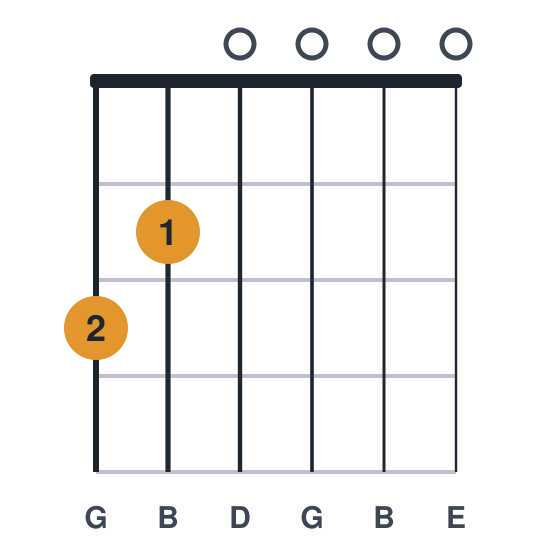
- G6the other soft colour on the same major


Other G chords
Gmaj9 guitar chord chart (300002) from melodician.com