G5 Guitar Chord
G5 is the G power chord. It has two notes: G and D. There is no third, so it is neither G major nor G minor. It is played with the root on the low E string at the 3rd fret.

Root on the low E string at the 3rd fret, the fifth on the A above it and the root again on the D. Movable: slide this grip anywhere and it is still a power chord.
How to play G5, step by step
- Index finger: 3rd fret, low E string
- Ring finger: 5th fret, A string
- Pinky finger: 5th fret, D string
- Strum only the low E and A and D strings, and stop the downstroke at the D.
This is the movable power chord grip in its most used position. Learn it here and you can play any power chord by sliding the same two fingers.
More ways to play G5
There are 3 common G5 shapes in total: the standard one at the top of the page, plus these, easiest first. You only ever need one. Tap any card to hear it.

Leaner than the three string version and quicker to move. Under distortion the missing octave is barely noticeable.

Thick and solid, with the doubled root filling it out. This is the sound of a rock rhythm part.
If it sounds noisy
- Strings above the chord ring out
- G5 uses the bottom three strings. Let the fretting fingers flatten slightly so they touch the G string, and stop the strum at the D.
- The root is weak
- The index holds the 3rd fret of the low E, the thickest string on the guitar. It needs firm pressure right behind the fret.
- Noise between chords
- Release the pressure without lifting the hand away, then move. Sliding while pressed is what makes the scraping sound.
What makes it a G5
G · D 1 5
G5 is the root G plus its perfect fifth, D. The B that would make it G major, or the B flat that would make it G minor, is left out.
With no third, the chord takes distortion cleanly and stays neutral about the key. That combination is why almost all rock rhythm guitar is built from these two note shapes rather than full chords.
G5 vs G
Full G major uses all six strings and three different notes. G5 uses three strings and two notes, so it is narrower but much easier to control at volume.
There is also a practical difference: G5 moves. Sliding the shape up two frets gives A5, down one gives F sharp 5. A full G chord has to be rebuilt for every new root.
G5 in major keys
Every note of G5 sits inside these keys. See how it works alongside the other chords in each one.
G5 chord questions
Is G5 major or minor?
Neither, and that is deliberate. Without a third the chord fits over both, which is why riffs use it.
Where is G5 on the neck?
The usual position is the 3rd fret of the low E string. The same chord is also at the 10th fret of the A string, and a smaller version sits on the D string at the 5th.
How do I mute the strings I am not playing?
Let the fretting fingers lean just far enough to rest on the string above the chord, and stop the strumming hand after the third string. Both hands share the job.
What chords go with G5?
C5 and D5 complete the key of G. Together with F5 they cover most rock progressions in that key.
Do I need distortion for a power chord?
No, but they were designed for it. Clean, two notes can sound bare; with overdrive they sound full, because the amp adds the harmonics a full chord would provide.
Chords to learn next
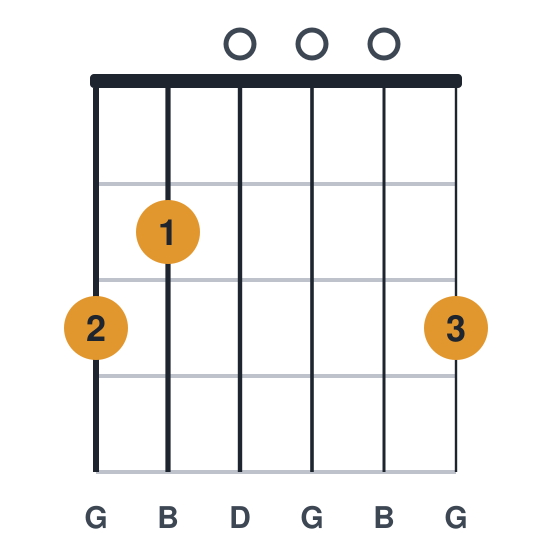
- Gthe full major chord on the same root
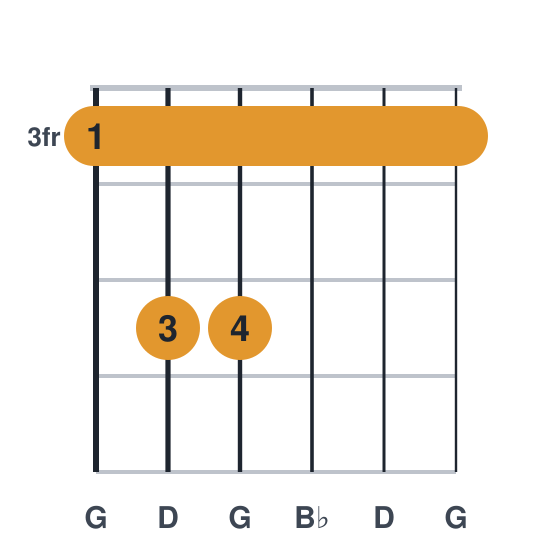
- Gmthe minor a power chord leaves undecided
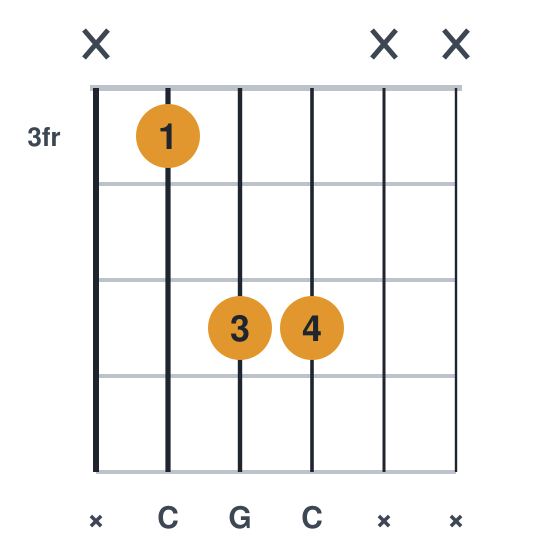
- C5the power chord a fourth up, the next move in most riffs
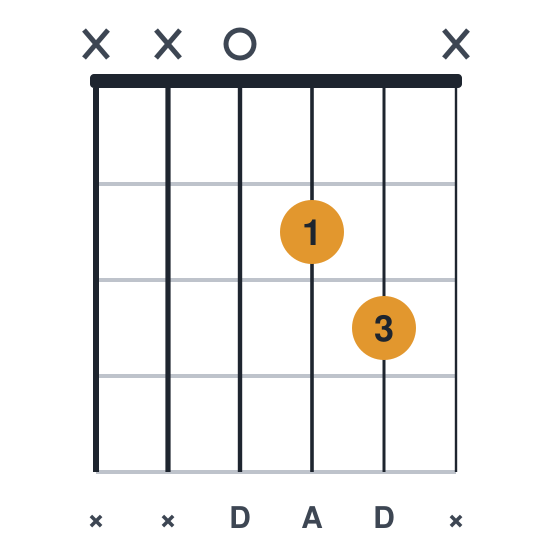
- D5the power chord a fifth up, the other half of most riffs


Other G chords
G5 guitar chord chart (355xxx) from melodician.com