Gm6 Guitar Chord
Gm6 is the G minor sixth chord. It has four notes: G, B flat, D and E. There is no open shape, so it is played as a barre at the 3rd fret with the sixth added on the B string.

The full six string minor sixth: index barred across the neck at the 3rd fret, root on the low E, and the sixth up on the B string. Movable, so this one grip is any minor sixth chord.
How to play Gm6, step by step
- Index finger: press flat across the low E to high E strings at fret 3
- Ring finger: lay across the A and D strings at fret 5
- Pinky finger: 5th fret, B string
- Strum all six strings.
This is the movable minor sixth grip. Slide the whole shape up two frets for Am6, down three for Em6, and nothing about the hand changes.
More ways to play Gm6
There are 3 common Gm6 shapes in total: the standard one at the top of the page, plus these, easiest first. You only ever need one. Tap any card to hear it.

Tighter and higher than the six string version, and easier to keep clean. All four notes are close together, so the chord speaks quickly.

Bright for a minor sixth. The open top string rings above the shape and gives the sixth plenty of air.
If the barre lets notes drop
- Strings under the barre are dead
- Roll the index onto its outer edge so the bone holds the strings rather than the soft pad, and keep it right behind the 3rd fret.
- The pinky note is weak
- The pinky takes the sixth on the B string at the 5th fret. It is the note that names the chord, so give it its own pressure check before you strum.
- The chord sounds thick and unclear
- Six strings with a barre is a lot of chord. Play the strings one at a time and check every one speaks, then strum lightly.
What makes it a Gm6
G · B♭ · D · E 1 ♭3 5 6
Gm6 is a G minor triad (G, B flat, D) with an E added, the major sixth. The third is flat and the sixth is not, which is the tension a minor sixth chord is built on.
The same four notes read from E spell Em7b5. Gm6 is also a C9 with no C in it, so it points naturally toward an F chord.
Gm6 vs Gm7
Gm7 adds an F to G minor and sounds smooth and finished. Gm6 adds an E, one fret lower, and the chord stops sounding finished at all.
Both are barre shapes at the 3rd fret, so they are easy to compare directly: hold Gm7, then move the top of the chord to bring in the sixth. The change in mood is much bigger than the change in the hand.
Gm6 in major keys
Every note of Gm6 sits inside these keys. See how it works alongside the other chords in each one.
Gm6 chord questions
What is the difference between Gm6 and Gm7?
Gm7 has an F, Gm6 has an E. One fret apart in pitch, and a large difference in feeling: Gm7 rests, Gm6 pushes.
Is there a Gm6 without a barre?
The five string shape further down the page uses no full barre; the index covers only two strings. There is no open position Gm6, because the shapes that would give one land past the 12th fret.
Is Gm6 the same as Em7b5?
The four notes are identical. G in the bass gives Gm6; E in the bass gives Em7b5, the half diminished chord.
Why is the sixth major in a minor chord?
The sixth is counted from the major scale and is left alone; only the third is flattened. That mix of flat third and natural sixth is the sound of a minor sixth chord.
Where is Gm6 used?
As the iv chord in D, as a tonic minor in jazz, and as a chord that leads toward F or C. It is common in swing and in minor key standards.
Chords to learn next
- Gmthe plain minor underneath it
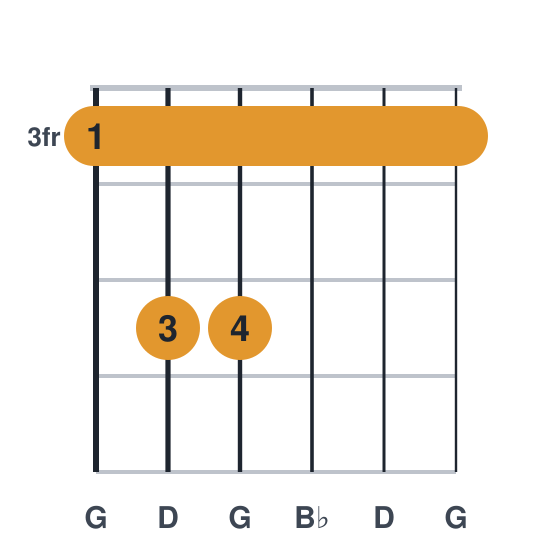
- Gm7a flat seventh instead of the sixth, the softer option
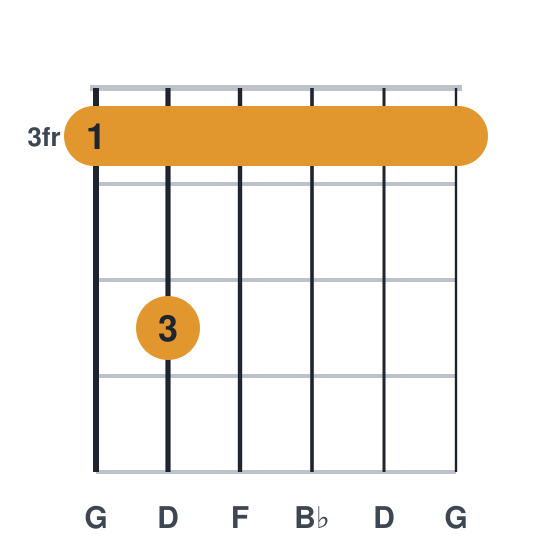
- Gthe major on the same root
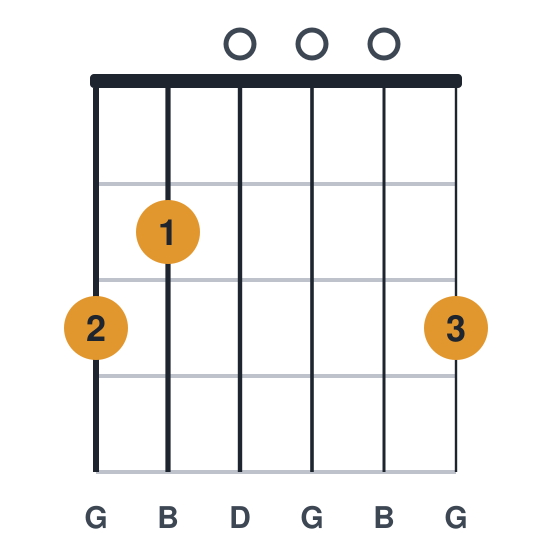
- G6the major sixth on the same root
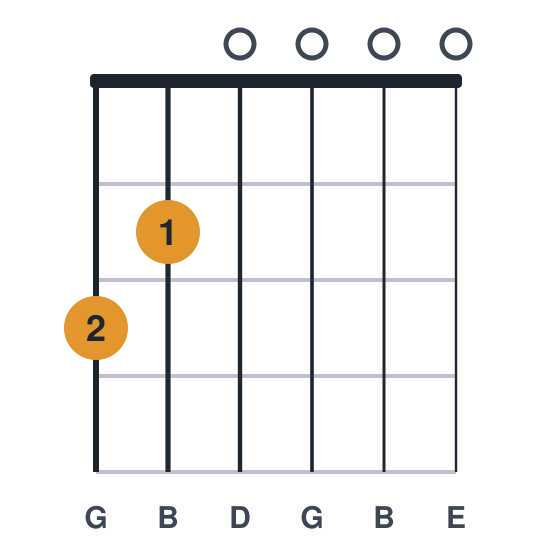


Other G chords
Gm6 guitar chord chart (355353) from melodician.com