G9 Guitar Chord
G9 is the G dominant ninth chord. It has five notes: G, B, D, F and A. The open shape takes two fingers, one on each outside string, and the four strings between them ring open.

Middle finger on the low E at the 3rd fret, index on the high E at the 1st. Everything between them is open.
How to play G9, step by step
- Middle finger: 3rd fret, low E string
- Index finger: 1st fret, high E string
- Let the A, D, G and B strings ring open.
- Strum all six strings.
Two fingers, one at each end of the neck, with four open strings between them. Keep both upright so the middle strings are not muted by a leaning knuckle.
More ways to play G9
There are 3 common G9 shapes in total: the standard one at the top of the page, plus these, easiest first. You only ever need one. Tap any card to hear it.

Full and low, with the ninth ringing on the top string over a heavy root. This is the shape that sounds like a horn section.

Tight and percussive, sitting in the middle of the neck. Easy to choke with the palm and hit again, which is why funk rhythm lives on this grip.
If the A string sounds
- The muted string is ringing
- Lay the index a little flatter so its underside touches the A string. It should be deadened, not pressed.
- The barre lets notes drop
- Roll the index onto its outer edge so the bone holds the low E and D strings at the 3rd fret, and keep it right behind the fret wire.
- The top note is weak
- The pinky takes the ninth on the high E at the 5th fret. That note gives the chord its name, so check it rings on its own.
What makes it a G9
G · B · D · F · A 1 3 5 ♭7 9
G9 is a G7 chord with a ninth added: G, B, D and F make G7, and the A on top makes it G9. The muted A string keeps the shape playable without changing what the chord is.
It is the V chord of C and the I chord of a blues in G. Ninths hold all the tension of a dominant seventh and dress it up, which is why blues, funk and soul players reach for them constantly.
G9 vs G7
G9 is G7 with an A added. Both pull toward C, but G7 is the plain, folky sound and G9 is the arranged, brass section sound.
G7 is also much easier: an open shape with three fingers, against a barre with a muted string for G9. The ninth is worth learning anyway, because it is the chord that makes a blues in G sound professional.
G9 in major keys
Every note of G9 sits inside these keys. See how it works alongside the other chords in each one.
G9 chord questions
What is the difference between G9 and Gadd9?
G9 contains an F, the flat seventh, so it is a dominant chord that wants to resolve. Gadd9 has no seventh: it is G major with an A added, and it sounds bright and stable.
Why is the A string muted?
The shape has no room for it. The index deadens the A string while barring the low E and D, which is standard practice for this grip and lets the rest of the chord sit where the hand can reach.
Is there an easier G9?
Yes. The shape further down the page puts the root on the A string at the 10th fret and needs no barre. It is higher up the neck but easier to hold.
Where is G9 used?
As the V chord in C, as the I chord of a blues in G, and throughout funk and soul rhythm guitar.
Is G9 the same as G7?
No. G9 adds the ninth, A, on top of G7. They do the same job and sound quite different doing it.
Chords to learn next
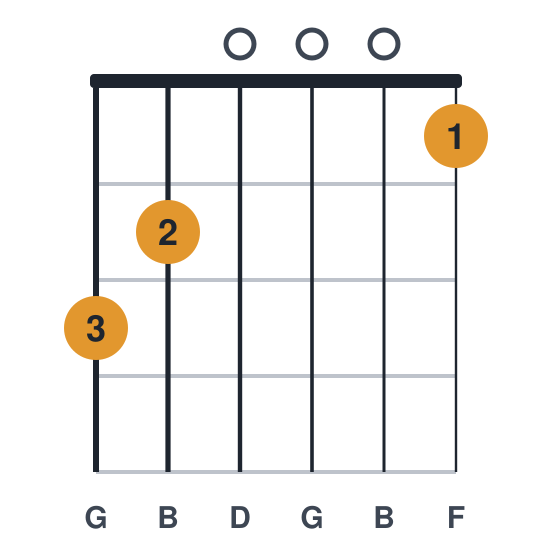
- G7the same chord without the ninth
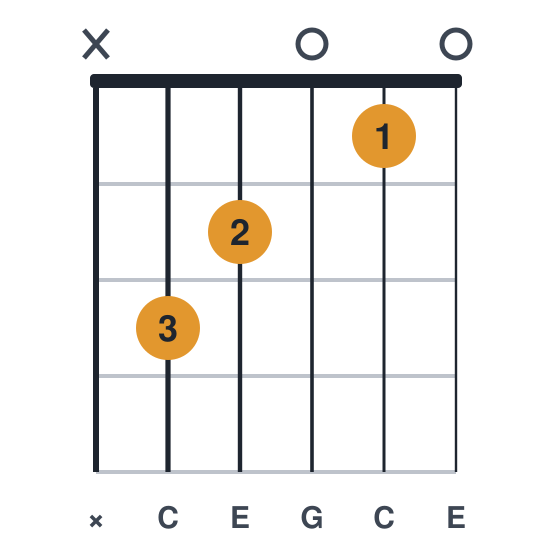
- Cwhere G9 wants to resolve
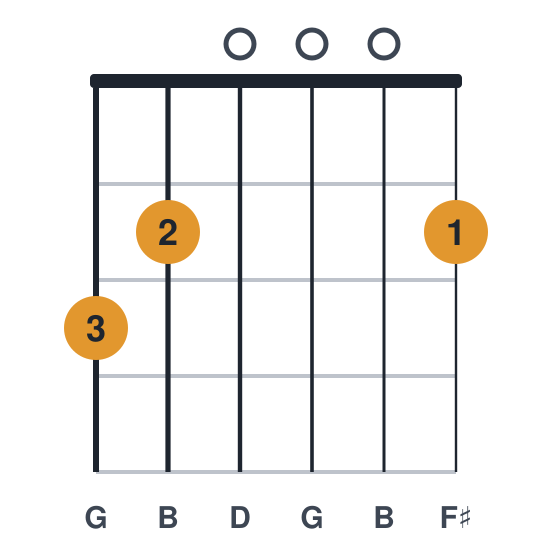
- Gmaj7the other seventh built on this root
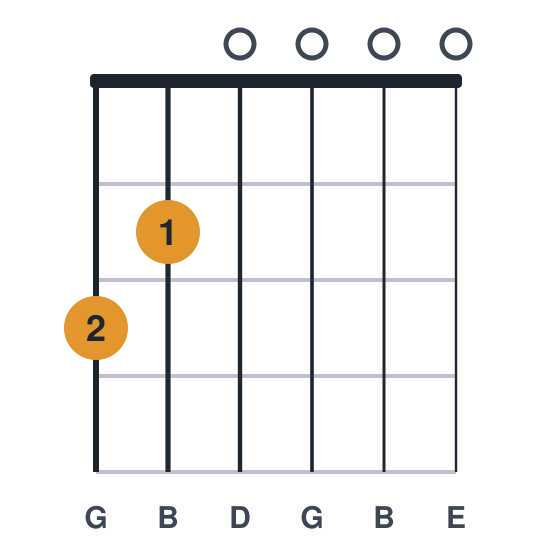
- G6the same root with a sixth instead of a seventh


Other G chords
G9 guitar chord chart (300001) from melodician.com