Fm9 Ukulele Chord
Fm9 is the F minor ninth chord. It has five notes: F, A flat, C, E flat and G. Four strings can hold four of them, so every shape drops the fifth. The standard shape is three fingers around the 4th to 6th frets with the open g string ringing as the ninth.

Three fingers in a staircase on the C, E and A strings with the open g string ringing as the ninth. The fifth is left out, as in every ninth shape.
How to play Fm9 on ukulele, step by step
- Index finger: 4th fret, E string
- Middle finger: 5th fret, C string
- Ring finger: 6th fret, A string
- Leave the G string open. Strum all four strings.
The open g string is the ninth, the note the chord is named for. Because ukulele tuning is re-entrant, that open string rings high in the middle of the chord rather than underneath it.
More ways to play Fm9
There are 2 common Fm9 shapes: the standard one at the top of the page, plus these further up the neck. You only ever need one. Tap any card to hear it.

Close voiced and controlled, all four notes fretted high on the neck. Darker and tidier than the open shape.
If it sounds unclear
- The open g string is muffled
- Your fretting fingers all sit on the other three strings. Keep them arched so the open G, the ninth, rings on; it is the note that makes the chord.
- The diagonal feels awkward
- Index at 4, middle at 5, ring at 6, each on its own string. Point the fingers slightly along the neck and place them in that order; the shape is a staircase, not a bar.
- The ring finger deadens the E string
- It holds the flat seventh at the 6th fret of the A string, right beside the index. Curl it so its underside clears the E string it passes over.
What makes it an Fm9
F · A♭ · C · E♭ · G 1 ♭3 5 ♭7 9
Fm9 is an Fm7 chord with a ninth added: F, A flat, C and E flat make the minor seventh, and the G makes it a ninth. The shapes here keep the root, flat third, flat seventh and ninth and drop the fifth, the one note a ninth chord can spare.
It is the ii chord of E flat, a horn and gospel key, which is where the chord does most of its work. Where a chart says Fm7, the ninth is very often the sound the record actually makes.
Fm9 vs Fm7
Fm9 adds a G, the ninth, to the four notes of Fm7. The ninth sits a whole step above the root an octave up and lifts the minor out of plainness without brightening it.
Fm7 on a ukulele is a compact two finger alternating shape in the first three frets; Fm9 moves up the neck and borrows the open g string. Different addresses, same family, one note of difference.
Fm9 chord questions
What is the difference between Fm9 and Fm7?
Fm9 has a G, the ninth, added to the four notes of Fm7. Same chord, more colour on top.
Why is there no C in the shape?
Four strings sound and the chord has five notes, so one has to go. The fifth adds weight but no character, which is why ninth chords always drop it.
What is the high shape at the 8th fret for?
It is the movable minor ninth claw with the root on the g string, the same grip as Ebm9 two frets lower. It puts all four notes under the fingers, with nothing left ringing.
Where is Fm9 used?
As the ii chord in E flat and across soul, gospel and jazz. On a ukulele it is also simply a prettier F minor when the song can afford it.
Why does the ninth ring so high?
It sits on the open g string, and ukulele tuning is re-entrant: the g is tuned an octave up. The ninth lands in the upper half of the chord, which is exactly where it glows.
Chords to learn next
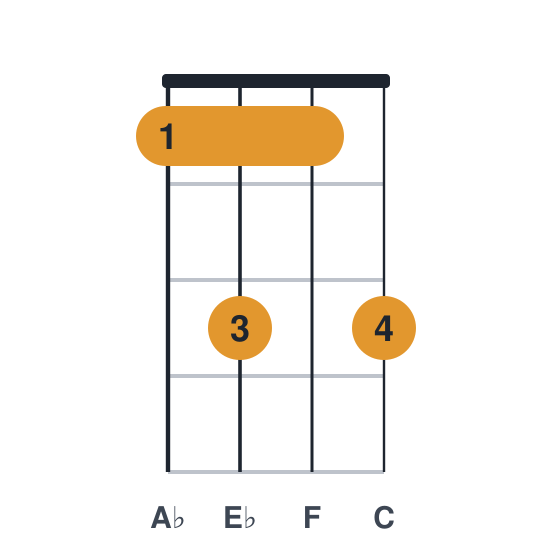
- Fm7the same chord without the ninth
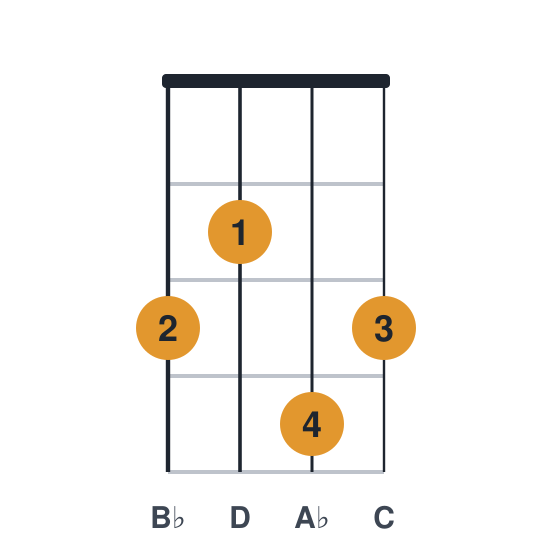
- Bb9the V chord Fm9 leans toward
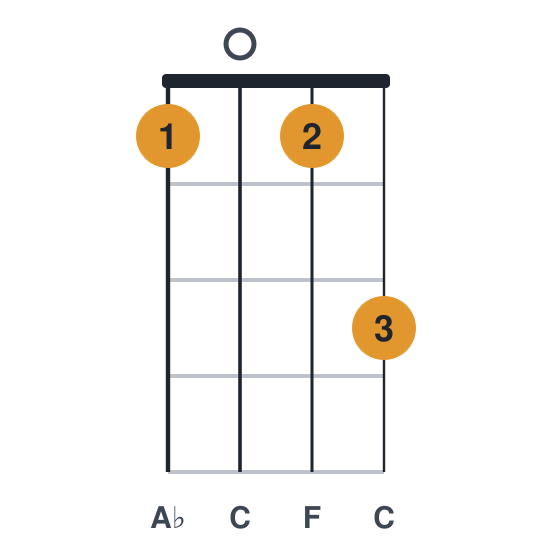
- Fmthe plain minor
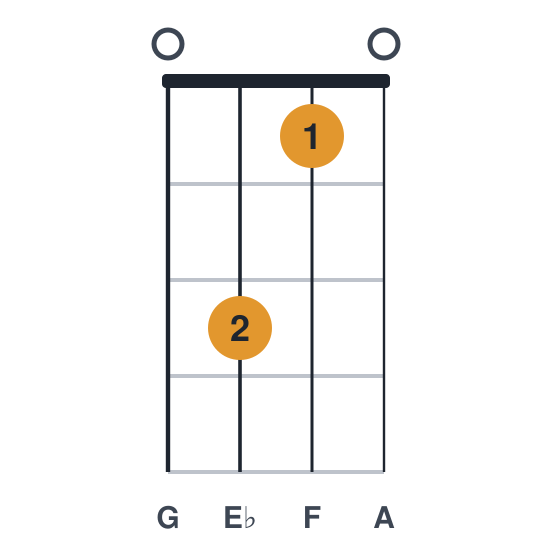
- F9the same ninth built on a major third


Other F chords
Fm9 ukulele chord chart (0546) from melodician.com