F6 Ukulele Chord
F6 is the F sixth chord. It has four notes: F, A, C and D. The main shape adds two fingers to plain F: index at the 1st fret of the E string, middle and ring at the 2nd, pinky at the 3rd, with no barre.

Plain F plus two fingers: the C string at the 2nd fret and the A string at the 3rd. Four fingertips, no barre.
How to play F6 on ukulele, step by step
- Index finger: 1st fret, E string
- Middle finger: 2nd fret, G string
- Ring finger: 2nd fret, C string
- Pinky finger: 3rd fret, A string
- Strum all four strings.
Start from plain F, 2010: keep those two fingers where they are, then add the ring at the 2nd fret of the C string and the pinky at the 3rd of the A string. F6 is F with the open strings claimed.
More ways to play F6
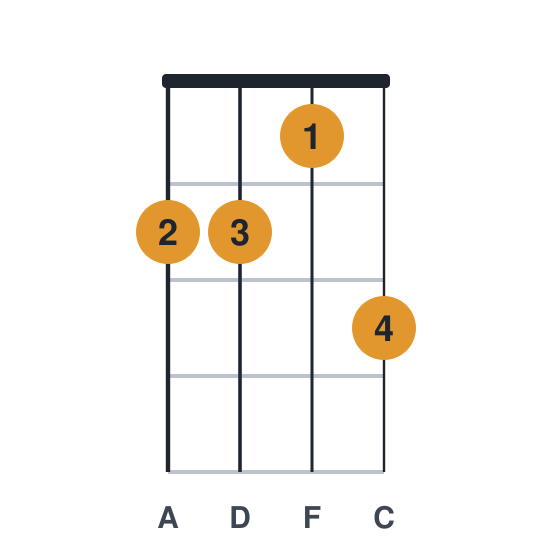
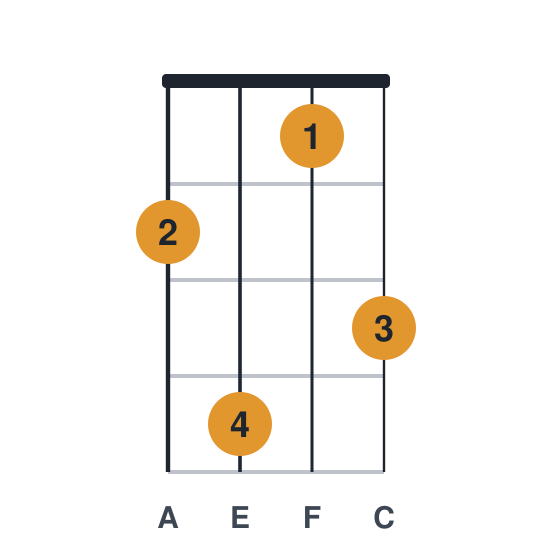
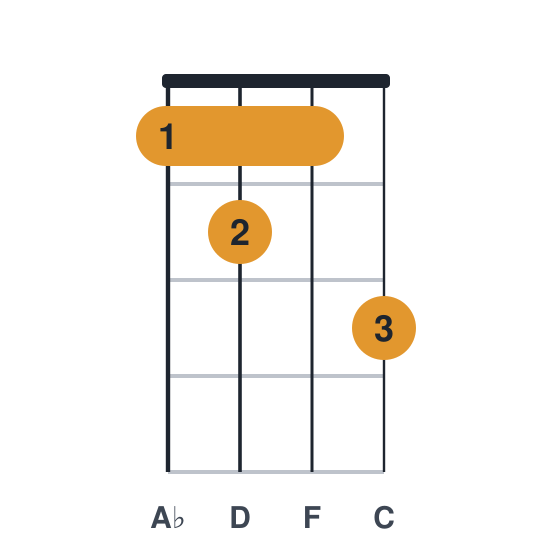
There are 3 common F6 shapes: the standard one at the top of the page, plus these further up the neck. You only ever need one. Tap any card to hear it.

Even and punchy in the middle of the neck; one flat finger can carry it.

High and glassy. The F6 for a final strum rather than a verse.
If it sounds muddy or buzzy
- The four fingers tangle
- The shape stacks two fingers at the 2nd fret with one below and one above. Bring the knuckles over the fretboard so each finger drops straight down onto its tip.
- The E string note disappears
- The index at the 1st fret sits lowest and gets leaned on by the ring finger above it. Arch the ring finger higher and re-test the E string alone.
- It sounds like plain F
- Check the C and A strings are fretted, not open. Open, they turn the chord back into F; fretted, they carry the fifth and the sixth.
What makes it an F6
F · A · C · D 1 3 5 6
F6 is an F major triad (F, A, C) with a sixth added: the D, nine half steps above the root. Nothing is taken away, so the chord still sounds like F, just rounder and warmer.
The same four notes read from D spell Dm7. A ukulele has no bass string to pick between the two names, so the surrounding chords pick instead. One grip serves both symbols.
F6 vs Fmaj7
F6 adds a D to the F triad; Fmaj7 adds an E. A whole step below the root against a half step below it: the sixth settles, the major seventh drifts.
In songs in F the sixth is the ending colour. Swing, doo wop and Hawaiian playing use F6 as their everyday F, which is most of where a ukulele player will meet it.
F6 chord questions
Is F6 the same as Dm7?
The four notes are the same: F, A, C and D. With no bass note on a ukulele, the chords around it decide which name your ear hears.
Is F6 hard to play?
It uses all four fingers in three frets, so it is busier than plain F, but nothing stretches and nothing barres. It comes together quickly from the plain F shape.
What is the difference between F6 and F7?
F6 adds a D and rests; F7 adds an E flat and pushes toward B flat. One ends phrases, the other moves them.
When would I use F6?
As a softer F: ending songs in F, and all through swing era and island style strumming, where the sixth is the default major colour.
Chords to learn next
- Fthe plain major underneath it
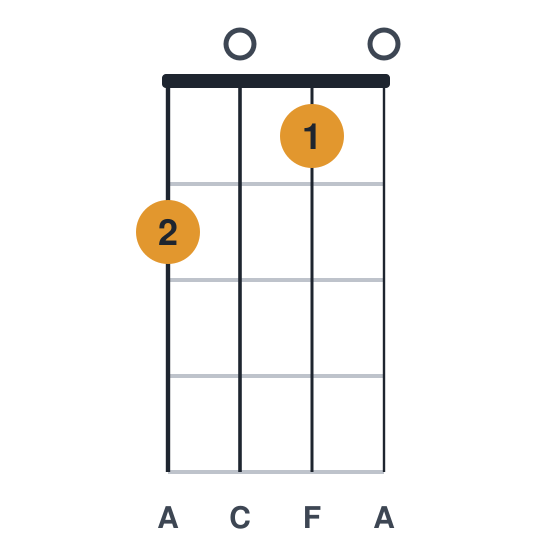
- Dm7the same four notes counted from D
- Fmaj7the other note people add to a major chord
- Fm6the same sixth over a minor chord


Other F chords
F6 ukulele chord chart (2213) from melodician.com