Fadd9 Ukulele Chord
Fadd9 is the F added ninth chord. It has four notes: F, A, C and G. On a ukulele it is a genuine one finger chord: fret the E string at the 1st fret and the three open strings already supply the ninth, the fifth and the third.

One finger: the E string at the 1st fret. The open g, C and A strings supply the ninth, fifth and third around it.
How to play Fadd9 on ukulele, step by step
- Index finger: 1st fret, E string
- Leave the G, C and A strings open. Strum all four strings.
Plain F and Fadd9 are one finger apart: lift the middle finger off the G string of a plain F and the open G becomes the ninth. Putting it back turns the colour off again.
More ways to play Fadd9
There are 3 common Fadd9 shapes: the standard one at the top of the page, plus these further up the neck. You only ever need one. Tap any card to hear it.

Fuller and rounder, with the open ninth now chiming against mid-neck notes. A lovely picking voicing.

Wide and glassy: nearly an octave between the open string and the highest note, so the chord sounds spread out and airy.
If it buzzes or sounds wrong
- The chord sounds thin
- With three open strings, most problems are strumming, not fretting. Strum from the wrist across all four strings evenly; clipping the open G string loses the ninth.
- The F is quiet
- The single fretted note carries the root. Press the index right behind the 1st fret of the E string, on the fingertip, so the root holds its own against the open strings.
- It sounds like plain F
- You are probably still fretting the G string at the 2nd fret out of habit. In Fadd9 that string stays open; the open G is the whole point.
What makes it an Fadd9
F · A · C · G 1 3 5 9
Fadd9 is an F major triad (F, A, C) with a ninth added: G. The ninth is the second note of the F scale moved up an octave, and because the third (A) stays in the chord, Fadd9 keeps its major character and simply gains air.
The ukulele is built for this chord: the open g, C and A strings are already the ninth, fifth and third, so one finger completes it. The re-entrant high g is why the ninth rings at the top of the chord even though it is the leftmost string on the diagram.
Fadd9 vs Fsus2
Both chords add a G to F, but Fsus2 removes the third (A) to make room for it, while Fadd9 keeps the third and stacks the G alongside. Fadd9 is still clearly F major, just brighter; Fsus2 is hollow and undecided.
On a ukulele the two are almost the same grip: mute or lift the open A string's note out of the picture and the floatier sus sound appears. Keeping the A ringing keeps the chord major.
Fadd9 chord questions
Is Fadd9 really a one finger chord on the ukulele?
Yes. Fret the E string at the 1st fret and strum all four strings. The open G is the ninth, the open C the fifth and the open A the third.
How is Fadd9 different from plain F?
Plain F frets the G string at the 2nd fret, adding a second A to the chord. Fadd9 leaves that string open, so the G rings as the added ninth. One finger versus two.
What is the difference between Fadd9 and F9?
F9 also contains a flat seventh, E flat, which makes it a dominant chord with a blues flavour. Fadd9 adds only the G and stays a bright major chord.
What is the difference between Fadd9 and Fsus2?
Both contain a G, but Fsus2 removes the third (A) and floats, while Fadd9 keeps the third and still sounds fully major.
Can I play Fadd9 instead of F?
Usually yes, especially in the keys of F and C where the added G belongs. Since it is easier than plain F, many players drift to it without noticing.
Chords to learn next
- Fthe plain major
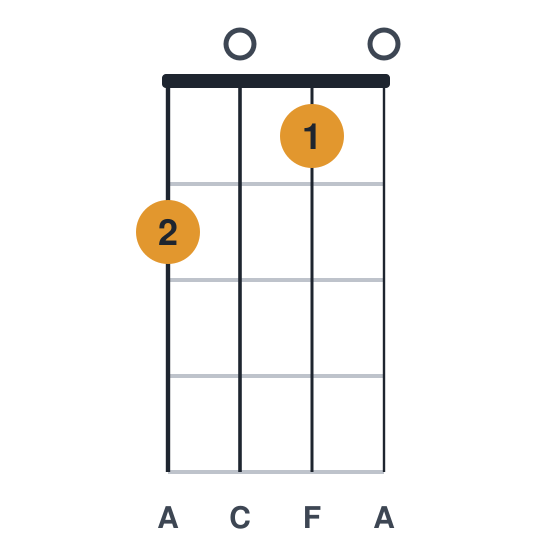
- Fsus2the 9 without the 3
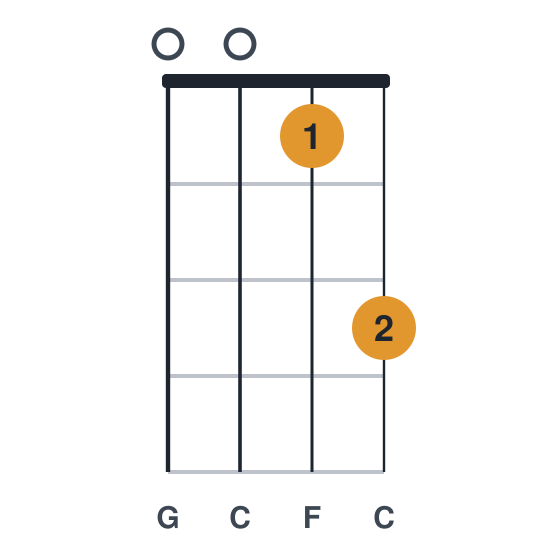
- Fmaj7another colour on the same major
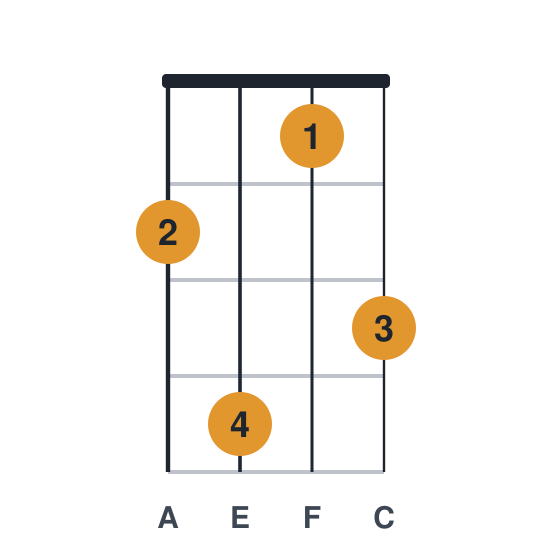
- Fmaj9the same ninth with the seventh under it
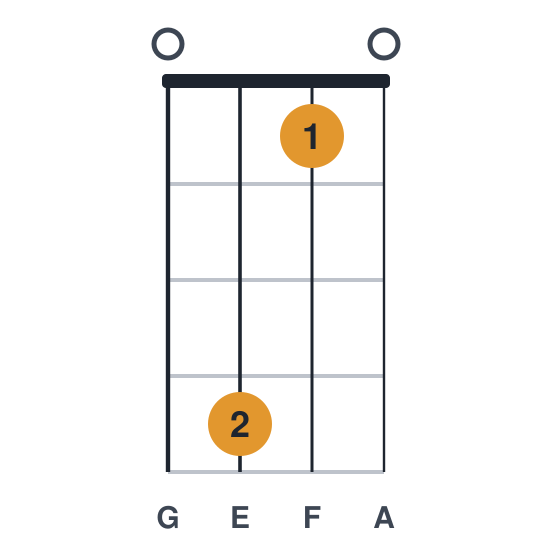


Other F chords
Fadd9 ukulele chord chart (0010) from melodician.com