Bm Ukulele Chord
Bm is the B minor chord. It has three notes: B, D and F sharp. The standard shape is usually the first minor barre a ukulele player learns: index flat across the C, E and A strings at the 2nd fret, ring finger on the 4th fret of the G string.

The first minor barre: index across the C, E and A strings at the 2nd fret, ring finger on the 4th fret of the G string. Movable to any fret.
How to play Bm on ukulele, step by step
- Index finger: press flat across the C to A strings at fret 2
- Ring finger: 4th fret, G string
- Strum all four strings.
The grip is the Bbm shape moved up one fret, and it keeps moving: two more frets and it becomes C#m. Learn the shape once and the fret decides the name.
More ways to play Bm
There are 3 common Bm shapes: the standard one at the top of the page, plus these further up the neck. You only ever need one. Tap any card to hear it.

Warmer than the barre, with the flat third ringing on top.

Bright and cutting this far up the neck, with the fifth doubled around the root.
If the barre will not ring
- The A string is quiet at the barre's far end
- Roll the index toward its outer edge so the bone presses rather than the soft pad, and check the barre has not drifted back from the 2nd fret.
- The G string note chokes
- The ring finger reaches two frets past the barre. Curl it so it lands on its tip just behind the 4th fret rather than lying across the neck.
- Everything buzzes
- The thumb belongs flat on the back of the neck, roughly opposite the barre. If it creeps over the top edge the hand cannot squeeze.
What makes it a Bm
B · D · F♯ 1 ♭3 5
Bm is a minor triad: B, a minor third D, and a fifth F sharp. It is the relative minor of D major and works as the ii chord of A and the vi chord of D, so it appears anywhere those guitar friendly keys do, which on the ukulele means most play along situations.
Bm is also a rite of passage: the first common chord with no open strings. The reward is the grip itself, because the same shape slid along the neck plays every minor chord, one fret down for Bbm, two up for C#m.
Bm vs B
B major is 4322, with the middle finger holding a D sharp on the 3rd fret of the C string. Bm flattens exactly that note: the barre claims the C string at the 2nd fret for a D natural. One fret, and major becomes minor.
Both chords plant the index at the 2nd fret, so moving between them keeps the hand anchored. That makes the pair a good barre exercise as well as a common change in the key of D.
Bm chord questions
Why is Bm hard on the ukulele?
It is the first common chord with no open strings, and it needs a barre. The barre only covers three strings, though, which makes it a far smaller hurdle than its guitar cousin.
Is there an easier Bm?
Not meaningfully. All three shapes on this page fret every string, and the standard barre is the easiest of them. The good news is that the same effort buys every other minor barre chord.
What is the difference between Bm and B?
One note: Bm has a D where B major has a D sharp. In the shapes, the C string sits under the barre at the 2nd fret instead of being fretted at the 3rd.
What keys use Bm?
It is the ii chord of A major, the vi chord of D major, and the home chord of B minor.
Is the Bm grip movable?
Yes. Slide it down one fret for Bbm or up two for C#m; the shape names a new minor chord at every fret.
Chords to learn next
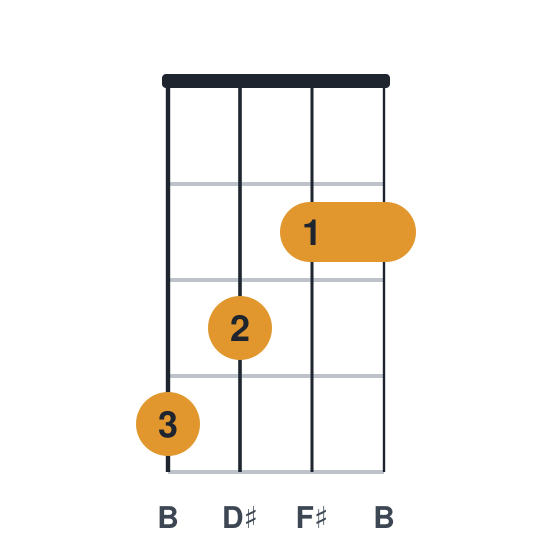
- Bthe major version of Bm
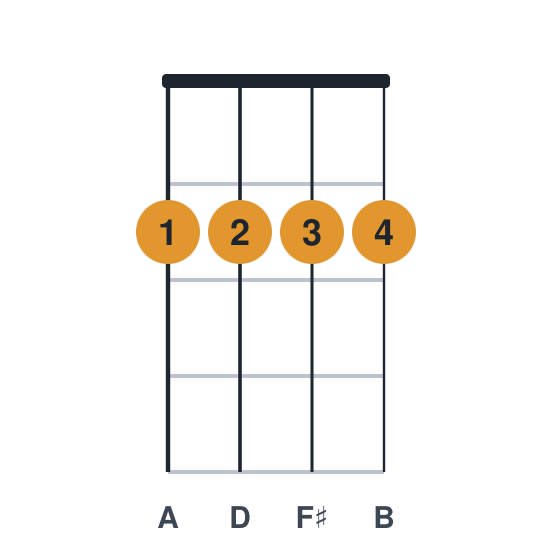
- Bm7adds a seventh for a softer Bm
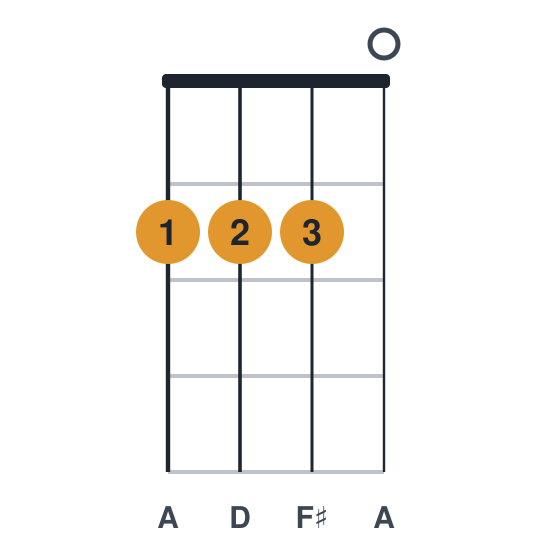
- Dthe relative major of Bm
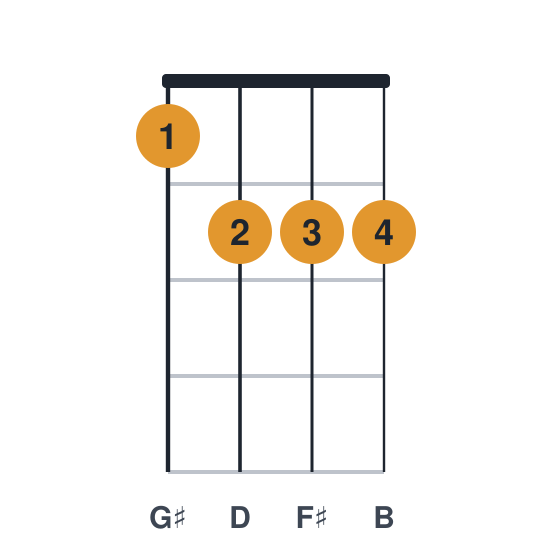
- Bm6the same minor with an old-fashioned sixth


Other B chords
Bm ukulele chord chart (4222) from melodician.com