Bmaj9 Ukulele Chord
Bmaj9 is the B major ninth chord. It has five notes: B, D sharp, F sharp, A sharp and C sharp, so on four strings the fifth is left out. One shape holds the remaining four notes inside a reachable window: all four fingers between the 3rd and 6th frets, which is why this page shows a single voicing.

All four fingers in a box between the 3rd and 6th frets: root on the G string, then third, seventh and ninth. The grip is movable; wherever the G string note lands names the chord.
How to play Bmaj9 on ukulele, step by step
- Index finger: 3rd fret, C string
- Middle finger: 4th fret, G string
- Ring finger: 4th fret, A string
- Pinky finger: 6th fret, E string
- Strum all four strings.
This is the movable maj9 grip: the root sits on the G string, and the same finger pattern two frets lower is Amaj9. Learn it once and the whole family opens up.
If the shape will not ring
- The pinky cannot reach the 6th fret
- It has the E string while three fingers hold the 3rd and 4th frets. Point the ukulele's neck up a little and let the elbow drop; the pinky lands from above instead of stretching sideways.
- One note in the middle buzzes
- Four fingers in a four fret box crowd each other. Arch every finger so each presses with its tip and touches nothing else.
- The chord sounds tight but dull
- Press each note just behind its fret, not in the middle of the space between frets. Near the wire the notes ring with the least force.
What makes it a Bmaj9
B · D♯ · F♯ · A♯ · C♯ 1 3 5 7 9
Bmaj9 is a Bmaj7 chord with a ninth added: B, D sharp, F sharp and A sharp make the seventh chord, and the C sharp on top makes it a ninth. On a ukulele the fifth, F sharp, is dropped: four strings hold four notes, and the fifth is the note the ear misses least. What stays is root, third, seventh and ninth, the four notes that are the chord.
It is the I chord of B major at its softest. B major lives more in band and piano music than in strum-alongs, so this chord tends to appear when a song in E wants its V chord softened, or when a chart written for horns lands on a ukulele.
Bmaj9 vs Bmaj7
Bmaj9 is Bmaj7 with a C sharp added. The seventh already settles the chord; the ninth widens it and gives it the sound of an arrangement rather than a strum.
On the ukulele they cost the same kind of effort, a compact fretted box each, so the choice is colour: Bmaj7 rests quietly, Bmaj9 glows a little wider.
Bmaj9 chord questions
Why does this page show only one shape?
Every combination of the four strings was checked, and only one keeps the notes that make Bmaj9 itself inside a window a hand can cover. A second shape would have to drop a note the chord cannot lose.
Why is there no F sharp in the chord?
Four strings hold four of the five notes, and the fifth is the one a ninth chord can spare. Root, third, seventh and ninth are all here.
What is the difference between Bmaj9 and B9?
B9 has an A natural, the flat seventh, and pulls toward E. Bmaj9 has an A sharp and stays put.
Is Bmaj9 hard to play?
It is one of the harder shapes on the site: all four fingers at once. Practising the same grip two frets lower as Amaj9, where the frets are wider apart, is the easiest way in.
Where is Bmaj9 used?
As the I chord of B major in jazz and soul, and anywhere Bmaj7 is written and a wider, softer sound is wanted.
Chords to learn next
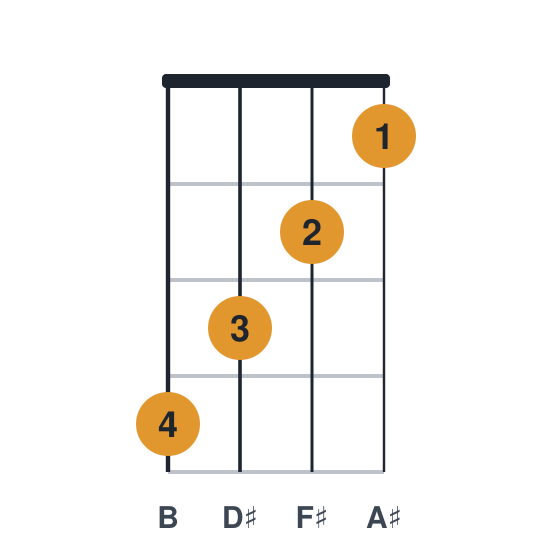
- Bmaj7the same chord without the ninth
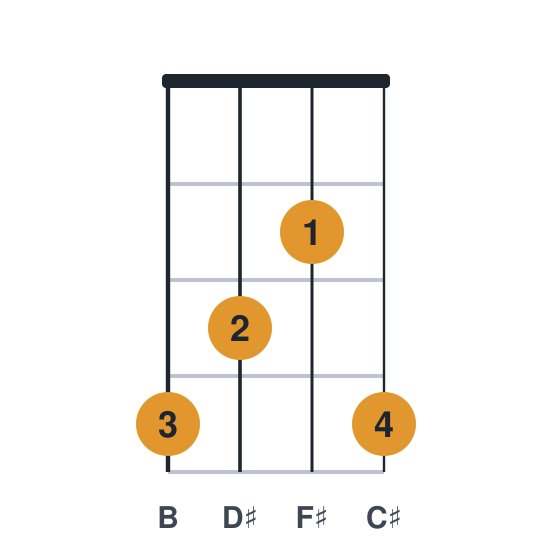
- Badd9the ninth without the seventh
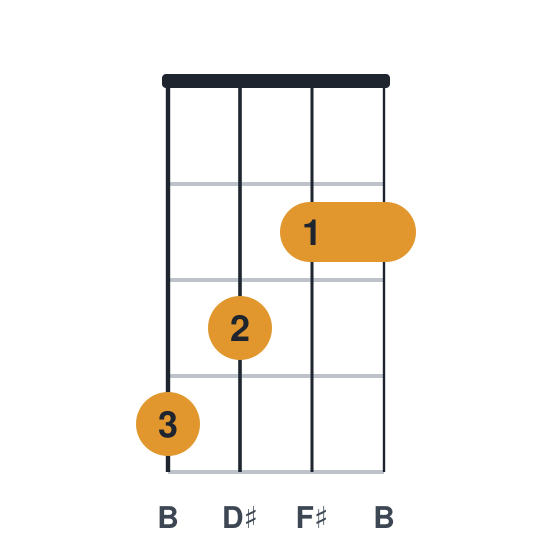
- Bthe plain major
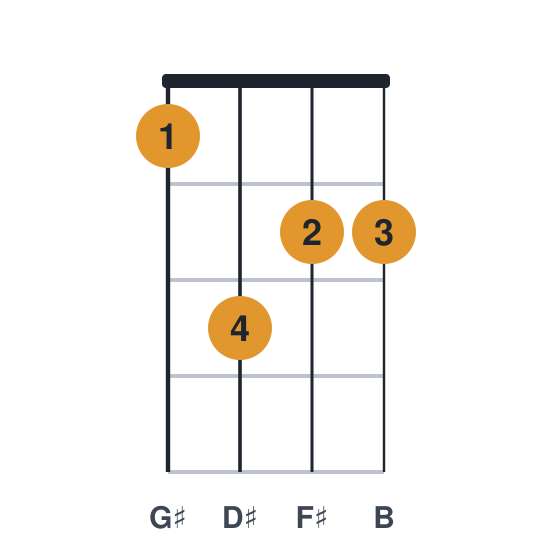
- B6the other soft colour on the same major


Other B chords
Bmaj9 ukulele chord chart (4364) from melodician.com