Badd9 Ukulele Chord
Badd9 is the B added ninth chord. It has four notes: B, D sharp, F sharp and C sharp. B has no open strings to lean on, so the standard shape uses all four fingers between the 2nd and 4th frets, one string each.

All four fingers between the 2nd and 4th frets, one string each: index on the E string, middle on the C, ring and pinky side by side at the 4th.
How to play Badd9 on ukulele, step by step
- Index finger: 2nd fret, E string
- Middle finger: 3rd fret, C string
- Ring finger: 4th fret, G string
- Pinky finger: 4th fret, A string
- Strum all four strings.
The shape has no open strings, so it moves: slide everything down one fret and the same grip plays Bbadd9, up one and it is Cadd9.
More ways to play Badd9
There are 3 common Badd9 shapes: the standard one at the top of the page, plus these further up the neck. You only ever need one. Tap any card to hear it.

Smoother than the four finger shape, with the ninth ringing from the g string at the top of the chord.

High and glassy. On most ukuleles this sits over the body, so it is more of an ending flourish than an everyday grip.
If it buzzes or feels cramped
- Fingers pile up at the 4th fret
- The ring and pinky fingers share the 4th fret on neighbouring strings. Stagger them, ring finger back in the fret space and pinky against the fret wire, so each has room to press straight down.
- The E string dies
- The index holds the E string at the 2nd fret underneath the arch of the other three fingers. Keep the wrist low so the index stays curled on its tip.
- The chord sounds sour
- With four fretted strings there are four chances to be one fret out. Check the pairs: C string at 3, E string at 2, G and A strings both at 4.
What makes it a Badd9
B · D♯ · F♯ · C♯ 1 3 5 9
Badd9 is a B major triad (B, D sharp, F sharp) with a ninth added: C sharp. The ninth is the second note of the B scale moved up an octave, and because the third (D sharp) stays in the chord, Badd9 keeps its major character and gains brightness.
It is the I chord of B, the IV of F sharp and the V of E, and the added C sharp belongs to all three keys. B is a common key for guitar-led rock and for horn-free pop, so the chord turns up more often than its awkward shape suggests.
Badd9 vs Bsus2
Both chords add a C sharp to B, but Bsus2 removes the third (D sharp) to make room for it, while Badd9 keeps the third and stacks the C sharp alongside. Badd9 stays clearly major with extra shimmer; Bsus2 floats, neither major nor minor.
The fingering difference on a ukulele is small but the sound difference is not. If the chart says B and you add colour, add9 is the safe choice because the chord stays major.
Badd9 chord questions
Why does Badd9 need four fingers?
B major has no open strings on a ukulele in standard tuning, and the add9 needs four different notes. Each string gets its own finger; there is no shortcut shape at the bottom of the neck.
What is the difference between Badd9 and B9?
B9 also contains a flat seventh, A, which makes it a dominant chord with a blues flavour. Badd9 adds only the C sharp and stays a bright major chord.
What is the difference between Badd9 and Bsus2?
Both contain a C sharp, but Bsus2 removes the third (D sharp) and floats, while Badd9 keeps the third and still sounds fully major.
Is there an easier Badd9?
Easier is relative here: the barre version at the 6th fret trades four separate fingers for a barre plus one. If barres suit your hand, it is the calmer grip.
Can I play Badd9 instead of B?
Usually yes, especially in the keys of B and E where the added C sharp belongs. The extra note softens one of the ukulele's stiffer chords.
Chords to learn next
- Bthe plain major
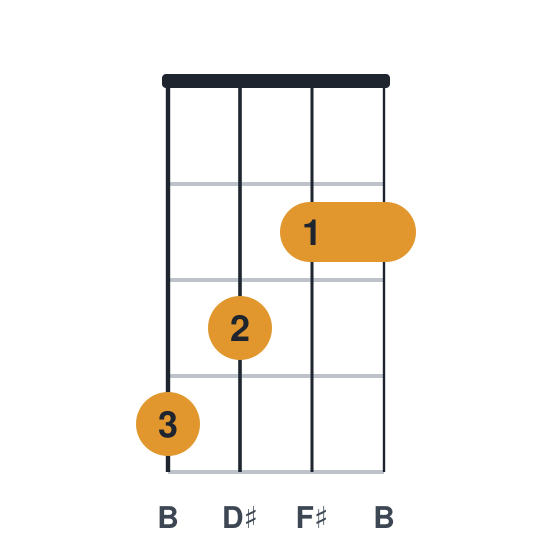
- Bsus2the 9 without the 3
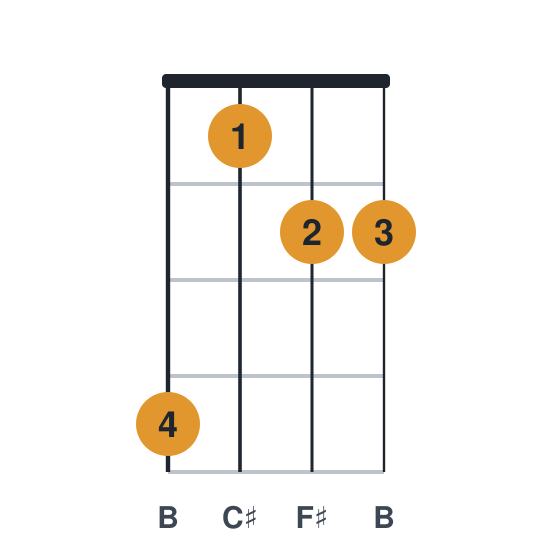
- Bmaj7another colour on the same major
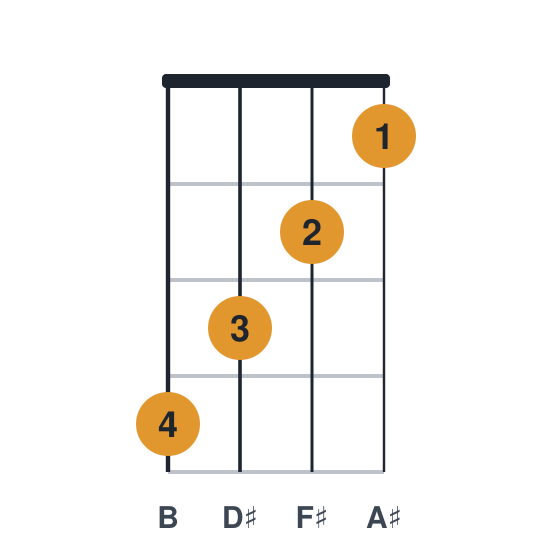
- Bmaj9the same ninth with the seventh under it
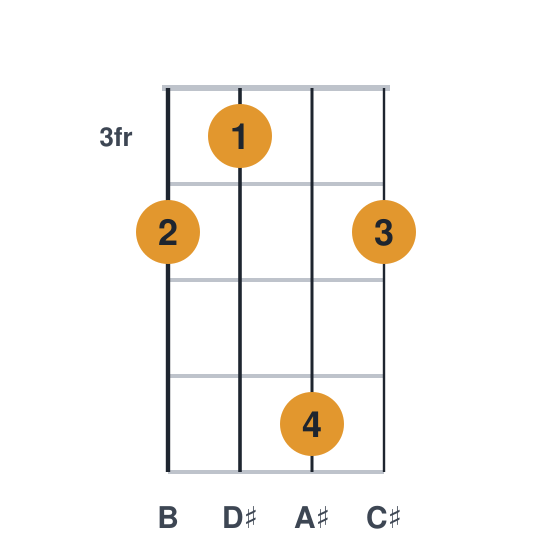


Other B chords
Badd9 ukulele chord chart (4324) from melodician.com