Bm6 Ukulele Chord
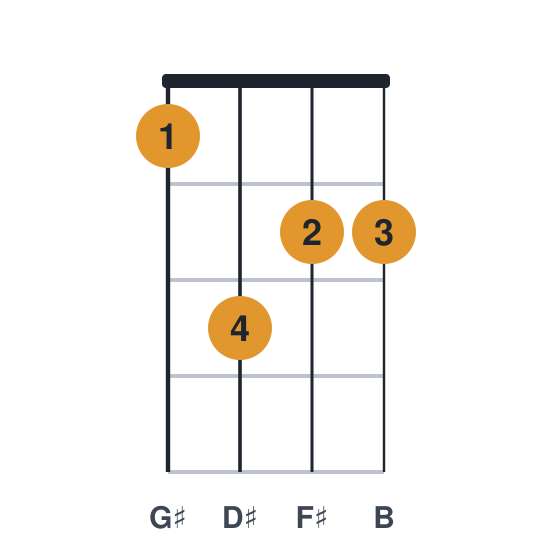
Bm6 is the B minor sixth chord. It has four notes: B, D, F sharp and G sharp. The standard ukulele shape uses all four fingers, one per string, with the G sharp sixth on the G string at the 1st fret.

One finger per string: index on the G string at the 1st fret, then middle, ring and pinky across the 2nd. The G sharp sixth sits at the bottom left of the shape.
How to play Bm6 on ukulele, step by step
- Index finger: 1st fret, G string
- Middle finger: 2nd fret, C string
- Ring finger: 2nd fret, E string
- Pinky finger: 2nd fret, A string
- Strum all four strings.
The shape is a fretted note on every string, so it is movable: the same claw two frets higher is C#m6. It is also Bm 4222 rethought low on the neck: same chord family, different corner of the fretboard.
More ways to play Bm6
There are 3 common Bm6 shapes: the standard one at the top of the page, plus these further up the neck. You only ever need one. Tap any card to hear it.

Fuller than the standard shape, with the root leading the strum. Movable, so this one grip is every minor sixth chord.

Bright and compact this high up the neck. Useful for a chord stab or when the melody sits above the 5th fret.
If the four fingers fight
- The chord buzzes somewhere
- With all four fingers down at once, one of them is usually sitting too far from its fret. Walk the strings one at a time, find the buzz, and nudge that finger up against the fret wire.
- The index mutes the C string
- It holds the G string at the 1st fret and tends to lean over. Stand it up on its tip; the C string needs room to ring at the 2nd fret under the middle finger.
- The hand cramps
- Four fingers inside two frets is a tight box. Drop the thumb to the middle of the neck and let the wrist come forward slightly, and the fingers land from above instead of from the side.
What makes it a Bm6
B · D · F♯ · G♯ 1 ♭3 5 6
Bm6 is a B minor triad (B, D, F sharp) with a G sharp added: the major sixth, nine half steps above the root. The third is flat and the sixth is not, and that mismatch is what makes a minor sixth chord sound restless rather than simply sad.
The same four notes read from G sharp spell G#m7b5, the half diminished chord. Bm6 is the iv chord in F sharp and a standby of jazz and older pop; in a minor key it often walks the line Bm, Bm6, Bm7 to keep a held minor chord moving.
Bm6 vs Bm7
Both add a fourth note to B minor. Bm7 adds an A and settles the chord; Bm6 adds a G sharp, one fret lower, and unsettles it. A semitone of difference, and the mood flips.
On the ukulele Bm7 is a flat barre at the 2nd fret and Bm6 is this four finger claw, so the m6 asks a little more of the hand. The m7 is the chord pop reaches for; the m6 belongs to jazz, tango and older songwriting.
Bm6 chord questions
What is the difference between Bm6 and Bm7?
One note. Bm7 has an A, Bm6 has a G sharp, one fret lower. The seventh relaxes the chord, the sixth sharpens it.
Why does a minor chord have a major sixth?
Because the sixth is measured from the major scale, not from the minor third. In a minor sixth chord the third is flattened and the sixth is not, and that mismatch is the whole sound of the chord.
Is Bm6 the same as G#m7b5?
The four notes are the same: B, D, F sharp and G sharp. With the music centred on B you hear Bm6; centred on G sharp it is G#m7b5, the half diminished chord.
Is there an easier Bm6?
The barre form at the 4th fret further down the page trades the four finger claw for a small barre plus two fingers. Neither is beginner territory, but hands disagree about which is friendlier; try both.
Where is Bm6 used?
As the iv chord in F sharp, as a colour on the tonic in B minor, and throughout jazz and older popular song, where minor sixths routinely stand in for minor sevenths.
Chords to learn next
- Bmthe plain minor underneath it
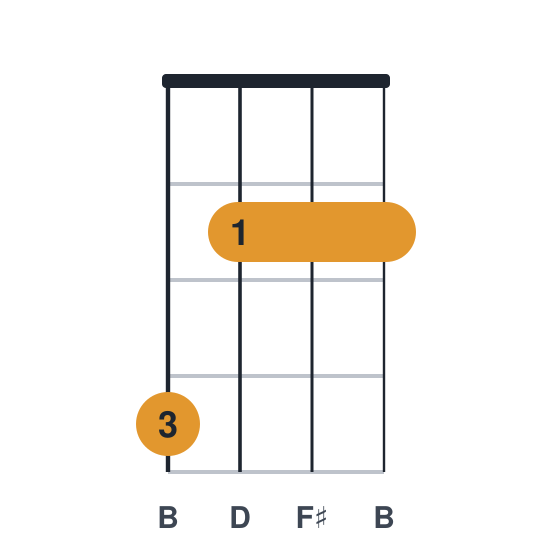
- Bm7a flat seventh instead of the sixth, the softer option
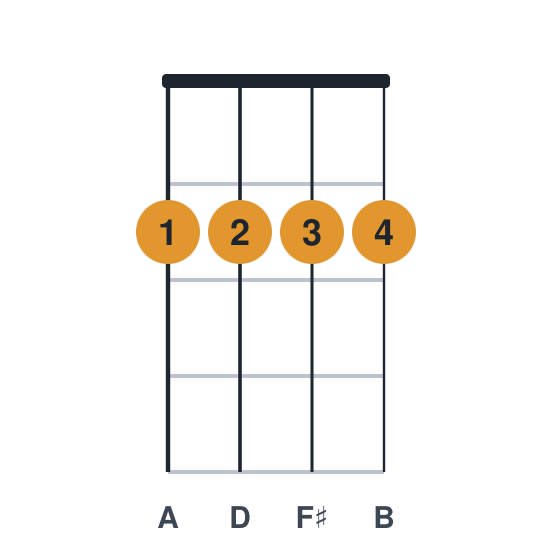
- Bthe major on the same root
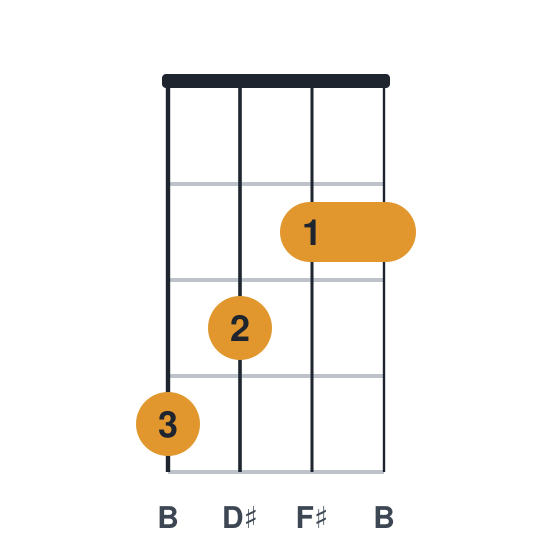
- B6the major sixth on the same root


Other B chords
Bm6 ukulele chord chart (1222) from melodician.com