E9 Ukulele Chord
E9 is the E dominant ninth chord. On ukulele it keeps four of its five notes: E, G sharp, D and F sharp, with the fifth left out. The standard shape sits between the 4th and 7th frets, the lowest place all four notes fit.

Four fingers between the 4th and 7th frets: third on the E string, ninth on the C, seventh on the G, root on the A string at the 7th.
How to play E9 on ukulele, step by step
- Index finger: 4th fret, E string
- Middle finger: 6th fret, C string
- Ring finger: 7th fret, G string
- Pinky finger: 7th fret, A string
- Strum all four strings.
The grip is the movable ninth shape with its root on the A string at the 7th fret. It sits mid neck because E9's notes simply do not gather any lower on four strings; there is no easier open form to miss.
More ways to play E9
There are 2 common E9 shapes: the standard one at the top of the page, plus these further up the neck. You only ever need one. Tap any card to hear it.

More open and ringing than the standard grip, with the loose root underneath fretted colour. A good sustained or final chord.
If the shape is not clean
- The index reach feels long
- The index holds the E string at the 4th fret while the other fingers sit at the 6th and 7th. Point the neck slightly upward and the diagonal stops fighting the wrist.
- Notes choke at the 7th fret
- Frets narrow up the neck, so fingertips must land closer together and more upright than near the nut. Slow the placement down; the frets meet you halfway.
- The chord jumps out louder than others
- Mid neck notes on a ukulele speak quickly. Strum this shape a touch lighter than open chords around it so the ninth colours rather than shouts.
What makes it an E9
E · G♯ · B · D · F♯ 1 3 5 ♭7 9
E9 is an E7 chord with a ninth added: E, G sharp and D carry the seventh chord and the F sharp is the ninth. A ukulele has four strings for those five notes, so the fifth, B, is left out, the same note guitar ninth grips drop.
It is the V chord of A, a home key for ukulele players, and the I chord of a blues in E. Anywhere E7 pushes to A, E9 makes the same push with rounder edges.
E9 vs E7
E9 adds an F sharp on top of E7. Both drive toward A, but E7 snarls a little and E9 swings.
E7 on ukulele sits in the first two frets and E9 lives at the 4th and above, so the two chords also move the hand to different parts of the neck. Songs that use both get contrast in position as well as colour.
E9 chord questions
Why is there no B in these shapes?
A ukulele has four strings and E9 has five notes. The fifth is the note a ninth chord misses least, so it is the one left out.
Why does the standard shape sit at the 4th fret?
E9's four kept notes never land inside one low position on gCEA strings. The 4th to 7th fret block is the first place on the neck where the whole chord fits under four fingers.
What is the difference between E9 and Eadd9?
E9 contains D, the flat seventh, and pulls toward A. Eadd9 has no seventh at all and is simply a brighter E major.
Is E9 movable?
Yes. Nothing in either shape is open, so the standard grip one fret down is Eb9 and one fret up is F9 in a new position. The root sits on the A string.
Where is E9 used?
As the V chord in A, as the I chord of a blues in E, and in soul and funk, where ninths do the work plain sevenths would.
Chords to learn next
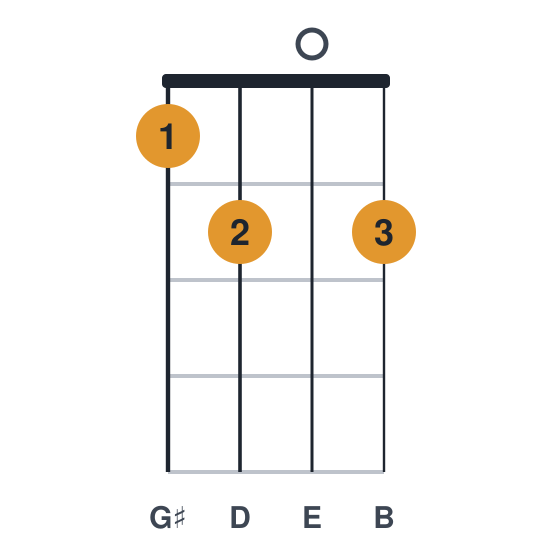
- E7the same chord without the ninth
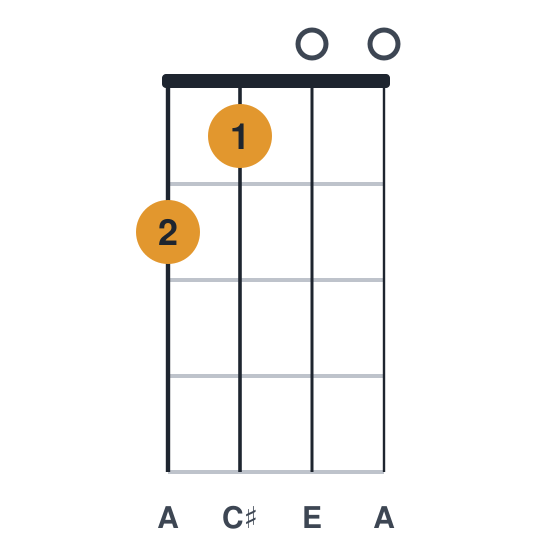
- Awhere E9 wants to resolve
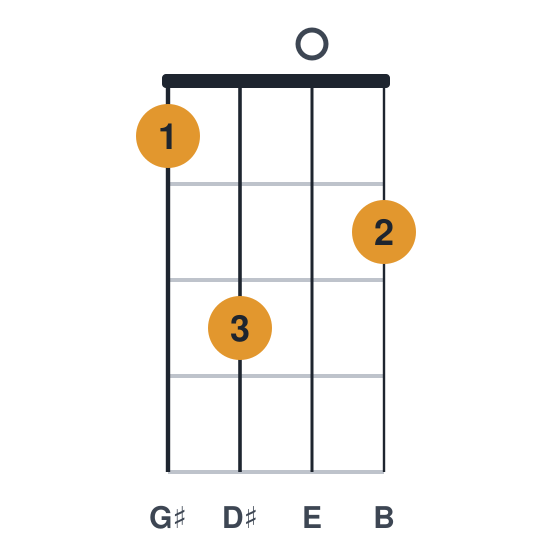
- Emaj7the other seventh built on this root
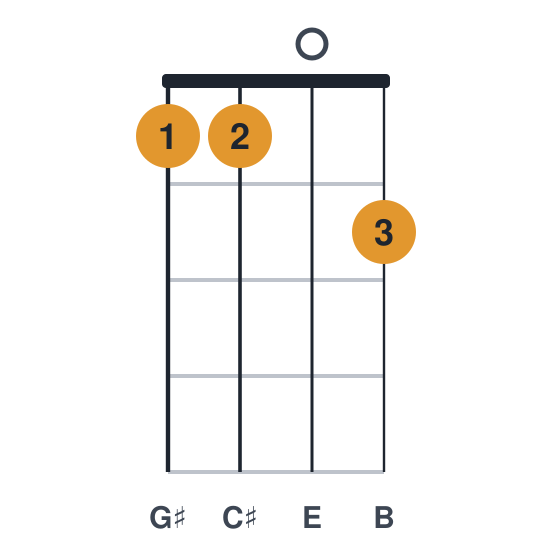
- E6the same root with a sixth instead of a seventh


Other E chords
E9 ukulele chord chart (7647) from melodician.com