Abdim Ukulele Chord
Abdim is the A flat diminished chord, a diminished triad. It has three notes: A♭, B and D. You will also see it written G#dim, and that spelling explains its favourite job: G♯ climbs one fret home to A. The standard shape sits in the first four frets, one finger per string, no barre.

One finger per string in the first four frets: root on the G string, doubled on the E string under the pinky. Movable, so one fret up it becomes Adim.
How to play Abdim on ukulele, step by step
- Index finger: 1st fret, G string
- Middle finger: 2nd fret, C string
- Ring finger: 2nd fret, A string
- Pinky finger: 4th fret, E string
- Strum all four strings.
Nothing in this shape uses an open string, so it is movable: slide everything up one fret and you are playing Adim, and so on up the neck.
More ways to play Abdim
There are 2 common Abdim shapes: the standard one at the top of the page, plus these further up the neck. You only ever need one. Tap any card to hear it.

Thinner and higher, with the tension pushed to the edges of the chord. Good for echoing the low shape without repeating it.
If it rattles or goes quiet
- The pinky note on the E string buzzes
- The pinky sits three frets above the index, and the stretch pulls it back from the 4th fret. Bring the elbow in slightly so the pinky can stand up close behind its fret.
- The 1st fret note sounds dull
- Frets near the nut need a touch more pressure. Move the index fingertip right behind the 1st fret of the G string rather than pressing harder from above.
- The C and A strings blur together
- The middle and ring fingers both sit at the 2nd fret. Curl both so each fingertip lands on its own string and neither leans on its neighbour.
What makes it an Abdim
A♭ · B · D 1 ♭3 ♭5
Abdim is two minor thirds stacked: A♭ up to B, then B up to D. Strict spelling calls those notes C♭ and E double flat, but charts use the plain names for the same pitches, and so does this page. Next to A♭ minor the fifth has shrunk by one fret, and that is the whole source of the tension.
Spelled G#dim it is the leading tone chord of A: G♯ pulls up to A, which is how most songs use it, as a one fret climb into A or A major's relative places. Wherever a writer wants the harmony to move up chromatically, this is the chord that does it.
Abdim vs G#m
G♯ minor is G♯, B and D♯. Abdim, spelled G#dim, keeps the root and the third but lowers the fifth by one fret to D. One note is the entire difference.
That one note splits their jobs completely: G♯m is a stable chord that can carry a whole section, while Abdim refuses to sit still and exists to connect, almost always up a fret to A. Play the two back to back and you will hear one settle and the other lean.
Abdim chord questions
Are Abdim and G#dim the same chord?
Yes, identical notes and identical shapes. G#dim is the more logical name when the chord resolves up to A, but both appear on charts.
Why does the diagram say B and D instead of Cb and Ebb?
Strict theory spells the A flat diminished triad A♭, C♭, E double flat. Those are the same pitches as B and D, and chord charts use the plain names because nobody thinks in double flats mid song.
What is the difference between Abdim and Abdim7?
Abdim is the three note triad on this page. Abdim7 adds a diminished seventh for four notes and a thicker, jazzier sound. Many ukulele songbooks chart the four note grip whenever they write dim; this page is the plain triad.
What does Abdim resolve to?
A, one half step up. Spell it G#dim and the move is obvious: G♯ climbs to A. It also works landing on A minor.
Is Abdim hard to play?
Middling. One finger per string with no barre, but the pinky has to reach the 4th fret while the index holds the 1st, and that stretch takes a little practice.
Chords to learn next
- AAbdim pulls up a half step to A
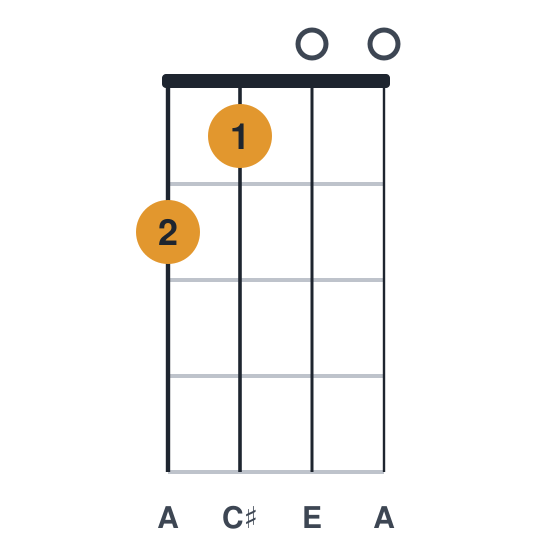
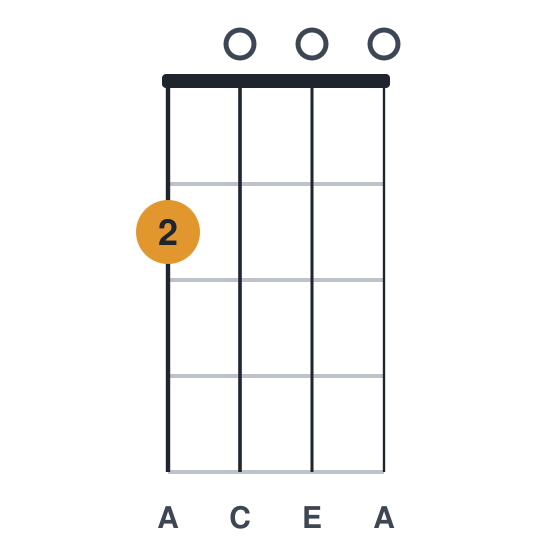
- Amthe minor resolution one fret up
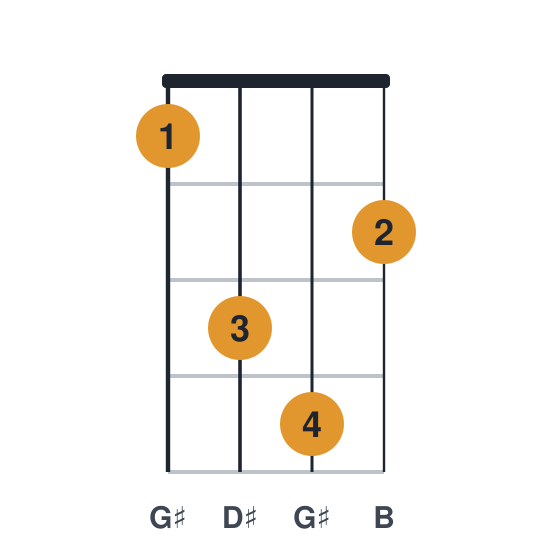
- G#mone note away from Ab minor
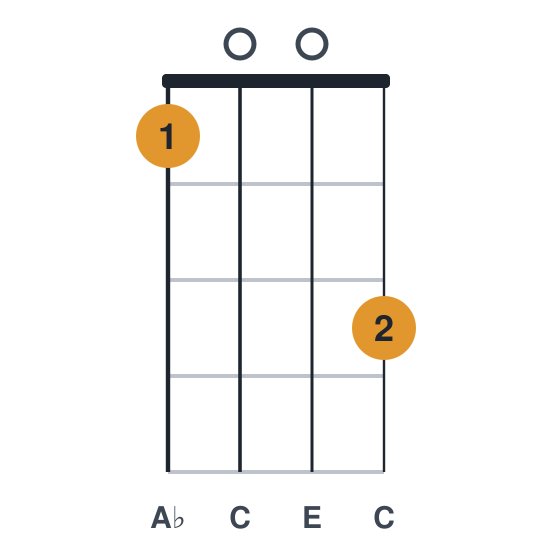
- Abaugthe other chord built out of equal intervals


Other Ab chords
Abdim ukulele chord chart (1242) from melodician.com