Abmaj9 Ukulele Chord
Abmaj9 is the A flat major ninth chord. Its five notes are A flat, C, E flat, G and B flat; on four strings the fifth is left out. The standard shape is just two fingers, because the open G and C strings already sound the seventh and the third. Almost no other A flat chord sits in open position on any instrument.

Two fingers and two open strings: the open G is the seventh and the open C the third, with the root on the E string at the 4th fret and the ninth on the A string at the 1st.
How to play Abmaj9 on ukulele, step by step
- Index finger: 1st fret, A string
- Middle finger: 4th fret, E string
- Leave the G and C strings open. Strum all four strings.
An A flat chord with open strings is a rare thing. The G and C strings happen to be the seventh and third of Abmaj9, so the hand only has to add the root and the ninth.
More ways to play Abmaj9
There are 2 common Abmaj9 shapes: the standard one at the top of the page, plus these further up the neck. You only ever need one. Tap any card to hear it.

A touch firmer than the standard shape, with the root leading the strum. Handy when the chord opens a phrase.
If it sounds unclear
- The gap between the two fingers feels wrong
- The index sits at the 1st fret and the middle at the 4th, an unusually wide pair. Let the wrist drop slightly and reach the middle finger over rather than stretching sideways.
- The open strings drown the fretted notes
- The root on the E string at the 4th fret has to speak. Press it firmly, right behind the fret, and strum evenly across all four strings.
- The chord sounds vague
- With two open strings ringing, the A flat itself is the anchor. If the E string note buzzes the chord turns into a cloud with no name.
What makes it an Abmaj9
A♭ · C · E♭ · G · B♭ 1 3 5 7 9
Abmaj9 is an Abmaj7 chord with a ninth added: A flat, C, E flat and G make the seventh chord, and the B flat on top makes it a ninth. On a ukulele the fifth, E flat, is dropped: four strings hold four notes, and the fifth is the one that adds the least. Here the open G is the seventh and the open C the third, an accident of tuning that makes this one of the easiest A flat chords anywhere.
It is the I chord of A flat major at its softest. A flat is a horn and piano key, so the chord lives in soul, gospel and jazz charts more than in campfire songbooks, but on a ukulele this grip costs less than most C chords.
Abmaj9 vs Abmaj7
Abmaj9 is Abmaj7 with a B flat added. The seventh already softens the chord; the ninth widens it into something that sounds deliberately arranged.
On the ukulele the ninth is also the easier chord: this Abmaj9 is two fingers and two open strings, while Abmaj7 needs three fingers fretted.
Abmaj9 chord questions
Is Abmaj9 the same as G#maj9?
Yes, one chord with two names. A flat is how the keys this chord lives in spell it, so that is the name used here.
Why is there no E flat in the shape?
Four strings hold four of the five notes, and the fifth is the note a ninth chord can spare. Root, third, seventh and ninth are all here.
Why is this A flat chord so easy?
Luck of the tuning. The open G and C strings happen to be the seventh and third of Abmaj9, so only the root and ninth need a finger.
What is the difference between Abmaj9 and Ab9?
Ab9 has a G flat, the flat seventh, and pulls toward D flat. Abmaj9 has a G natural and stays put.
Where is Abmaj9 used?
As the I chord of A flat major in soul, gospel and jazz, and anywhere Abmaj7 is written and a wider sound is wanted.
Chords to learn next
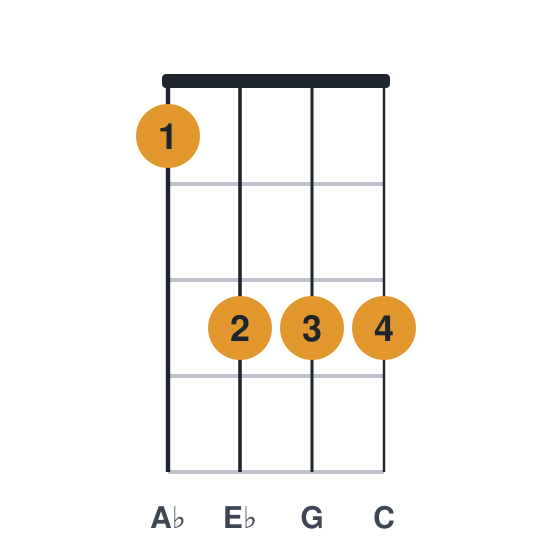
- Abmaj7the same chord without the ninth
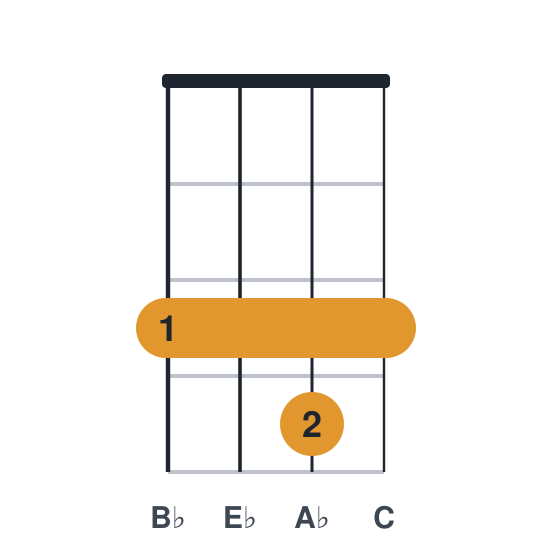
- Abadd9the ninth without the seventh
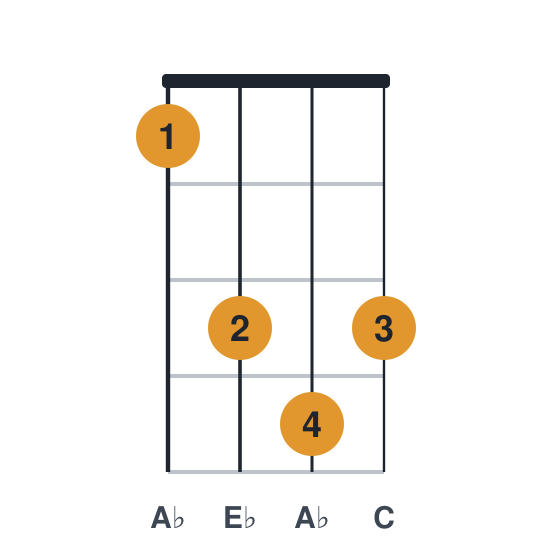
- Abthe plain major
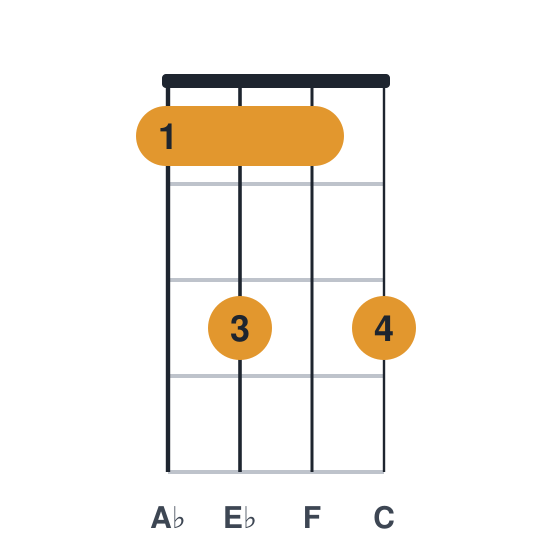
- Ab6the other soft colour on the same major


Other Ab chords
Abmaj9 ukulele chord chart (0041) from melodician.com