Ab9 Ukulele Chord
Ab9 is the A flat dominant ninth chord. On ukulele it keeps four of its five notes: A flat, C, G flat and B flat, with the fifth left out. The standard shape needs three fingers, because the open C string already supplies the third.

Three fingers in the first two frets with the open C string ringing as the third. The root sits on the G string at the 1st fret.
How to play Ab9 on ukulele, step by step
- Index finger: 1st fret, G string
- Middle finger: 1st fret, A string
- Ring finger: 2nd fret, E string
- Leave the C string open. Strum all four strings.
The open C string is doing quiet work here: C is the third of A flat, so one string of the chord comes free. Fret that string and the same grip becomes movable.
More ways to play Ab9
There are 3 common Ab9 shapes: the standard one at the top of the page, plus these further up the neck. You only ever need one. Tap any card to hear it.

Fuller and darker than the open shape, with the ninth clearly on top. The one to use when the chord needs weight.

Thin and bright, almost banjo like this high up. Useful for an accent stab more than for strumming a verse.
If the shape is not clean
- The open C string gets muffled
- The index sits on the G string right beside it. Keep that finger on its tip so the C string can ring free; it carries the third, and the chord goes hollow without it.
- The two 1st fret notes buzz
- The index and middle finger both press at the 1st fret, where the strings are stiffest. Press right behind the fret wire, not on top of it.
- The chord sounds like a plain seventh
- The B flat on the A string is the ninth. If the middle finger drifts to the open A, the colour note vanishes and Ab7 is what is left.
What makes it an Ab9
A♭ · C · E♭ · G♭ · B♭ 1 3 5 ♭7 9
Ab9 is an Ab7 chord with a ninth added: A flat, C and G flat carry the seventh chord and the B flat is the ninth. A ukulele has four strings for those five notes, so the fifth, E flat, is left out, the same note guitar ninth grips drop.
It is the V chord of D flat and the I chord of a blues in A flat. A flat is a piano and horn key, so a ukulele player usually meets this chord in soul, gospel and jazz material.
Ab9 vs Ab7
Ab9 adds a B flat on top of Ab7. Both resolve toward D flat, and the ninth is the smoother of the two.
Where A flat appears at all, the arrangement usually wants the ninth: horn section chords are ninths more often than plain sevenths.
Ab9 chord questions
Is Ab9 the same as G#9?
Yes, one chord with two names. A flat suits the flat keys this chord lives in, so it is the spelling used here.
Why is there no E flat in these shapes?
A ukulele has four strings and Ab9 has five notes. The fifth adds the least to a ninth chord, so every chart drops it first.
Is Ab9 hard to play on ukulele?
No. The standard shape is three fingers in the first two frets with an open string doing part of the work, which is easier than most ninth chords.
What is the difference between Ab9 and Abadd9?
Ab9 contains G flat, the flat seventh, and pulls toward D flat. Abadd9 has no seventh and just adds shimmer to a plain A flat major.
Where is Ab9 used?
As the V chord in D flat, as the I chord of a blues in A flat, and in soul, gospel and jazz arrangements.
Chords to learn next
- Ab7the same chord without the ninth
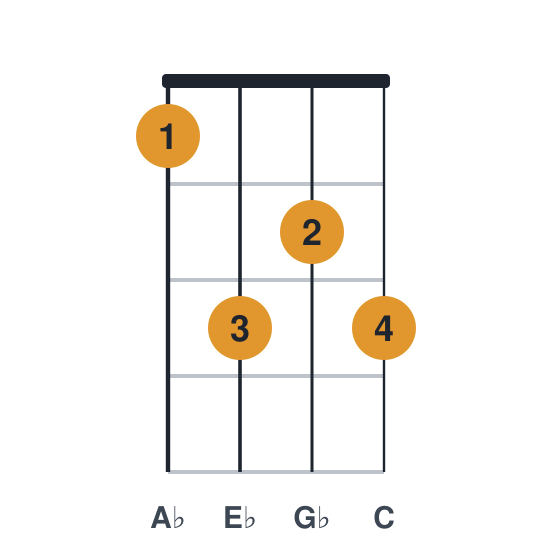
- C#where Ab9 wants to resolve
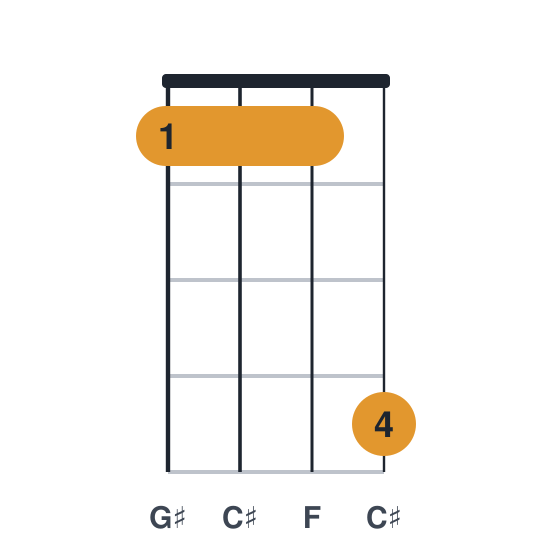
- Abmaj7the other seventh built on this root
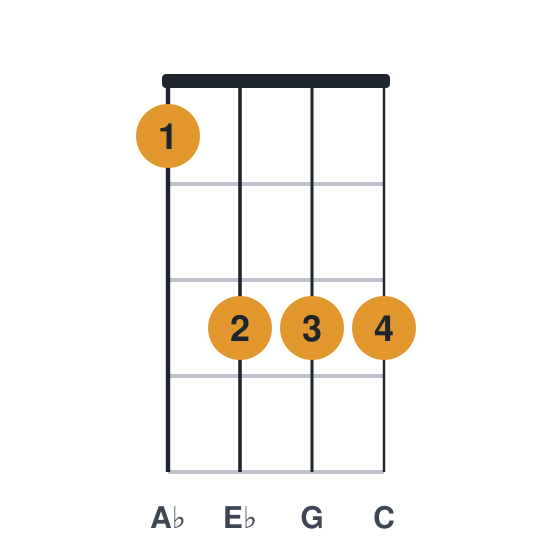
- Ab6the same root with a sixth instead of a seventh
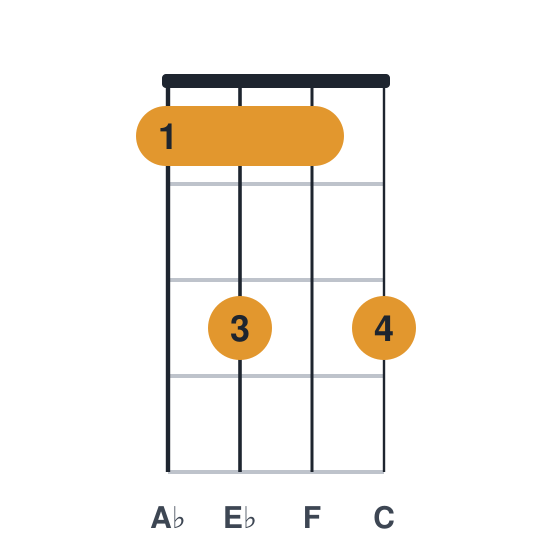


Other Ab chords
Ab9 ukulele chord chart (1021) from melodician.com