D7 Piano Chord
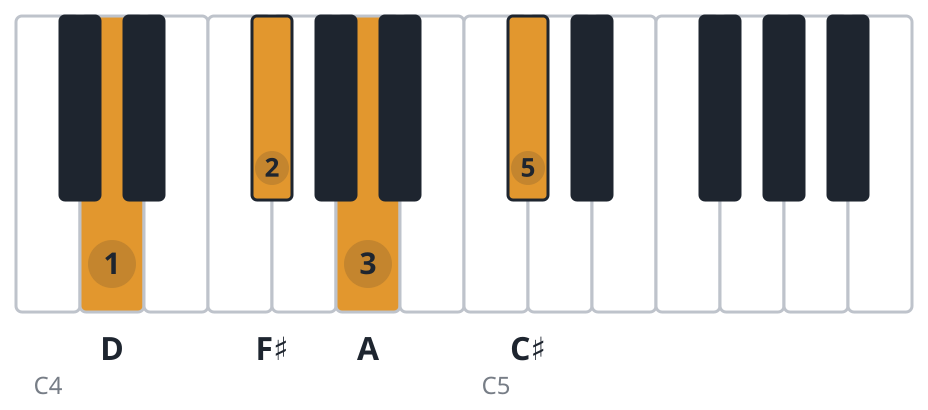
D7 is the D dominant seventh chord. It has four notes: D, F sharp, A and C. Three are white keys and the F sharp is black.

D at the bottom, then F♯ and A and C. Right hand 1-2-3-5, left hand 5-3-2-1. The black key is F♯.
How to play D7 on piano, step by step
- Start on the D above middle C. That is the lowest note of the chord.
- Thumb (1): D
- Index finger (2): F♯
- Middle finger (3): A
- Little finger (5): C
- Press them together with the right hand. The left hand plays the same notes with fingers 5, 3, 2, 1 an octave lower, or just D on its own as a bass note.
In the key of G this is the chord that takes you home. Practise D7 to G as a pair and the pull is obvious straight away.
Inversions of D7
The same 4 notes with a different one at the bottom. All of them are D7; which you play depends on what the hand is coming from. Tap any card to hear it.


If it sounds wrong
- The chord sounds sad
- The second note is F sharp, the black key. F natural would give Dm7, which is a different chord with a different job.
- The top note is C sharp
- It has to be C natural. C sharp would make Dmaj7, which settles rather than pulls.
- The index finger feels awkward
- It sits on the black F sharp while the thumb is forward on white D. Move the whole hand slightly into the keyboard so both fingers reach comfortably.
What makes it a D7
D · F♯ · A · C 1 3 5 ♭7
D7 is a D major triad, D F sharp A, with a C added on top: the flat seventh. The C and the F sharp are a tritone apart, and that interval is what creates the tension.
It is the V7 of G, so in the key of G it is the chord that resolves home. It is also the I chord of a blues in D.
D7 vs D
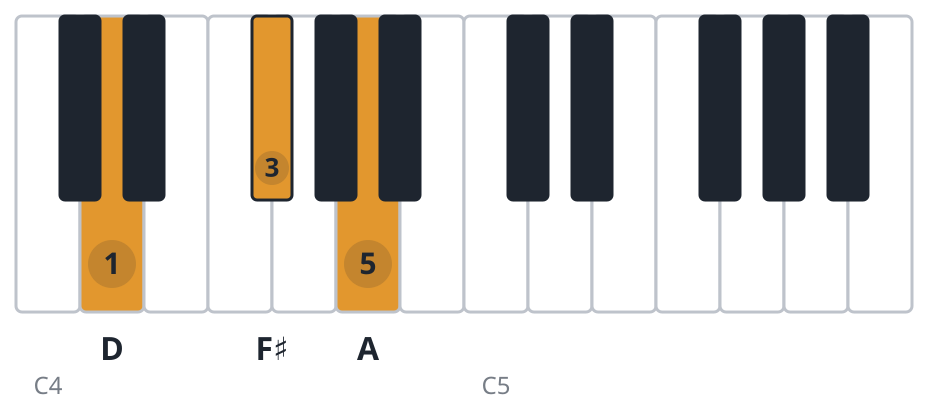
D7 is D major with a C on top. D is a chord you can end on; D7 is not, unless the song is a blues.
In the key of G, D7 to G is one of the most used pairs in all of music, and the added C is what makes the ending feel inevitable.
D7 in major keys
Every note of D7 sits inside these keys. See how it works alongside the other chords in each one.
Questions about D7
Which notes are in a D7 chord on piano?
D, F sharp, A and C. F sharp is the black key to the right of F; the rest are white.
What fingers do you use for D7?
Right hand: thumb on D, index on F sharp, middle on A, little finger on C. Left hand: 5, 3, 2, 1.
What is the difference between D7 and Dm7?
The second note. D7 has F sharp and sounds bright and driving; Dm7 has F natural and sounds soft and minor.
Where is the D7 chord used?
As the V7 of G, as the I chord of a blues in D, and as the chord that leads to G in any key that contains it.
Is D7 hard on piano?
No. One black key and a span of a seventh, which is comfortable for most hands.
Chords to learn next
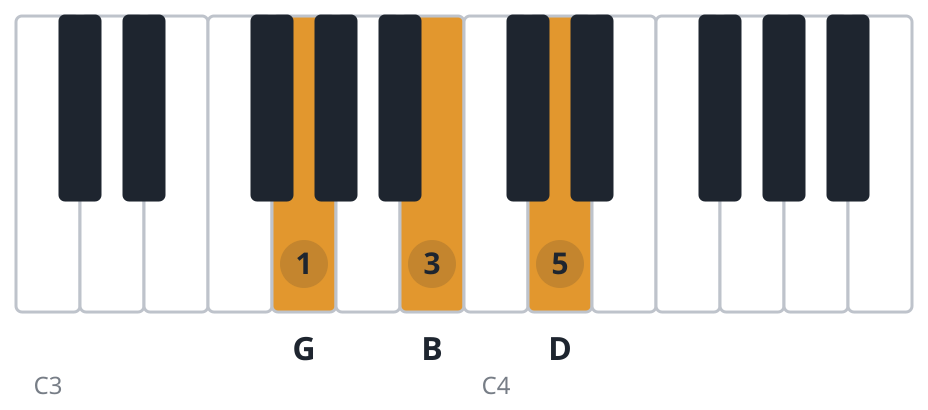
- GD7 resolves here
- Dthe plain major underneath it
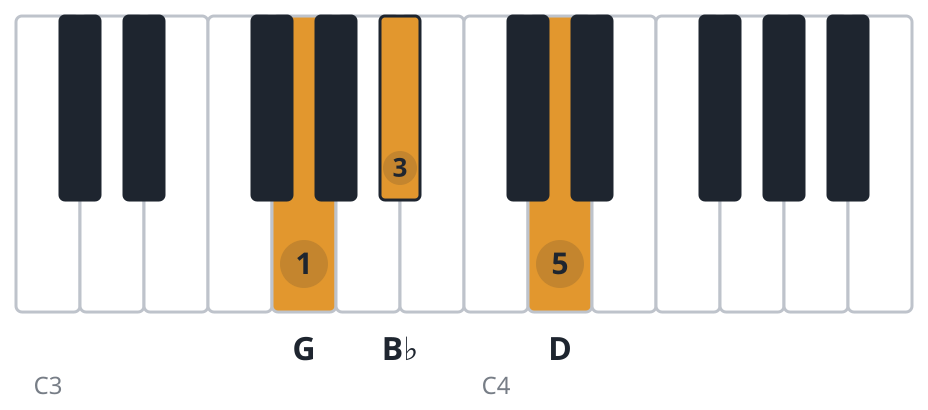
- GmD7 leads to the minor of G too
- Dmaj7the other seventh on this root, and a different mood