D6 Piano Chord
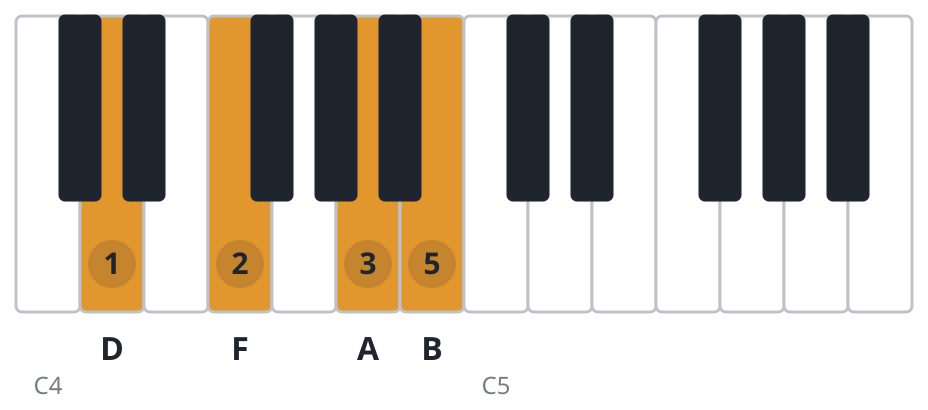
D6 is the D sixth chord. It has four notes: D, F sharp, A and B. Only the F sharp is a black key; the rest are white, and the shape is a plain D major chord with the B added under the little finger.

D at the bottom, then F sharp, A and B. Right hand 1-2-3-5, left hand 5-3-2-1, with the one black key under the index finger.
How to play D6 on piano, step by step
- Start on the D above middle C. That is the lowest note of the chord.
- Thumb (1): D
- Index finger (2): F♯
- Middle finger (3): A
- Little finger (5): B
- Press them together with the right hand. The left hand plays the same notes with fingers 5, 3, 2, 1 an octave lower, or just D on its own as a bass note.
Build D major first, D, F sharp and A, then add the B one whole step above the A. The single black key, F sharp, sits under the index finger and anchors the middle of the hand.
Inversions of D6
The same 4 notes with a different one at the bottom. All of them are D6; which you play depends on what the hand is coming from. Tap any card to hear it.


If it sounds wrong
- The top note landed on C
- One key too far, and the chord turns into a D7 sound that wants to go to G. The sixth is B, the white key directly above A.
- It sounds like B minor
- The same four notes read from B spell Bm7. If B becomes the lowest note the chord flips to minor in the ear. Keep D at the bottom, or add a low D in the left hand.
- The F sharp gets lost
- The one black key is the note that makes the chord major. Curve the index finger enough to press it squarely, and listen for it inside the chord.
What makes it a D6
D · F♯ · A · B 1 3 5 6
D6 is a D major triad, D, F sharp and A, with a B added: the sixth, a whole step above the fifth. Nothing is removed, so the chord still behaves like D major, just rounder and a little more nostalgic.
Those same four notes counted from B are Bm7, the relative minor seventh. One set of keys, two chords, and the bass note decides. The third inversion of D6 is a Bm7 shape with a different name on the chart.
D6 vs Dmaj7
Both soften D major with one added note. D6 adds B, a whole step over the A; Dmaj7 adds C sharp, a half step under the D above. The B settles; the C sharp shimmers.
Hold D, F sharp and A, then rock the top between B and C sharp. B could end a country song; C sharp could start a ballad. Neither moves the harmony, but they colour it in opposite directions.
D6 in major keys
Every note of D6 sits inside these keys. See how it works alongside the other chords in each one.
Questions about D6
Is D6 the same as Bm7?
They share all four notes: D, F sharp, A and B. D lowest makes it D6; B lowest makes it Bm7. The bass note names the chord.
What fingers do you use for D6?
Right hand: thumb on D, index on F sharp, middle on A, little finger on B, which is 1, 2, 3, 5. Left hand: 5, 3, 2, 1.
What is the difference between D6 and D7?
D6 adds B, a colour note with no pull. D7 adds C, a flat seventh that drives the chord toward G. Decoration versus direction.
When would I use D6?
As a final chord in D, in swing and older pop, and under melodies resting on B. It is also the sound of a D chord that does not want to sound too plain.
Is D6 hard to play?
Not really. One black key under the index finger and three white keys, with nothing wider than a sixth between thumb and little finger.
Chords to learn next
- Dthe plain major underneath it
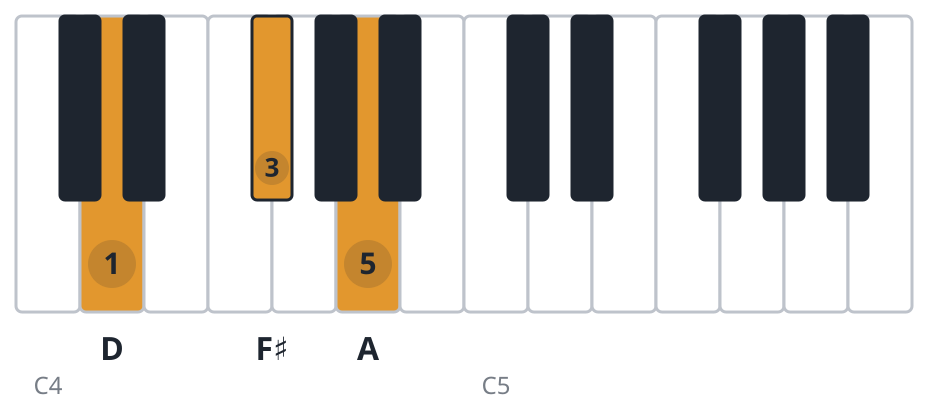
- Bm7the same four notes counted from B
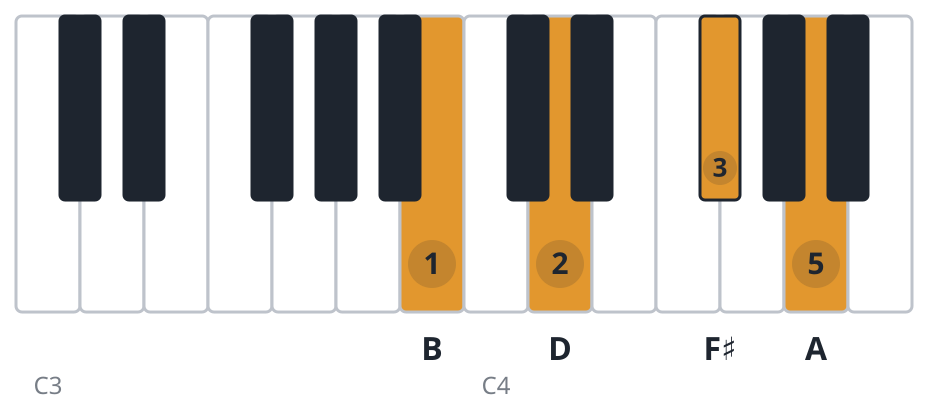
- Dmaj7the other note people add to a major chord
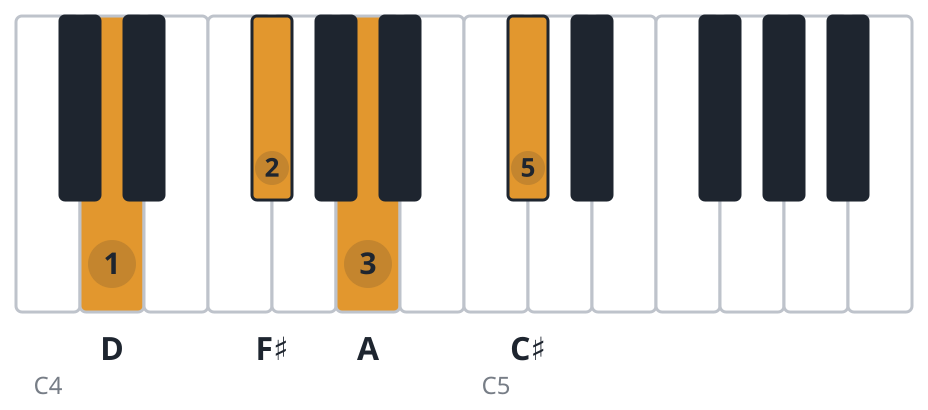
- Dm6the same sixth over a minor chord