Bb6 Guitar Chord
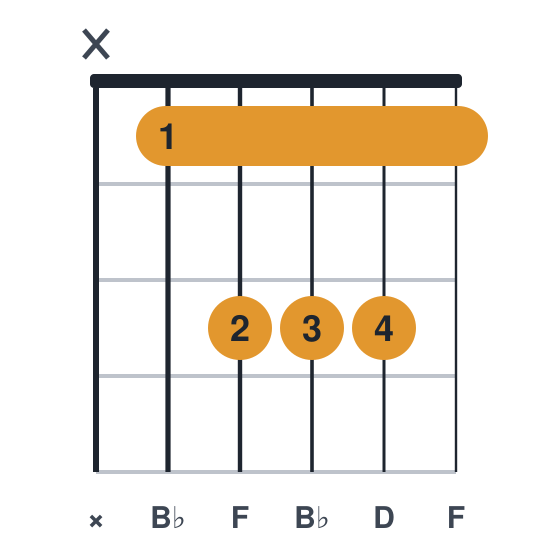
Bb6 is the B flat sixth chord. It has four notes: B flat, D, F and G. There is no open shape, so it is played with the root on the A string at the 1st fret and one finger laid across the four strings above it.

Root on the A string at the 1st fret with one finger laid flat across the other four at the 3rd. Movable: this is the grip most players use for any sixth chord above the open strings.
How to play Bb6, step by step
- Index finger: 1st fret, A string
- Ring finger: press flat across the D to high E strings at fret 3
- Strum from the A string down, skipping the low E.
The whole shape moves as a block. Slide it up two frets and you have C6; up four and you have D6. One grip covers every sixth chord on the neck.
More ways to play Bb6
There are 3 common Bb6 shapes in total: the standard one at the top of the page, plus these, easiest first. You only ever need one. Tap any card to hear it.

The biggest Bb6 on the neck. Low root, wide spread, and the sixth ringing on top of all six strings.

Bright and small, well above the bass. This is the Bb6 for playing rhythm behind someone else.
If the laid finger buzzes
- Notes under the ring finger are dead
- Laying one finger across four strings takes practice. Straighten it, press just behind the 3rd fret, and let the finger fall slightly on its side rather than flat on the pad.
- The root is unclear
- The index sits alone at the 1st fret of the A string, close to the nut where strings are stiffest. Press firmly and check it rings before adding the other finger.
- The low E sounds
- It is not in the chord. Start the strum on the A string, or mute the low E with the tip of the index finger.
What makes it a Bb6
B♭ · D · F · G 1 3 5 6
Bb6 is a B flat major triad (B flat, D, F) with a G added, the sixth degree of the B flat scale. The triad is complete, so the chord still functions as B flat wherever it appears.
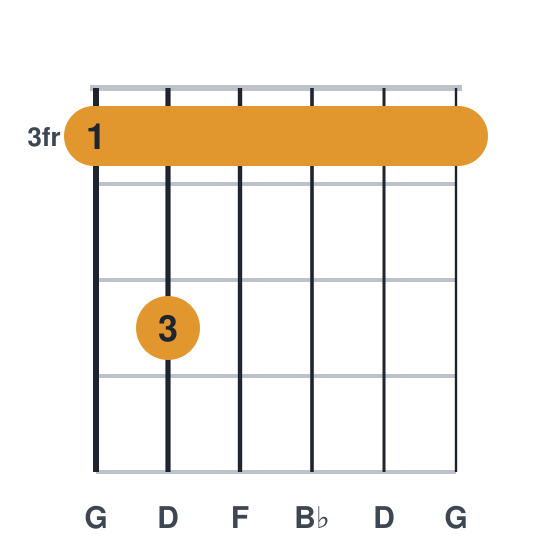
The same four notes counted from G spell Gm7. Bb6 and Gm7 are one pitch collection with two names, decided by which note is in the bass.
Bb6 vs Bbmaj7
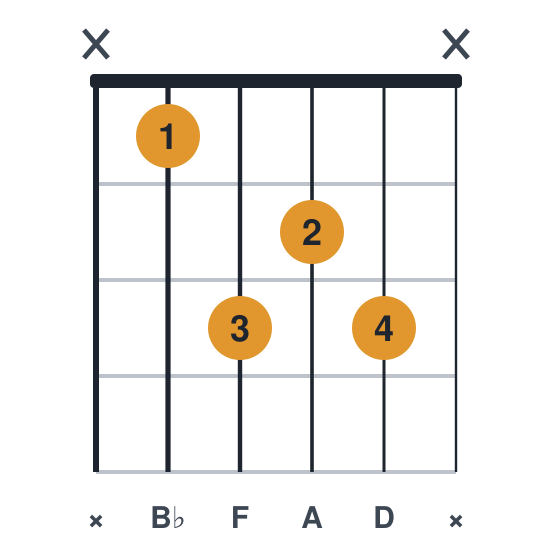
Bb6 adds a G to B flat major; Bbmaj7 adds an A. The G is a whole step below the root and sounds resolved. The A is a half step below it and creates the gentle clash that makes major sevenths sound unfinished.
Because both are barre style shapes at the same position, they are easy to compare: hold Bb6 and move the top notes up a fret to find Bbmaj7. In a horn key like B flat, players reach for the sixth far more often.
Bb6 in major keys
Every note of Bb6 sits inside these keys. See how it works alongside the other chords in each one.
Bb6 chord questions
Is there an easy Bb6?
The shape on this page is the easy one: two fingers, one holding the root on the A string and one laid across the four strings above. It needs no full six string barre.
Is Bb6 the same as Gm7?
The notes are identical: B flat, D, F and G. B flat in the bass gives Bb6, G in the bass gives Gm7.
Is Bb6 the same as A#6?
Yes, the same chord. B flat is the name used in flat keys and in horn arrangements, where this chord actually turns up, so Bb6 is the spelling you will see.
What is the difference between Bb6 and Bb7?
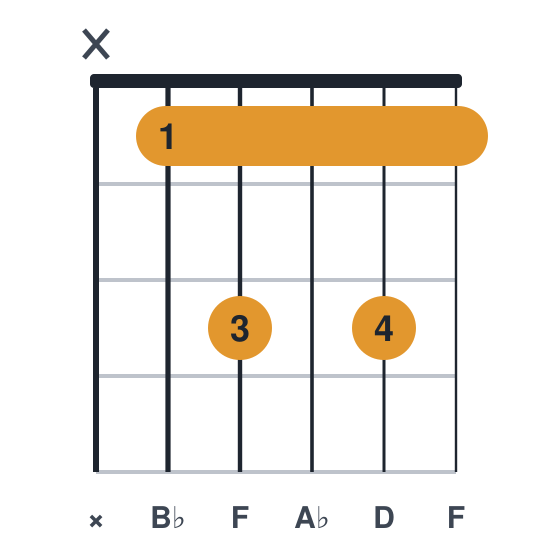
Bb6 adds a G and rests. Bb7 adds an A flat and pushes toward E flat. One ends a phrase, the other drives it forward.
Where do I hear sixth chords like this?
Swing, jazz standards, doo wop and rockabilly, where a plain major chord is usually played as a sixth. Keys like B flat and E flat are common in those styles because they suit horns.
Chords to learn next
- Bbthe plain major underneath it
- Gm7the same four notes counted from G
- Bbmaj7the other note people add to a major chord
- Bb7a seventh on the same root instead of a sixth


Other Bb chords
Bb6 guitar chord chart (x13333) from melodician.com