C#maj7 Piano Chord
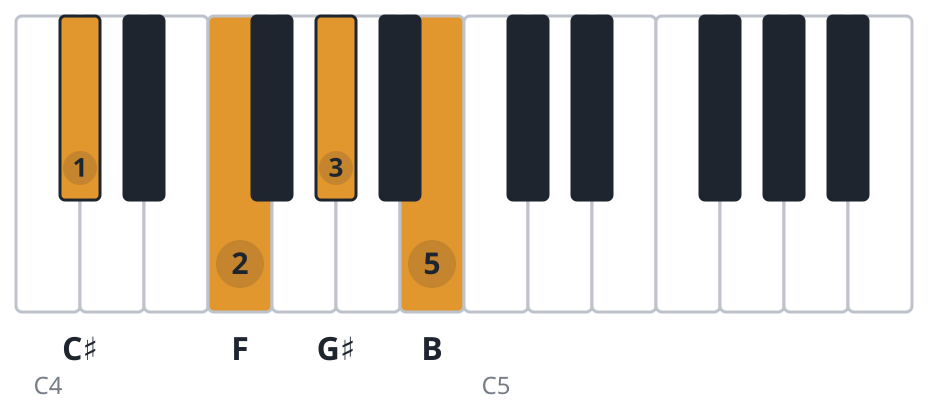
C sharp major seventh is the C#maj7 piano chord. It has four notes: C sharp, F, G sharp and C. The root and the fifth are black keys; the third and the seventh are white.

C♯ at the bottom, then F and G♯ and C. Right hand 1-2-3-5, left hand 5-3-2-1. The black keys are C♯ and G♯.
How to play C#maj7 on piano, step by step
- Start on the C♯ above middle C. That is the lowest note of the chord.
- Thumb (1): C♯
- Index finger (2): F
- Middle finger (3): G♯
- Little finger (5): C
- Press them together with the right hand. The left hand plays the same notes with fingers 5, 3, 2, 1 an octave lower, or just C♯ on its own as a bass note.
The chord contains both C sharp and C, which looks odd written down and sounds perfectly normal: they are a half step apart at opposite ends of the chord, which is exactly what a major seventh is.
Inversions of C#maj7
The same 4 notes with a different one at the bottom. All of them are C#maj7; which you play depends on what the hand is coming from. Tap any card to hear it.


If it sounds wrong
- The top note is B
- That gives C sharp 7, which pulls toward F sharp. The major seventh here is C natural, the key immediately below C sharp's octave.
- The second note looks wrong
- It is F, a white key. Written strictly it is E sharp, which is the same key, and every chart prints F.
- The hand rocks in and out
- Black and white keys alternate through this chord. Settle the hand at a middle depth rather than moving for each note.
What makes it a C#maj7
C♯ · F · G♯ · C 1 3 5 7
C sharp major seventh is a C sharp major triad, C sharp E sharp G sharp, with a B sharp added on top. E sharp and B sharp are the keys everyone calls F and C, and that is how chord charts print them.
It is the I chord of C sharp major and the IV of G sharp. Both are rare home keys, so this chord is usually met inside another key or after a modulation.
C#maj7 vs C#
C sharp major seventh is C sharp major with a C natural added on top. The triad is final; the seventh is soft and open.
It is worth knowing that the same chord is often written D flat major seventh, which puts every note on a flat name and looks far less alarming.
C#maj7 in major keys
Every note of C#maj7 sits inside these keys. See how it works alongside the other chords in each one.
Questions about C#maj7
Which notes are in a C#maj7 chord on piano?
C sharp, F, G sharp and C. C sharp and G sharp are black keys; F and C are white.
Why does the chord contain both C sharp and C?
The major seventh sits one half step below the octave. For C sharp that note is C natural, written strictly as B sharp. Having both in the chord is normal and is what gives a major seventh its sound.
Is C#maj7 the same as Dbmaj7?
The same four keys and the same sound. Written as D flat major seventh the spelling is much simpler, which is why jazz charts prefer it.
What fingers do you use for C#maj7?
Right hand: thumb on C sharp, index on F, middle on G sharp, little finger on C. Left hand: 5, 3, 2, 1.
Where is the C#maj7 chord used?
As the I chord in C sharp or D flat, mostly in jazz.
Chords to learn next
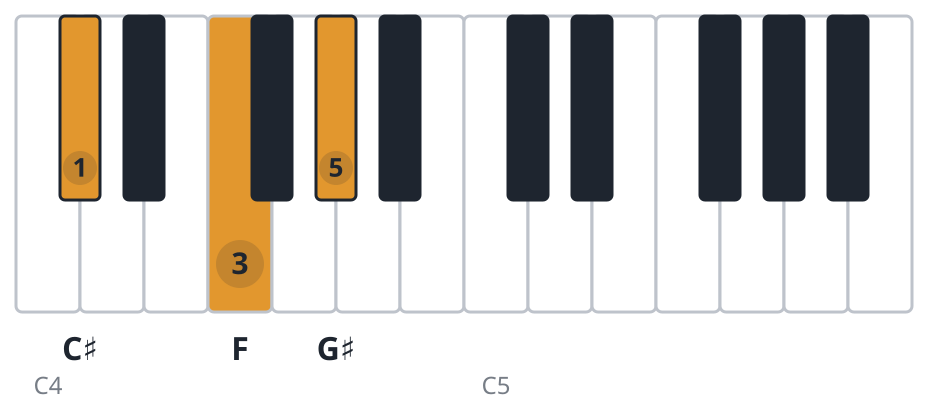
- C#the plain major
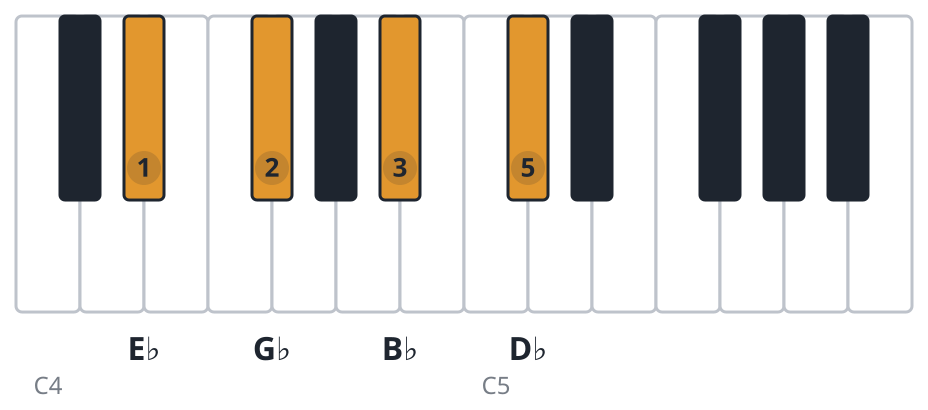
- Ebm7the ii chord beside C#maj7 in the key of C#
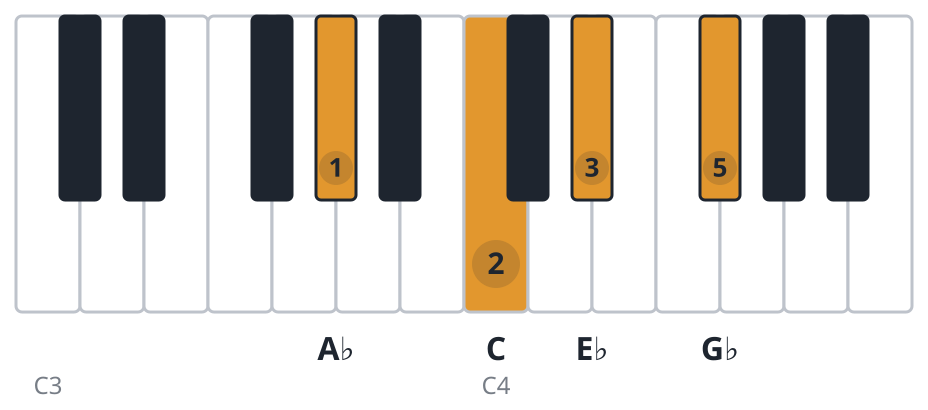
- Ab7the V chord of C#
- C#7the restless seventh, a half step below this one