C#m7 Piano Chord
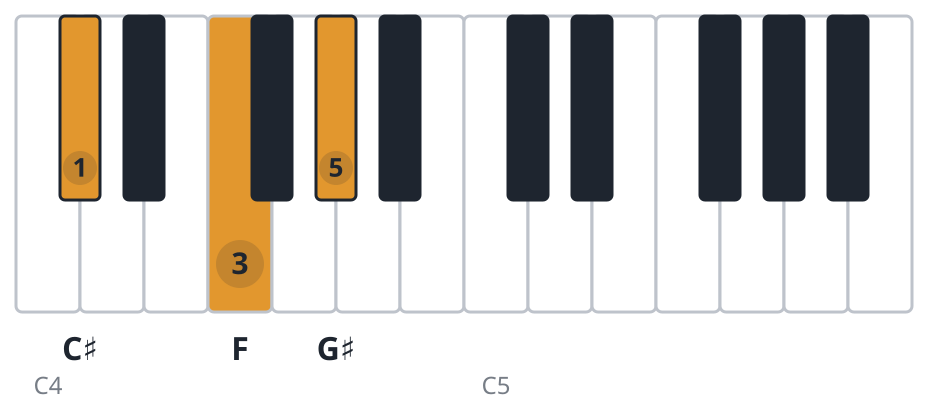
C sharp minor seventh is the C#m7 piano chord. It has four notes: C sharp, E, G sharp and B. The root and the fifth are black; the third and the seventh are white.

C♯ at the bottom, then E and G♯ and B. Right hand 1-2-3-5, left hand 5-3-2-1. The black keys are C♯ and G♯.
How to play C#m7 on piano, step by step
- Start on the C♯ above middle C. That is the lowest note of the chord.
- Thumb (1): C♯
- Index finger (2): E
- Middle finger (3): G♯
- Little finger (5): B
- Press them together with the right hand. The left hand plays the same notes with fingers 5, 3, 2, 1 an octave lower, or just C♯ on its own as a bass note.
This is the same alternating shape as F sharp minor seventh, moved along the keyboard. If one is comfortable the other needs no new learning.
Inversions of C#m7
The same 4 notes with a different one at the bottom. All of them are C#m7; which you play depends on what the hand is coming from. Tap any card to hear it.


If it sounds wrong
- The chord sounds bright
- The second note is E, a white key. Playing F instead would give C sharp 7.
- The hand keeps shifting depth
- Two black keys and two white ones alternating means the fingers sit at different depths. Park the hand in the middle and let the fingertips reach.
- The top note is B sharp
- It has to be B natural. B sharp is the key called C, and it would turn this into a major seventh chord.
What makes it a C#m7
C♯ · E · G♯ · B 1 ♭3 5 ♭7
C sharp minor seventh is a C sharp minor triad, C sharp E G sharp, with a B added: the flat seventh.
It is the ii chord of B and the vi of E. E is one of the most used keys in rock and pop, which is why this chord appears far more often than four sharps would suggest.
C#m7 vs C#m
C sharp minor seventh is C sharp minor with a B on top. The triad is the comfortable black, white, black shape; the seventh adds another white key above it.
The seventh is the smoother of the two, and in pop either will usually do where a chart asks for C sharp minor.
C#m7 in major keys
Every note of C#m7 sits inside these keys. See how it works alongside the other chords in each one.
Questions about C#m7
Which notes are in a C#m7 chord on piano?
C sharp, E, G sharp and B. C sharp and G sharp are black keys; E and B are white.
What fingers do you use for C#m7?
Right hand: thumb on C sharp, index on E, middle on G sharp, little finger on B. Left hand: 5, 3, 2, 1.
What is the difference between C#m7 and C#7?
The second note. C sharp minor seventh has E and sounds soft; C sharp 7 has F and drives toward F sharp.
Where is the C#m7 chord used?
As the ii chord in B and the vi in E. Guitar based rock and pop use it constantly.
Is C#m7 hard on piano?
No. The alternating black and white pattern is the only thing to get used to, and the span is comfortable.
Chords to learn next
- C#mthe same chord without the seventh
- Ab7the V chord that resolves to C# minor
- F#7partner in the ii V of B major
- C#the major on the same root