C#6 Piano Chord
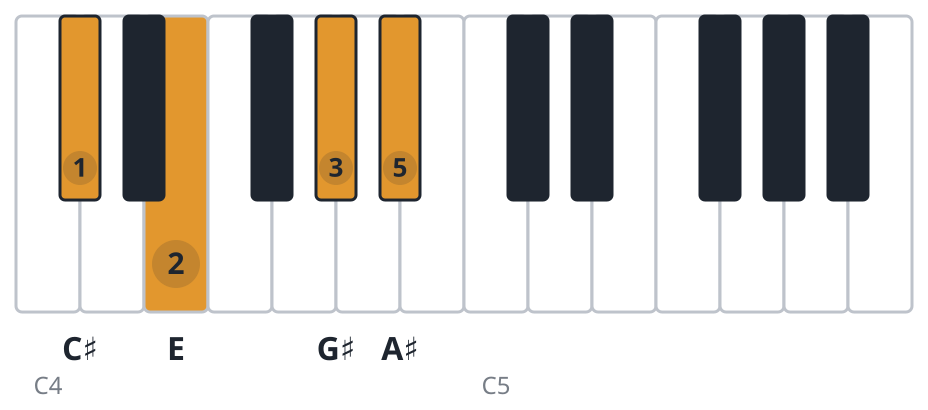
C#6 is the C sharp sixth chord. It has four notes: C sharp, F, G sharp and A sharp. Three are black keys; only the F under the index finger is white. The same chord is often written Db6.

C sharp at the bottom, then F, G sharp and A sharp. Right hand 1-2-3-5, left hand 5-3-2-1, with only the F on a white key.
How to play C#6 on piano, step by step
- Start on the C♯ above middle C. That is the lowest note of the chord.
- Thumb (1): C♯
- Index finger (2): F
- Middle finger (3): G♯
- Little finger (5): A♯
- Press them together with the right hand. The left hand plays the same notes with fingers 5, 3, 2, 1 an octave lower, or just C♯ on its own as a bass note.
Thumb, middle and little finger all sit on black keys, C sharp, G sharp and A sharp, with the index finger dropping to the white F between them. Keep the hand inside the keyboard and the shape falls into place.
Inversions of C#6
The same 4 notes with a different one at the bottom. All of them are C#6; which you play depends on what the hand is coming from. Tap any card to hear it.


If it sounds wrong
- The top note slid onto B
- Falling from A sharp onto the white B gives a C#7 sound, which pulls toward F sharp. The sixth is the black key A sharp, one whole step above G sharp.
- It sounds like B flat minor
- C#6 shares its four notes with Bbm7. If the A sharp, which is the same key as B flat, ends up lowest, the ear hears the minor chord. Keep C sharp at the bottom.
- The white F disappears
- One low white key among three raised black ones gets underplayed. The F is the major third, the note that makes the chord major, so give the index finger deliberate weight.
What makes it a C#6
C♯ · F · G♯ · A♯ 1 3 5 6
C#6 is a C sharp major triad, C sharp, F and G sharp, with an A sharp added: the sixth, a whole step above the fifth. The chart spells the third E sharp; on the keyboard it is the F key, and this site names keys the way players find them.
The same four notes counted from A sharp spell Bbm7, the relative minor seventh. One handful of keys, two names, decided by the lowest note. Written as Db6, the chord is a staple of jazz and vocal keys.
C#6 vs C#maj7
One top note apart. C#6 adds A sharp, a whole step over the G sharp; C#maj7 adds C, the white key a half step under the C sharp above. The sixth settles, the seventh floats.
Hold C sharp, F and G sharp, then rock the top between A sharp and C. The A sharp version could end a standard; the C version hangs like evening light. Both live in the same three-black-key hand.
C#6 in major keys
Every note of C#6 sits inside these keys. See how it works alongside the other chords in each one.
Questions about C#6
Is C#6 the same as Db6?
Yes, one chord with two spellings. Charts in flat keys write Db6; this page uses C sharp so the whole site names each root one way.
Is C#6 the same as Bbm7?
Same four notes: C sharp, F, G sharp and A sharp. C sharp in the bass makes it C#6; B flat in the bass makes it Bbm7.
What fingers do you use for C#6?
Right hand: thumb on C sharp, index on F, middle on G sharp, little finger on A sharp, which is 1, 2, 3, 5. Left hand: 5, 3, 2, 1.
Why is there an F in a C sharp chord?
Strict spelling calls the third E sharp, which is the same key as F. Chord charts and this site use the plain name so you find the right key first time.
When would I use C#6?
As the settled tonic in tunes written in D flat, under melodies resting on B flat, and anywhere a plain C sharp major sounds too bare to end on.
Chords to learn next
- C#the plain major underneath it
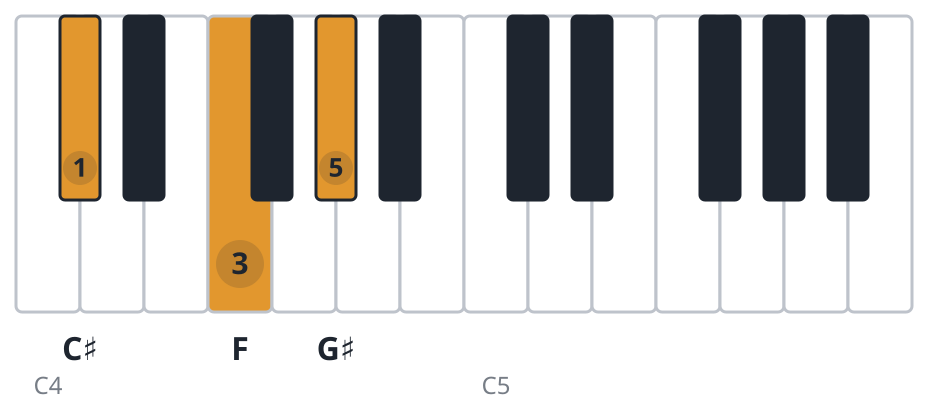
- Bbm7the same four notes counted from Bb
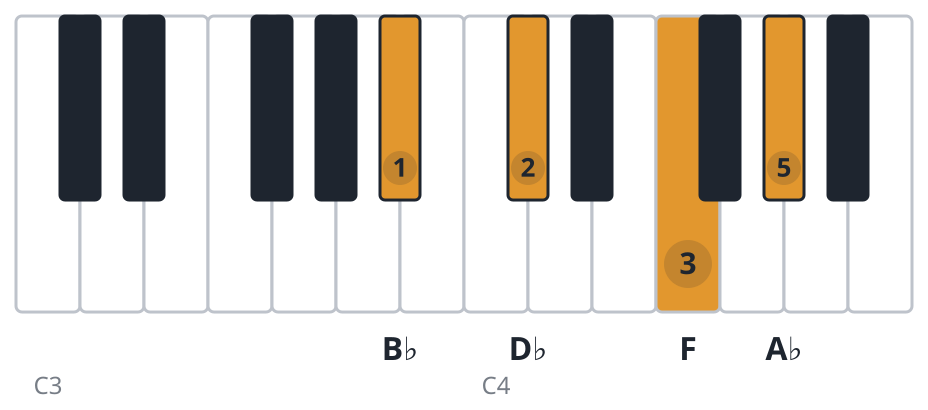
- C#maj7the other note people add to a major chord
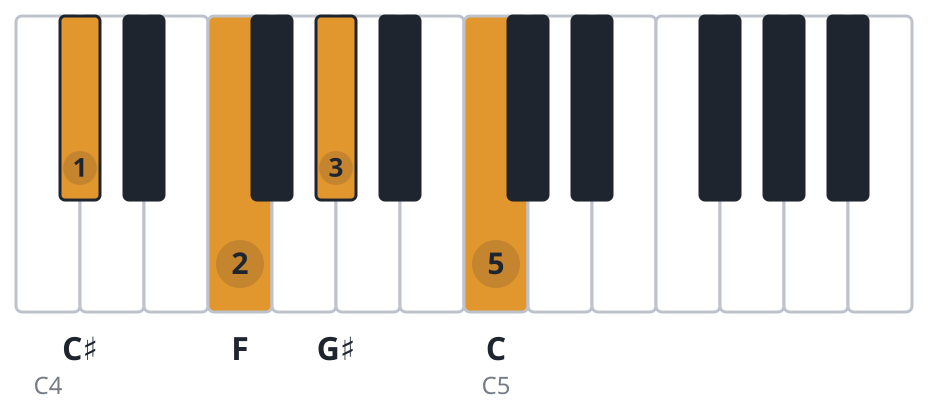
- C#m6the same sixth over a minor chord