G#m6 Guitar Chord
G#m6 is the G sharp minor sixth chord. It has four notes: G sharp, B, D sharp and F. The standard shape is a full barre at the 4th fret with the root on the low E string.

The full six string minor sixth: index barred across the neck at the 4th fret, root on the low E, and the sixth up on the B string. Movable, so this one grip is any minor sixth chord.
How to play G#m6, step by step
- Index finger: press flat across the low E to high E strings at fret 4
- Ring finger: lay across the A and D strings at fret 6
- Pinky finger: 6th fret, B string
- Strum all six strings.
The grip is the movable minor sixth: at the 4th fret it is G#m6, two frets lower F#m6. Whatever the low E string plays under the barre is the chord.
More ways to play G#m6
There are 2 common G#m6 shapes in total: the standard one at the top of the page, plus these, easiest first. You only ever need one. Tap any card to hear it.

Tight and bright at the top of the neck, with the fifth on top. The lighter grip of the two, if your guitar gives you room up there.
If it will not come out clean
- The barre is doing too much
- At the 4th fret the index covers the low E, D and high E strings. Set it just behind the fret, roll it toward its edge, and let arm weight do the pressing.
- The A or D string is dead
- The ring finger lays across both at the 6th fret. Flatten it across the pair; a curled tip will always drop one of them.
- It sounds like a plain minor chord
- The F on the B string under the pinky is the sixth. If the pinky leans or misses the 6th fret, the chord collapses back into G#m.
What makes it a G#m6
G♯ · B · D♯ · F 1 ♭3 5 6
G#m6 is a G sharp minor triad (G sharp, B, D sharp) with an F added: the major sixth, nine half steps above the root. The minor third darkens the chord and the major sixth pulls against the darkness, which is exactly the tension a minor sixth chord is for.
Read from F, the same four notes spell Fm7b5, the half diminished chord. G#m6 is also a C#9 without its root, which explains why it slips so easily into progressions heading for F sharp.
G#m6 vs G#m7
G#m7 adds an F sharp to G sharp minor and smooths it over. G#m6 adds an F, one fret lower, and the smoothness is gone: the chord sounds like a question that wants answering.
Both are barre grips at the 4th fret on this root, so neither is harder to reach than the other. The m7 is the everyday choice; the m6 is the jazz and film colour.
G#m6 in major keys
Every note of G#m6 sits inside these keys. See how it works alongside the other chords in each one.
G#m6 chord questions
Is G#m6 the same as Abm6?
Yes, the same notes under two names. The minor chords on this root are almost always written G sharp, so that is the spelling here.
What is the difference between G#m6 and G#m7?
One note. G#m7 has an F sharp, G#m6 has an F, one fret lower. The seventh settles the chord; the sixth unsettles it.
Is G#m6 the same as Fm7b5?
Same four notes: G sharp, B, D sharp and F. G sharp in the bass makes it G#m6; F in the bass makes it the half diminished chord.
Is there an easier G#m6?
The second shape skips the low E: root on the A string at the 11th fret with a two string index barre at the 9th. Less barre, but higher up the neck.
Where is G#m6 used?
As the iv chord in E flat, on the tonic in G sharp minor, and in jazz and older popular music, where minor sixths often replace minor sevenths.
Chords to learn next
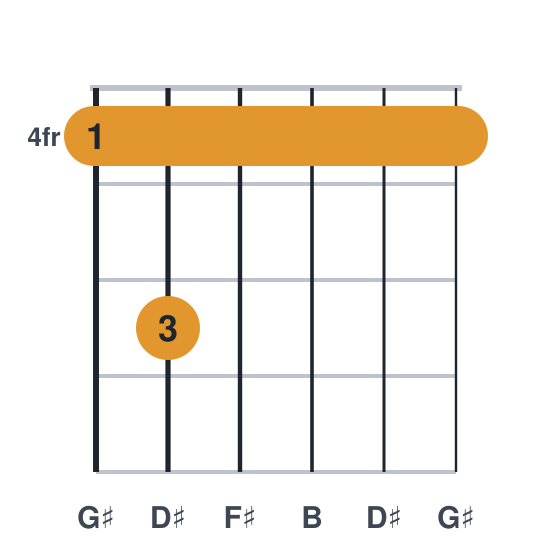
- G#mthe plain minor underneath it
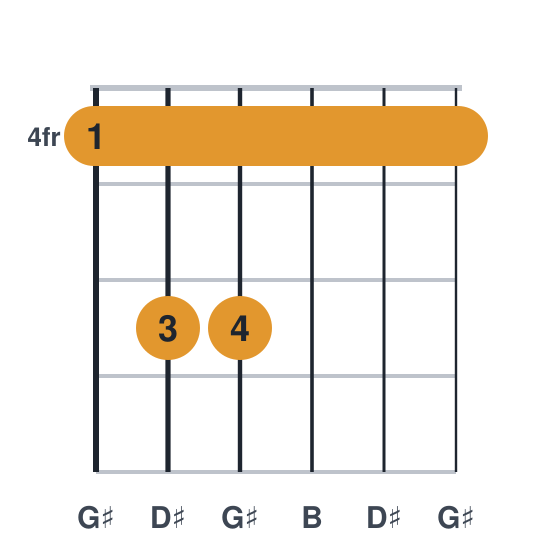
- G#m7a flat seventh instead of the sixth, the softer option
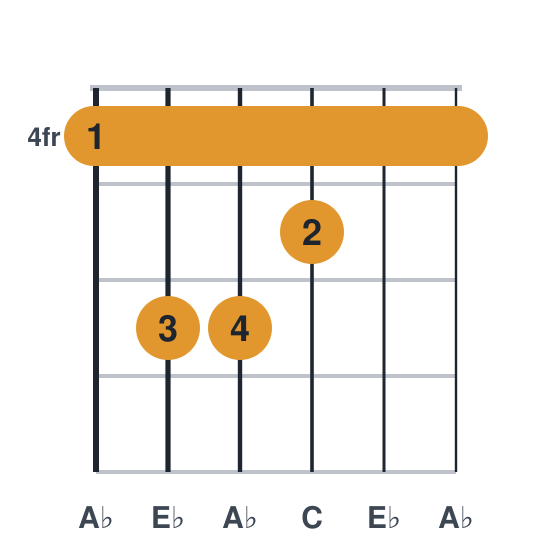
- Abthe major on the same root
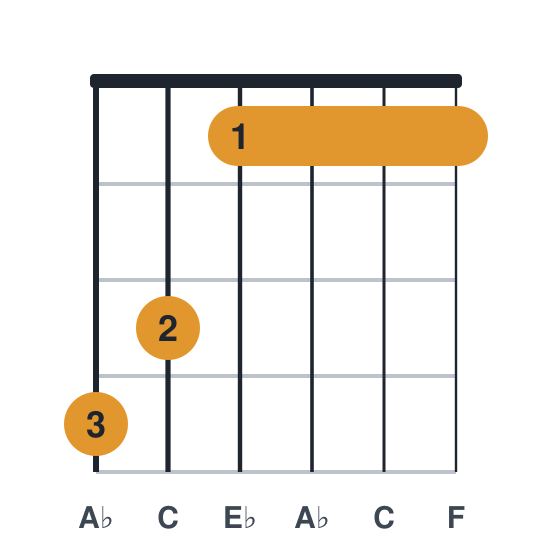
- Ab6the major sixth on the same root


Other G# chords
G#m6 guitar chord chart (466464) from melodician.com