G#m9 Guitar Chord
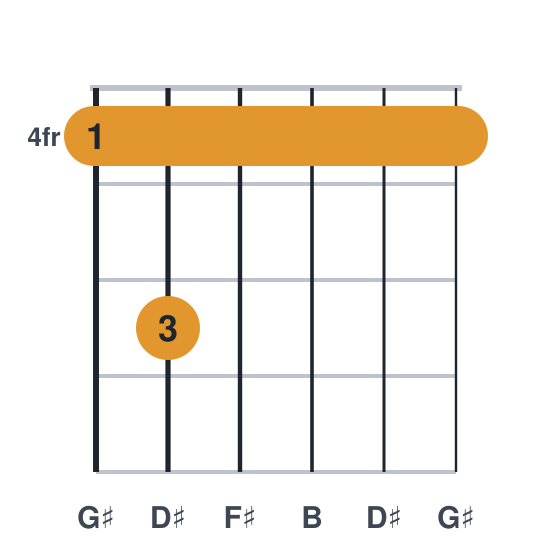
G#m9 is the G sharp minor ninth chord. It has five notes: G sharp, B, D sharp, F sharp and A sharp. The main shape is a barre at the 4th fret with the root on the low E string and the ninth on top.

The Em9 barre shape at the 4th fret: index across five strings, root on the low E, and the ninth up on the high E string. Six strings, movable to any root.
How to play G#m9, step by step
- Index finger: press flat across the low E to B strings at fret 4
- Ring finger: 6th fret, A string
- Pinky finger: 6th fret, high E string
- Strum all six strings.
Only the position makes this G sharp. It is the same movable Em9 grip as every other root: slide it down two frets for F#m9 or up one for Am9.
More ways to play G#m9
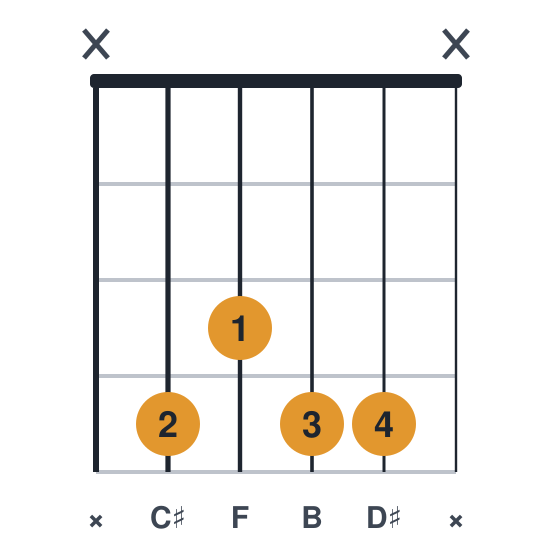
There are 2 common G#m9 shapes in total: the standard one at the top of the page, plus these, easiest first. You only ever need one. Tap any card to hear it.

Tight, bright and quick to damp. High on the neck the chord loses its weight and turns into a rhythm part.
If the barre will not settle
- The B string dies under the index
- The barre has to sound the low E, D, G and B strings at the 4th fret. The B is the usual casualty: shift the index down a hair so its softest joint crease is not sitting on that string.
- The pinky cannot reach the high E
- It goes to the 6th fret for the A sharp, the ninth. Bring the ring finger to the A string first and let the pinky follow it; placing the pinky first twists the hand.
- The chord sounds blurred
- Six strings and five different notes is a lot of information. Strum a touch slower than feels natural so the top of the chord, where the ninth lives, has room to speak.
What makes it a G#m9
G♯ · B · D♯ · F♯ · A♯ 1 ♭3 5 ♭7 9
G#m9 is a G#m7 chord with a ninth added: G sharp, B, D sharp and F sharp make the minor seventh, and the A sharp makes it a ninth. In the barre shape the A sharp rings on the high E string, the highest note of the grip.
It is the ii chord of F sharp and the vi of B, and it shadows E major as the iii chord, so it appears in more guitar songs than its name suggests. Minor ninths are the house minor of soul and R and B, where a bare minor seventh reads as plain.
G#m9 vs G#m7
G#m9 is G#m7 with an A sharp added. The minor seventh sits still; the ninth adds a whole step of light above the octave and the chord starts to hover.
Both chords are barres for this root, so the richer one costs nothing extra. Where a chart in B or F sharp writes G#m7, the ninth drops straight in.
G#m9 in major keys
Every note of G#m9 sits inside these keys. See how it works alongside the other chords in each one.
G#m9 chord questions
Is G#m9 the same as Abm9?
Yes, one chord with two names. G sharp is how the sharp keys this chord lives in spell it, so that is the name used here.
What is the difference between G#m9 and G#m7?
G#m9 has an A sharp, the ninth, added to the four notes of G#m7. Same chord, more colour on top.
Is G#m9 hard to play?
It is a five string barre with the ring and pinky working above it. The five string shape at the 11th fret on this page skips the full barre and suits smaller hands.
Where is G#m9 used?
As the ii chord in F sharp, the vi in B and the iii in E, and throughout soul, R and B and jazz as the standard version of G sharp minor.
Do you strum all six strings?
In the barre shape, yes. In the 11th fret shape the low E stays out and the strum starts on the A string.
Chords to learn next
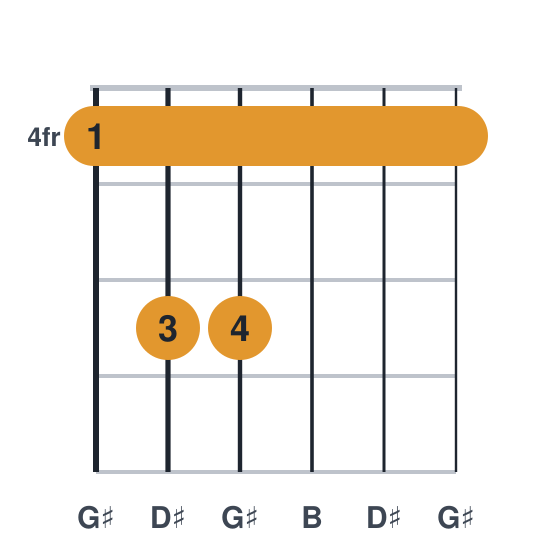
- G#m7the same chord without the ninth
- C#9the V chord G#m9 leans toward
- G#mthe plain minor
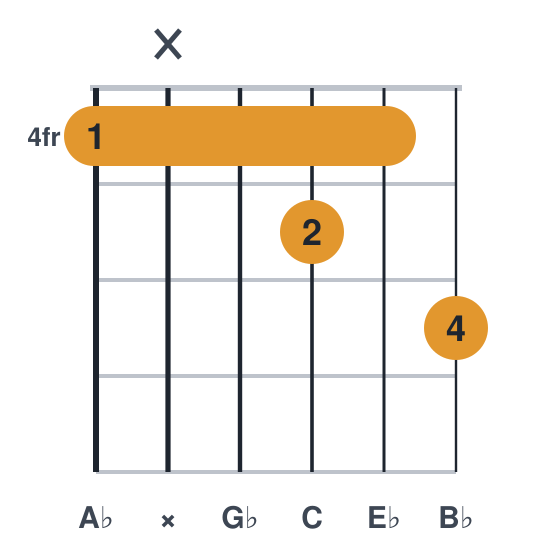
- Ab9the same ninth built on a major third


Other G# chords
G#m9 guitar chord chart (464446) from melodician.com