Bm9 Guitar Chord
Bm9 is the B minor ninth chord. It has five notes: B, D, F sharp, A and C sharp. The shape on this page is three fingers in the first two frets with the open D string in the middle, so unlike most B chords it needs no barre.

Three fingers at the 2nd fret with the open D string ringing in the middle. The fifth is left out, which no ear misses in a ninth chord, and nothing needs to be barred.
How to play Bm9, step by step
- Index finger: 2nd fret, A string
- Middle finger: 2nd fret, G string
- Ring finger: 2nd fret, B string
- Leave the D string open. Strum only the A and D and G and B strings, and stop the downstroke at the B.
This open shape only works for B, because it leans on the open D string for its flat third. Every other minor ninth root has to fret that note, which is why the rest of the family lives in barre grips.
More ways to play Bm9
There are 2 common Bm9 shapes in total: the standard one at the top of the page, plus these, easiest first. You only ever need one. Tap any card to hear it.

Wide and warm, with the root doubled low down. The bigger, fuller answer when the open shape feels too light.
If it sounds unclear
- The open D string is muffled
- The index on the A string is leaning on it. Stand the finger up and press with the tip so the D, the flat third, rings freely between the fretted notes.
- The high E rings
- It is not in the chord: an open E would add a fourth. Stop the downstroke at the B string, or let the ring finger touch the high E lightly to keep it quiet.
- The low E rumbles
- Start the strum on the A string so B is the lowest note. With the root that low in the shape, a stray E underneath muddies everything.
What makes it a Bm9
B · D · F♯ · A · C♯ 1 ♭3 5 ♭7 9
Bm9 is a Bm7 chord with a ninth added: B, D, F sharp and A make the minor seventh, and the C sharp makes it a ninth. The open shape leaves out the F sharp, the fifth, which is the one note a ninth chord can spare: root, flat third, flat seventh and ninth are all there.
It is the ii chord of A and the vi chord of D, two guitar keys, which makes Bm9 one of the most usable minor ninths on the instrument. Minor ninths are the everyday minor of soul and jazz, where a plain minor seventh can sound bare.
Bm9 vs Bm7
Bm9 adds a C sharp to Bm7. Bm7 is settled and plain; the ninth sits a whole step above the root an octave up and gives the chord a floating quality that never quite lands.
There is a practical difference too. Bm7 is usually a barre at the 2nd fret, while this Bm9 is three fingertips and an open string. In the keys of A and D it is often the easier chord to reach for, not just the prettier one.
Bm9 in major keys
Every note of Bm9 sits inside these keys. See how it works alongside the other chords in each one.
Bm9 chord questions
Can I play Bm9 without a barre?
Yes, and that is the shape shown here: three fingers at the 2nd fret with the open D string in the middle. It is one of the few B chords that needs no barre.
Why is there no fifth in the open shape?
Four strings sound and the chord has five notes, so one has to go. The fifth adds weight but no character, which is why it is always the note ninth chords drop.
What is the difference between Bm9 and Bm7?
Bm9 has a C sharp, the ninth, added to the four notes of Bm7. Same chord, more colour on top.
Why is the high E string muted?
The open high E would add an E to the chord, a fourth, which is not in Bm9. Stopping the strum at the B string keeps the spelling honest.
Where is Bm9 used?
As the ii chord in A, as the vi in D, and anywhere a B minor is written and a richer sound is wanted, which covers most of soul, R and B and jazz.
Chords to learn next
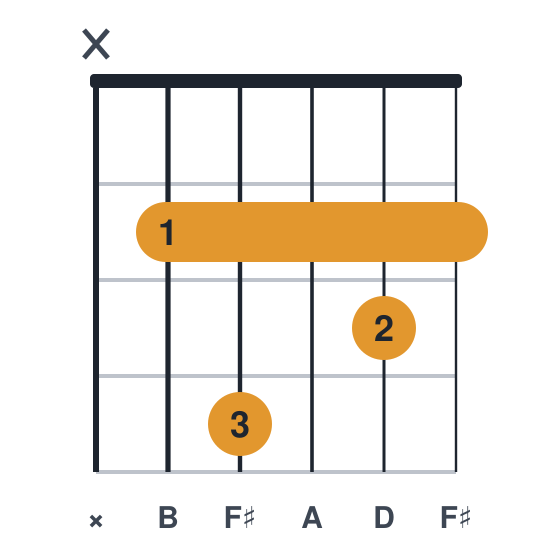
- Bm7the same chord without the ninth
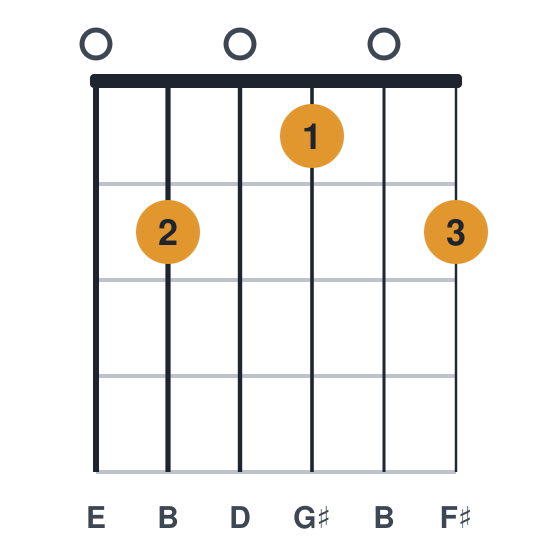
- E9the V chord Bm9 leans toward
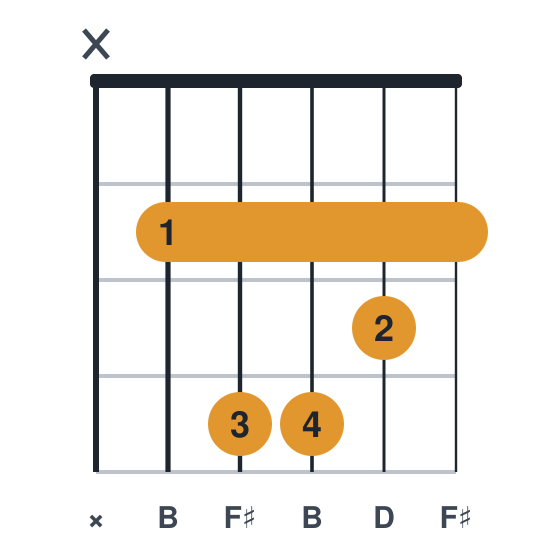
- Bmthe plain minor
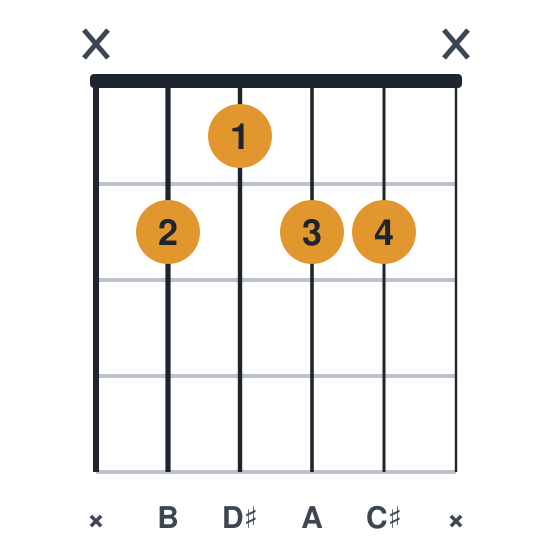
- B9the same ninth built on a major third


Other B chords
Bm9 guitar chord chart (x2022x) from melodician.com