B6 Guitar Chord
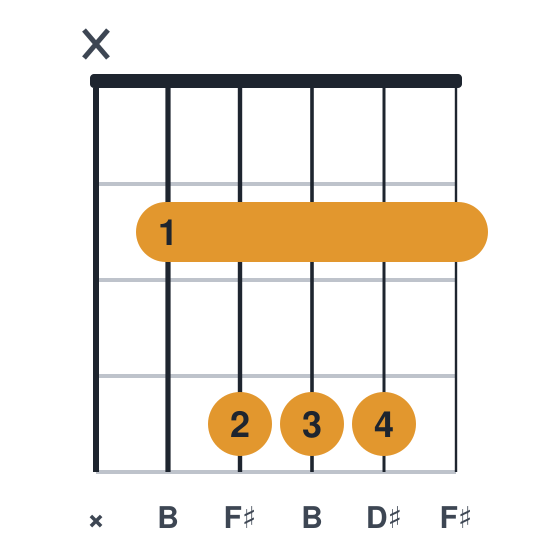
B6 is the B sixth chord. It has four notes: B, D sharp, F sharp and G sharp. It is played with the root on the A string at the 2nd fret and one finger laid across the four strings above it at the 4th.

Root on the A string at the 2nd fret with one finger laid flat across the other four at the 4th. Movable: this is the grip most players use for any sixth chord above the open strings.
How to play B6, step by step
- Index finger: 2nd fret, A string
- Ring finger: press flat across the D to high E strings at fret 4
- Strum from the A string down, skipping the low E.
This is the same grip as A6 moved up two frets, with the root now fretted instead of open. Everything about the shape stays the same as it travels.
More ways to play B6
There are 4 common B6 shapes in total: the standard one at the top of the page, plus these, easiest first. You only ever need one. Tap any card to hear it.

The biggest B6 on the neck. Low root, wide spread, and the sixth ringing on top of all six strings.

Bright and small, well above the bass. This is the B6 for playing rhythm behind someone else.
Compact and close to the nut, warmer than the same chord barred further up the neck.
If it sounds patchy
- Some notes under the laid finger are missing
- Four strings under one finger needs firm, even pressure. Roll the finger onto its outer edge so the harder side of the bone does the work.
- The stretch feels awkward
- The index is at the 2nd fret and the other finger at the 4th. Keep the thumb low behind the neck so the hand can open across two frets without twisting.
- The low E rings
- Not part of the chord. Strum from the A string, or let the index reach over and touch the low E lightly.
What makes it a B6
B · D♯ · F♯ · G♯ 1 3 5 6
B6 is a B major triad (B, D sharp, F sharp) with a G sharp added, the sixth. The triad is untouched, so the chord keeps working as B.
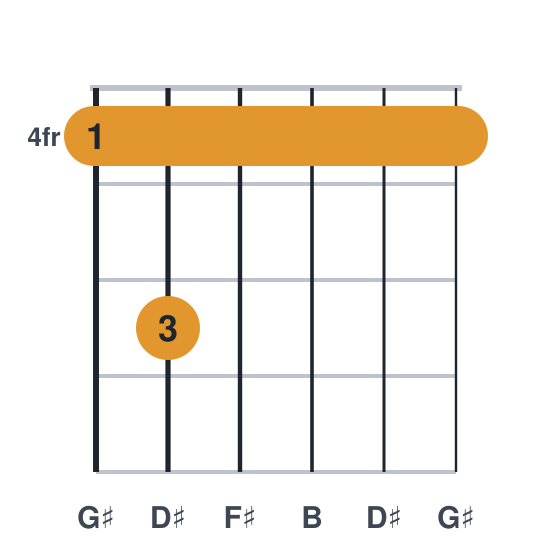
Those same notes read from G sharp spell G#m7. B6 and G#m7 are the same four pitches, and only the bass note tells them apart.
B6 vs Bmaj7
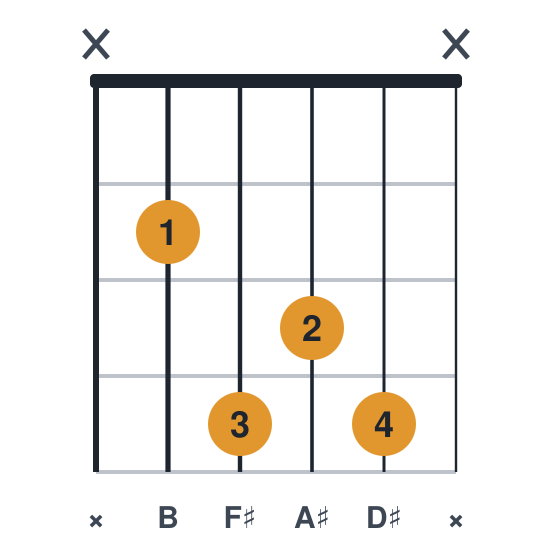
B6 adds a G sharp to B major; Bmaj7 adds an A sharp. A whole step below the root against a half step below it: the first sounds settled, the second sounds like it is still waiting.
For a guitarist B6 has a practical advantage. Full B major needs a barre and Bmaj7 usually does too, while B6 is two fingers on five strings, which makes it the easiest way to play a B chord that is not a power chord.
B6 in major keys
Every note of B6 sits inside these keys. See how it works alongside the other chords in each one.
B6 chord questions
Is B6 easier than B major?
Yes, noticeably. B major needs a barre across five strings. B6 puts the index on one string and lays a second finger across the four above it, which most players find much easier to hold cleanly.
Is B6 the same as G#m7?
The notes match: B, D sharp, F sharp and G sharp. B in the bass gives B6, G sharp in the bass gives G#m7.
How is B6 used in a blues in E?
B is the V chord in the key of E, and a shuffle rhythm on it alternates B5 and B6 exactly as the E and A chords do. That rocking movement is the standard way to play the chord in blues.
What is the difference between B6 and B7?
B6 adds a G sharp and rests. B7 adds an A and pulls hard toward E. In blues and in songs in E, B7 is far more common; B6 is the one that ends things.
Do you strum all six strings?
No. Strum five, from the A string down, so the root B stays the lowest note.
Chords to learn next
- Bthe plain major underneath it
- G#m7the same four notes counted from G#
- Bmaj7the other note people add to a major chord
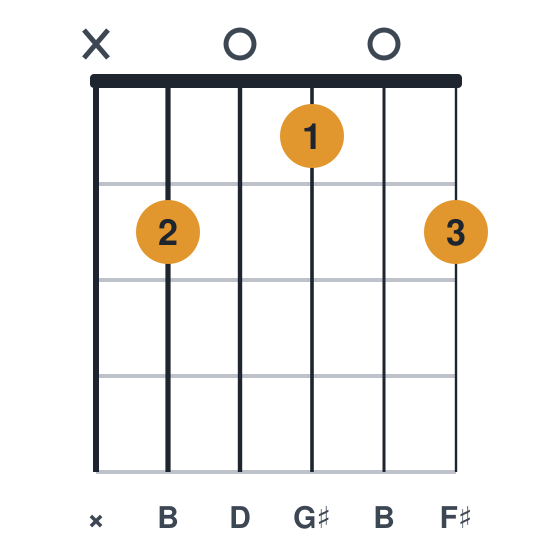
- Bm6the same sixth over a minor chord


Other B chords
B6 guitar chord chart (x24444) from melodician.com