Bbsus2 Ukulele Chord
Bbsus2 is the B flat suspended second chord on ukulele. It has three notes: B♭, C and F. It is one lifted finger away from the full B♭ barre: raise the finger on the C string and the barre chord most beginners dread turns into this easier, more open shape.

Ring on the 3rd fret of the G, index and middle at the 1st fret of the E and A, C string open: the B♭ barre with its middle lifted out.
How to play Bbsus2 on ukulele, step by step
- Index finger: 1st fret, E string
- Middle finger: 1st fret, A string
- Ring finger: 3rd fret, G string
- Leave the C string open. Strum all four strings.
Play B♭, lift the C string finger to hear Bbsus2, then put it back. That lift and return is the classic sus move, and here it doubles as a rest for the hand in a song full of B♭.
More ways to play Bbsus2
There are 3 common Bbsus2 shapes: the standard one at the top of the page, plus these further up the neck. You only ever need one. Tap any card to hear it.

Fuller and darker than the open-string version, with the suspension on top of the strum.

An airy, spread voicing: two Cs ring against the high B♭ and F.
If it will not ring
- The open C string is muted
- It sits between two fretted strings, so a leaning finger kills it easily. Arch the ring finger on the G string until the C rings clear.
- The 1st fret notes buzz
- Index and middle share the 1st fret on the E and A strings. Keep both tips right behind the fret wire; the 1st fret is the stiffest spot on the neck.
- It still sounds like Bb
- If the D creeps in you are still fretting the C string. The whole point of this shape is that string ringing open on C, the suspended note.
What makes it a Bbsus2
B♭ · C · F 1 2 5
Bbsus2 replaces the third of the B flat chord, D, with C. That leaves a root, a whole step and a fifth: no major or minor identity, just a hang that resolves when the C moves. Usually it steps back up to D for B♭ major.
The same three notes read from F spell Fsus4, the sus4 twin every sus2 chord has a fifth up. B♭ lives in the flat keys, F, B♭ and E♭, so this chord turns up in songs brought over from horn and piano arrangements. In sharp spelling it is A#sus2, a name you will mostly meet in chord apps.
Bbsus2 vs Bbsus4
Bbsus2 fills the gap left by the missing D with C, a whole step over the root; Bbsus4 fills it with E♭, a fourth over it. One approaches the absent third from below, the other from above.
In use, the sus4 makes a tense lead-in that wants B♭ straight away, while the sus2 is the open, airy version that can carry a bar on its own. On ukulele the sus2 is also simply easier: it is the B♭ barre with one finger lifted.
Bbsus2 chord questions
Is A#sus2 the same as Bbsus2?
Yes, one chord with two names. B♭ is the spelling used here because this root lives in flat keys.
Is Bbsus2 easier than Bb?
Yes. B♭ needs a barre plus two fingers; Bbsus2 lifts the middle of that shape away and lets the C string ring open.
Is Bbsus2 major or minor?
Neither. The D that would decide it is replaced by C, so the chord hangs until a third comes back.
What is the difference between Bbsus2 and Bbsus4?
Bbsus2 suspends C, a whole step over the root; Bbsus4 suspends E♭, a fourth over it. The sus4 is the tense one, the sus2 the spacious one.
What does Bbsus2 resolve to?
B♭ major when the C steps up to D, or B flat minor when it falls to D♭. The chord itself does not choose.
Chords to learn next
- Bbwhere the suspension usually lands
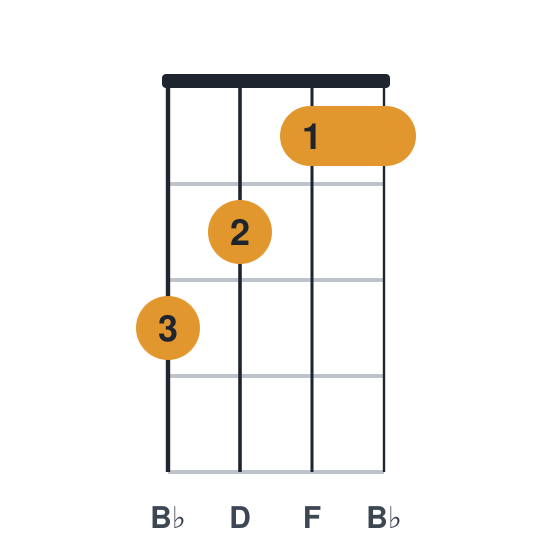
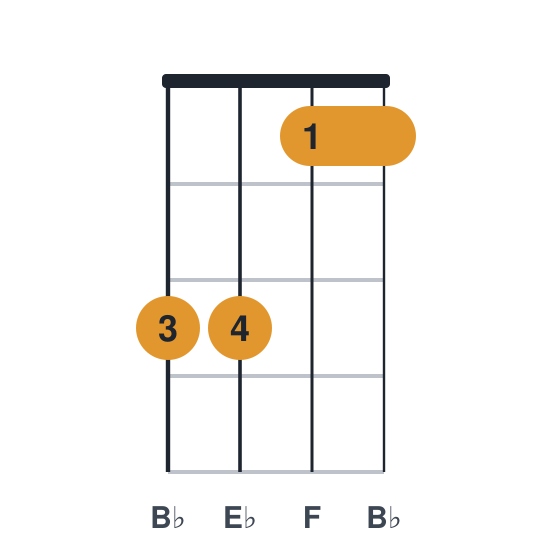
- Bbsus4the other suspension
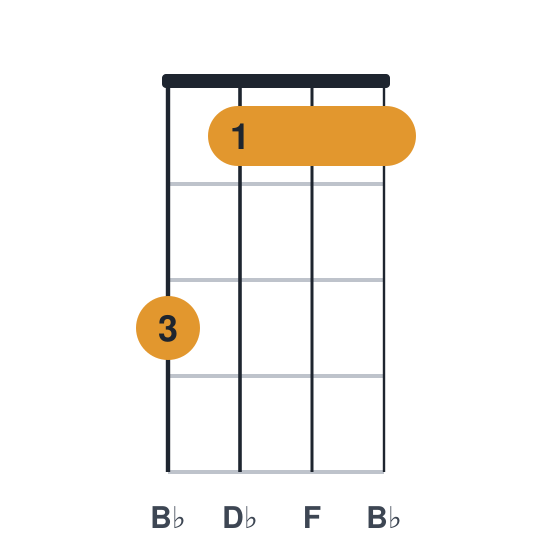
- BbmBbsus2 sits between major and minor
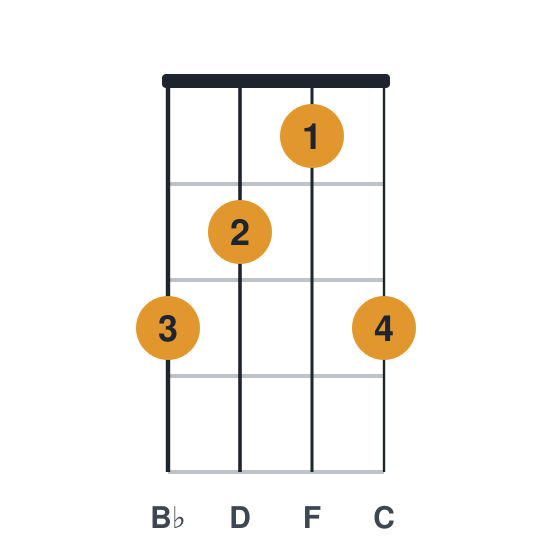
- Bbadd9the same colour with the third kept in


Other Bb chords
Bbsus2 ukulele chord chart (3011) from melodician.com