Bbmaj9 Ukulele Chord
Bbmaj9 is the B flat major ninth chord. It has five notes: B flat, D, F, A and C, so on four strings the fifth is left out. The standard shape is a four finger box between the 2nd and 5th frets with the root on the G string; a lighter two finger version sits higher up the neck.

Four fingers in a box between the 2nd and 5th frets, root on the G string. The movable maj9 grip: two frets up it is Cmaj9.
How to play Bbmaj9 on ukulele, step by step
- Index finger: 2nd fret, C string
- Middle finger: 3rd fret, G string
- Ring finger: 3rd fret, A string
- Pinky finger: 5th fret, E string
- Strum all four strings.
This is the movable maj9 grip with the root on the G string: slide the whole pattern two frets up and it becomes Cmaj9. One grip covers the family.
More ways to play Bbmaj9
There are 2 common Bbmaj9 shapes: the standard one at the top of the page, plus these further up the neck. You only ever need one. Tap any card to hear it.

Lighter and easier than the standard shape, if you do not mind playing up at the body of the uke.
If the shape will not ring
- The pinky reach to the 5th fret is a strain
- Three fingers sit at the 2nd and 3rd frets while the pinky takes the E string at the 5th. Bring the thumb behind the middle of the neck so the hand can open.
- A note in the middle is dead
- Four fingers close together will touch a neighbouring string if any of them lies flat. Arch each one and press with the tip.
- The chord sounds choked
- Fret each note just behind its fret wire. In the middle of the fret space the same pressure buzzes.
What makes it a Bbmaj9
B♭ · D · F · A · C 1 3 5 7 9
Bbmaj9 is a Bbmaj7 chord with a ninth added: B flat, D, F and A make the seventh chord, and the C on top makes it a ninth. On a ukulele the fifth, F, is dropped: four strings hold four notes, and the fifth is the note the ear misses least. Root, third, seventh and ninth remain, which is the whole identity of the chord.
It is the I chord of B flat major at its softest. B flat is a horn key, so the chord appears in soul and jazz charts more than in songbooks, usually where a plain Bbmaj7 would sound a shade too plain.
Bbmaj9 vs Bbmaj7
Bbmaj9 is Bbmaj7 with a C added. The seventh already softens the chord; the ninth widens it into something that sounds arranged rather than strummed.
The two shapes live in the same part of the neck, so on ukulele the choice is purely the colour: Bbmaj7 rests, Bbmaj9 shimmers a little wider.
Bbmaj9 chord questions
Is Bbmaj9 the same as A#maj9?
Yes, one chord with two names. B flat is how the keys this chord lives in spell it, so that is the name used here.
Why is there no F in the shapes?
Four strings hold four of the five notes, and the fifth is the one a ninth chord can spare. The ear fills it in.
Is there an easier Bbmaj9?
The second shape on this page uses two fingers and two open strings. It sits at the 6th and 7th frets, so it trades effort for position.
What is the difference between Bbmaj9 and Bb9?
Bb9 has an A flat, the flat seventh, and pulls toward E flat. Bbmaj9 has an A natural and stays put.
Where is Bbmaj9 used?
As the I chord of B flat major in jazz, soul and bossa nova, and anywhere Bbmaj7 is written and a wider sound is wanted.
Chords to learn next
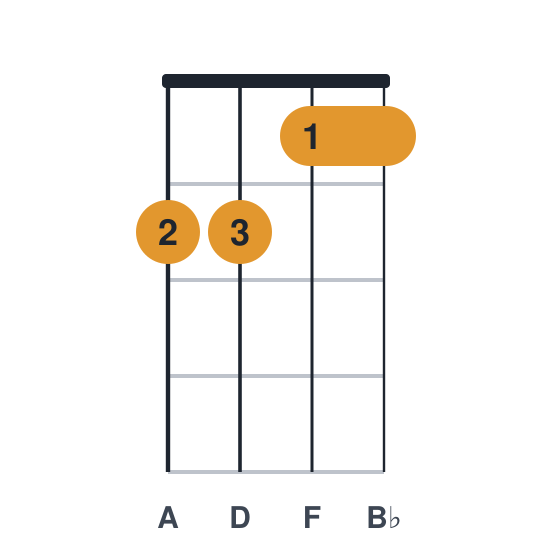
- Bbmaj7the same chord without the ninth
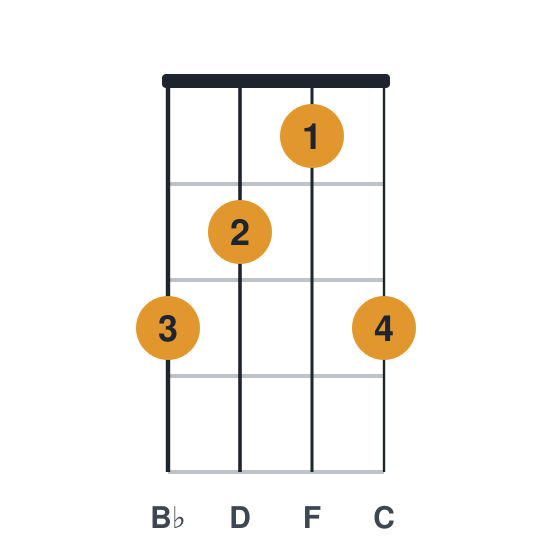
- Bbadd9the ninth without the seventh
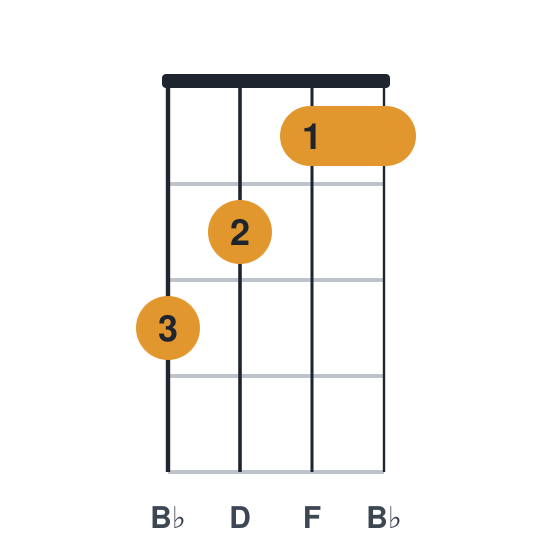
- Bbthe plain major
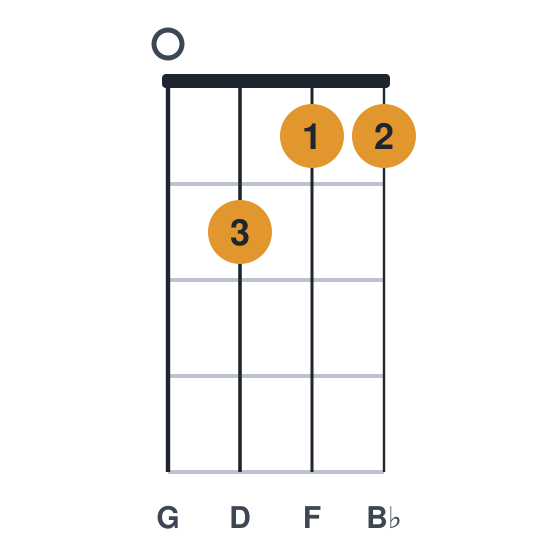
- Bb6the other soft colour on the same major


Other Bb chords
Bbmaj9 ukulele chord chart (3253) from melodician.com