Bbm6 Ukulele Chord
Bbm6 is the B flat minor sixth chord. It has four notes: B flat, D flat, F and G. On a ukulele it is an unusually friendly chord: the standard shape is three fingers in a row at the 1st fret, and the open G string is already the sixth.

Three fingers in a row at the 1st fret of the C, E and A strings, with the G string open. The open string is the sixth, so the hard part of the chord is already done for you.
How to play Bbm6 on ukulele, step by step
- Index finger: 1st fret, C string
- Middle finger: 1st fret, E string
- Ring finger: 1st fret, A string
- Leave the G string open. Strum all four strings.
The open G string is doing the clever work here: G is the sixth of B flat minor, so the tuning hands you the colour note for free. Fret the other three strings at the 1st fret and the chord is done.
More ways to play Bbm6
There are 3 common Bbm6 shapes: the standard one at the top of the page, plus these further up the neck. You only ever need one. Tap any card to hear it.

Rounder than the open shape, with the root leading the strum. Slide it anywhere: this grip is every minor sixth chord.

Thin and bright this far up, closer to a mandolin than a ukulele. Useful when the song sits high or you want the m6 colour to cut through.
If it sounds wrong
- The open G string is dull
- The index at the 1st fret of the C string is leaning back and touching it. Keep the fingers arched so the open string can ring; it carries the sixth, the note the chord is named for.
- Three fingers feel crowded at one fret
- Stack them in a diagonal rather than a straight line: index low on the C string, middle and ring above it. Some players use a single finger laid flat across all three strings instead, which works fine as long as the G string stays clear.
- It sounds like a plain minor
- Then the G string is muted. B flat, D flat and F alone are just Bbm; the open G is what makes it a sixth.
What makes it a Bbm6
B♭ · D♭ · F · G 1 ♭3 5 6
Bbm6 is a B flat minor triad (B flat, D flat, F) with a G added: the major sixth, nine half steps above the root. The third is flat and the sixth is not, and that mismatch is what makes the chord sound restless rather than simply sad.
The same four notes read from G spell Gm7b5, the half diminished chord. Bbm6 is the iv chord in F and a standby of jazz and older pop, where it usually walks to F. On the ukulele the open G string happens to be that sixth, which is why such a dark sounding chord gets such an easy shape.
Bbm6 vs Bbm7
Both add a fourth note to B flat minor. Bbm7 adds an A flat and settles the chord; Bbm6 adds a G, one fret lower, and unsettles it. A semitone of difference, and the mood flips.
On the ukulele the two are one string apart: Bbm7 frets the G string at the 1st fret, Bbm6 leaves it open. Rocking that one finger on and off while the other three hold still is the quickest way to hear what separates the two chords.
Bbm6 chord questions
Is Bbm6 the same as A#m6?
Yes, one chord with two spellings. Flat keys are the natural home of this chord, so B flat is the name used here.
What is the difference between Bbm6 and Bbm7?
One note on one string. Bbm7 has an A flat, fretted at the 1st fret of the G string; Bbm6 leaves that string open, sounding G. The seventh relaxes the chord, the sixth sharpens it.
Is Bbm6 the same as Gm7b5?
The four notes are the same: B flat, D flat, F and G. With the music centred on B flat you hear Bbm6; centred on G it is Gm7b5, the half diminished chord.
Why is Bbm6 so easy on ukulele?
Luck of the tuning. The open G string is exactly the major sixth of B flat minor, so the colour note comes free and the other three notes line up at the 1st fret.
Where is Bbm6 used?
As the iv chord in F, as a colour on the tonic in B flat minor, and throughout jazz and older popular song, where minor sixths routinely stand in for minor sevenths.
Chords to learn next
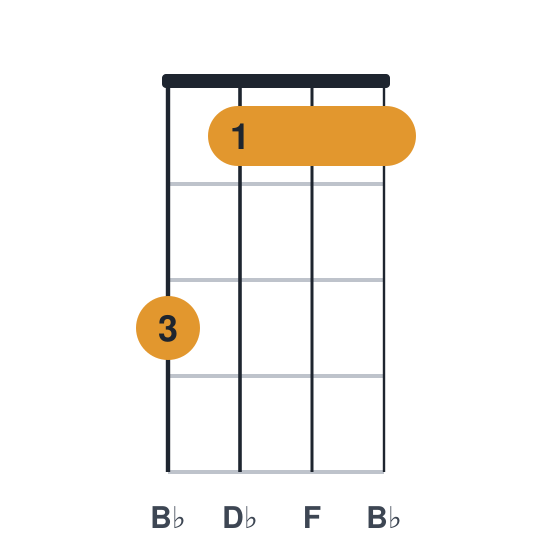
- Bbmthe plain minor underneath it
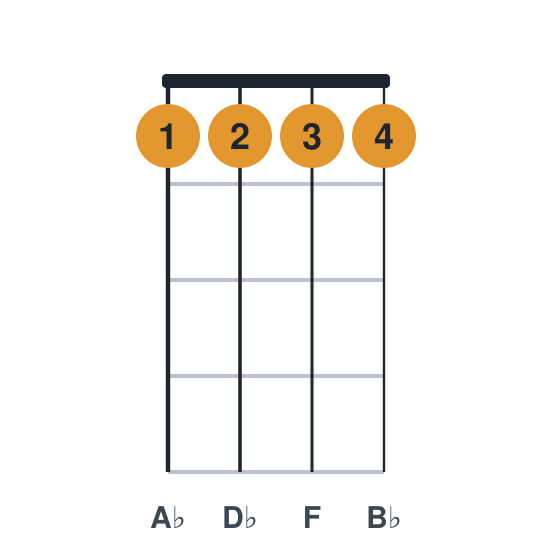
- Bbm7a flat seventh instead of the sixth, the softer option
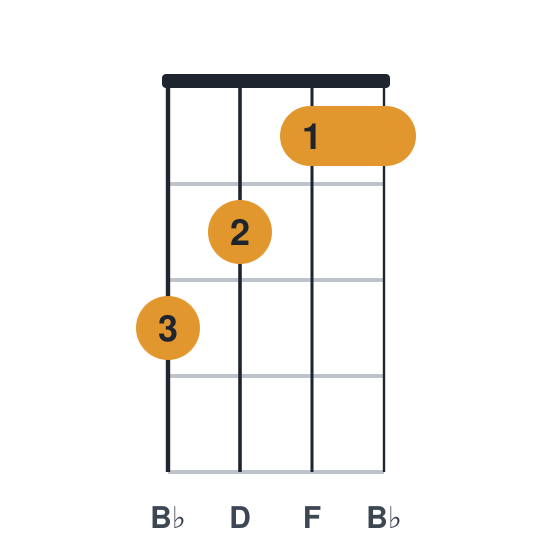
- Bbthe major on the same root
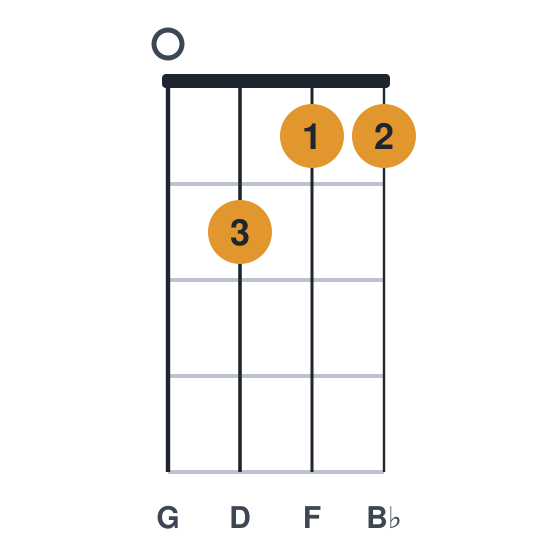
- Bb6the major sixth on the same root


Other Bb chords
Bbm6 ukulele chord chart (0111) from melodician.com