E7 Piano Chord
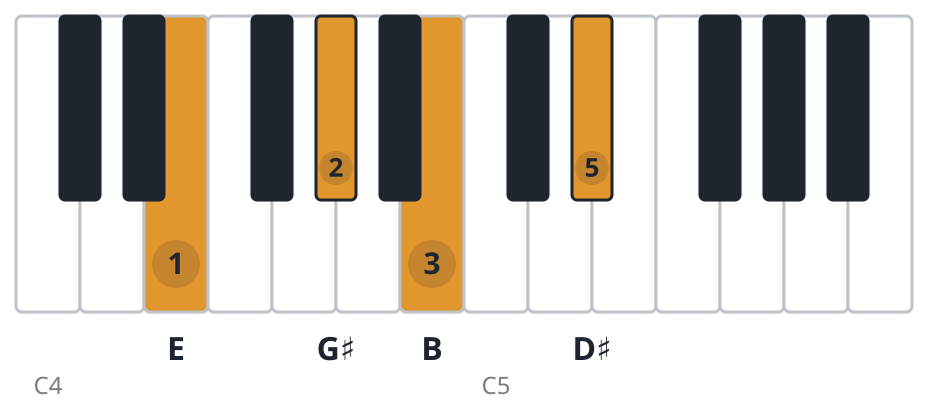
E7 is the E dominant seventh chord. It has four notes: E, G sharp, B and D. Only the G sharp is black.

E at the bottom, then G♯ and B and D. Right hand 1-2-3-5, left hand 5-3-2-1. The black key is G♯.
How to play E7 on piano, step by step
- Start on the E above middle C. That is the lowest note of the chord.
- Thumb (1): E
- Index finger (2): G♯
- Middle finger (3): B
- Little finger (5): D
- Press them together with the right hand. The left hand plays the same notes with fingers 5, 3, 2, 1 an octave lower, or just E on its own as a bass note.
E7 pulls to A. It is also the home chord of a blues in E, which is the most played key in blues on any instrument.
Inversions of E7
The same 4 notes with a different one at the bottom. All of them are E7; which you play depends on what the hand is coming from. Tap any card to hear it.


If it sounds wrong
- The chord sounds sad
- The second note is G sharp, the black key to the right of G. G natural gives Em7.
- The top note is D sharp
- It has to be D natural. D sharp would give Emaj7, a chord that settles rather than pulls.
- The index finger is muffled
- It sits on the black G sharp between two white keys. Move the hand into the keyboard so the finger reaches the key properly rather than catching its front edge.
What makes it an E7
E · G♯ · B · D 1 3 5 ♭7
E7 is an E major triad, E G sharp B, with a D added on top: the flat seventh. The G sharp and D are a tritone apart, which is what creates the tension.
It is the V7 of A, and the I chord of a blues in E. In guitar led music it is one of the most used chords there is, so a pianist accompanying one meets it constantly.
E7 vs E
E7 is E major with a D added. E is a resting chord; E7 leans toward A.
In a blues in E nothing resolves: E7 is home, A7 is the fourth chord and B7 is the fifth, and all three keep their sevenths throughout.
E7 in major keys
Every note of E7 sits inside these keys. See how it works alongside the other chords in each one.
Questions about E7
Which notes are in an E7 chord on piano?
E, G sharp, B and D. G sharp is the black key; the rest are white.
What fingers do you use for E7?
Right hand: thumb on E, index on G sharp, middle on B, little finger on D. Left hand: 5, 3, 2, 1.
What is the difference between E7 and Em7?
The second note. E7 has G sharp and sounds bright and driving; Em7 has G natural and sounds soft and minor.
Where is the E7 chord used?
As the V7 of A and as the I chord of a blues in E, which is the most common blues key on guitar.
Is E7 hard on piano?
No. One black key inside the chord and a comfortable span.
Chords to learn next
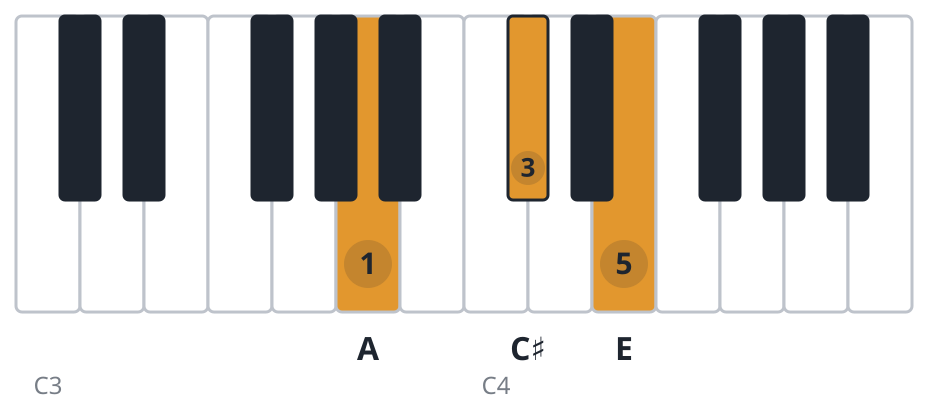
- AE7 resolves here
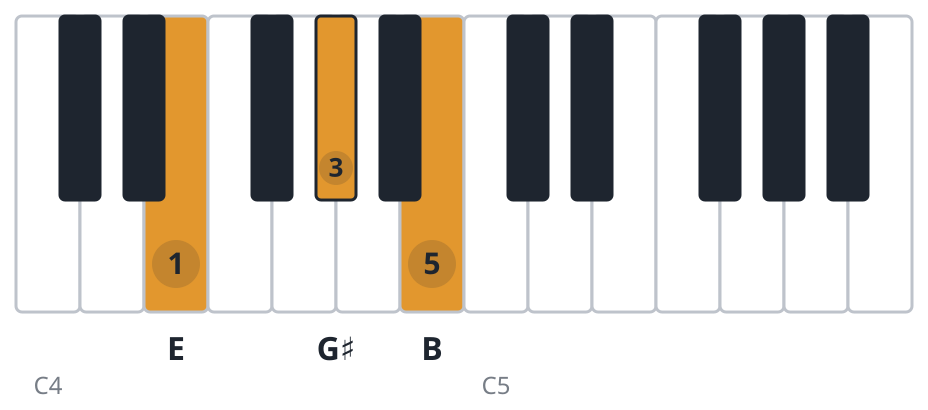
- Ethe plain major underneath it
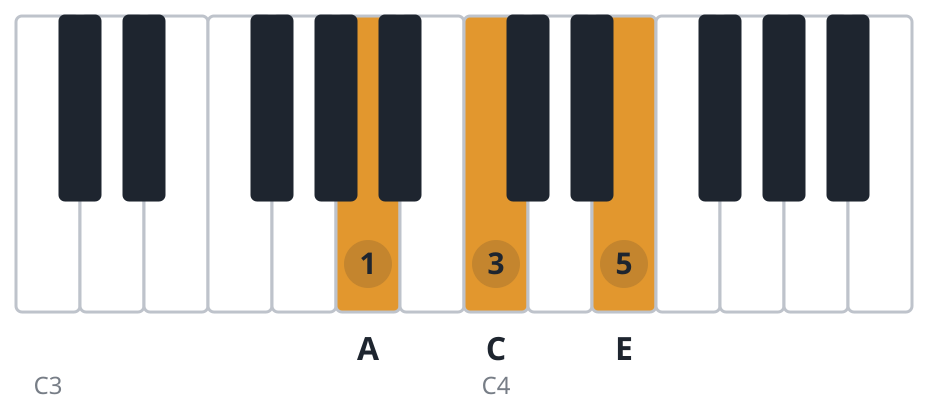
- AmE7 leads to the minor of A too
- Emaj7the other seventh on this root, and a different mood