Ab9 Piano Chord
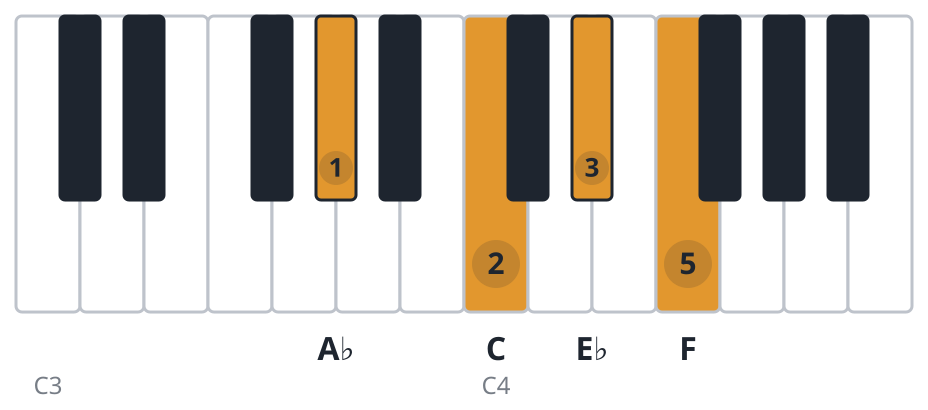
Ab9 is the A flat dominant ninth chord. It has five notes: A flat, C, E flat, G flat and B flat. It is wider than an octave, so most players put A flat in the left hand and the rest in the right.

A♭ at the bottom, then C, E♭, G♭ and B♭. Right hand 1-2-3-4-5 if it reaches; otherwise A♭ alone in the left hand and the other four notes in the right.
How to play Ab9 on piano, step by step
- Start on the A♭ below middle C. That is the lowest note of the chord.
- Thumb (1): A♭
- Index finger (2): C
- Middle finger (3): E♭
- Ring finger (4): G♭
- Little finger (5): B♭
- That reach is wider than an octave, so most players split it: play A♭ with the left hand and the other notes with the right. If you keep it in one hand, use the two-hand split shown on this page. Leaving out the fifth (E♭) can thin the sound, but it does not shorten the span from the root to the ninth.
Four of the five notes are black keys; only the C is white. The hand sits deep in the keys here, which feels strange for a bar or two and then very comfortable.
If it sounds wrong
- The reach is too wide
- A flat to B flat is a ninth. Put A flat in the left hand and the other four notes in the right; that split is how the chord is normally played.
- It sounds soft instead of bluesy
- The seventh must be G flat. G natural turns the chord into Abmaj9, a soft chord with a different job.
- Fingers slip off the black keys
- Four of the five notes are black. Play closer to the front edge of the black keys and let the one white note, C, sit deeper under the index finger.
What makes it an Ab9
A♭ · C · E♭ · G♭ · B♭ 1 3 5 ♭7 9
Ab9 is an Ab7 chord with a B flat added: A flat, C, E flat and G flat make the seventh, and the B flat on top makes it a ninth.
It is the V9 of D flat and the I chord of a blues in A flat. A flat is a piano and horn key, so this chord lives in soul, gospel and jazz, where the ninth is the default colour for a dominant chord.
Ab9 vs Ab7
Ab9 is Ab7 with a B flat added on top. Both resolve toward D flat, and the ninth is the smoother of the two.
Where A flat appears at all, soul and gospel players usually voice the ninth without being asked. Play Ab7, add B flat with the little finger, and the chord turns from bare to warm.
Ab9 in major keys
Every note of Ab9 sits inside these keys. See how it works alongside the other chords in each one.
Questions about Ab9
Is Ab9 the same as G#9?
Yes, one chord with two names. A flat suits the flat keys this chord lives in, so that is the spelling used here.
What is the difference between Ab9 and Abadd9?
The seventh. Ab9 contains G flat; Abadd9 is the plain A flat major chord with a B flat added and no seventh.
Why does this page show no inversions?
This page teaches one practical root-position voicing because a ninth spans more than an octave. Ninth chords can still be inverted: an inversion changes the bass note, and players often reorder or omit notes to fit the hand. The diagrams here keep the beginner-friendly voicing visible.
Can I leave a note out of Ab9?
The fifth (E flat) can be omitted when another part supplies the root; this thins the voicing without changing the chord quality.
Where is the Ab9 chord used?
As the V chord of D flat, as the home chord of a blues in A flat, and all through soul, gospel and jazz arrangements.
Chords to learn next
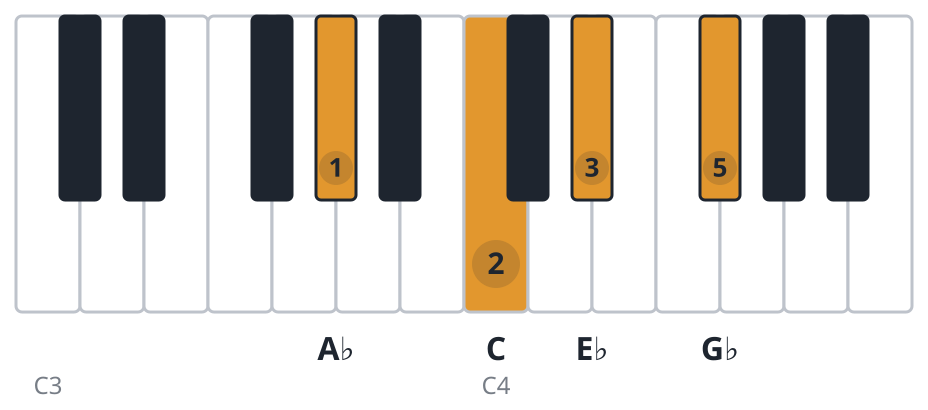
- Ab7the same chord without the ninth
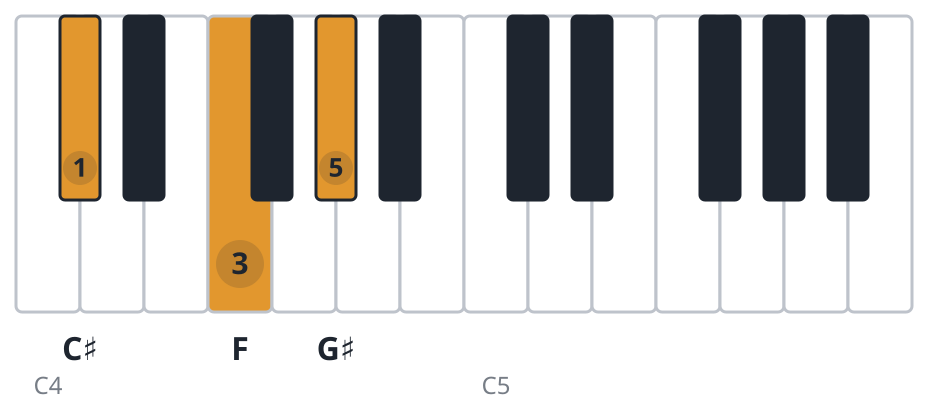
- C#where Ab9 wants to resolve
- Abmaj7the other seventh built on this root
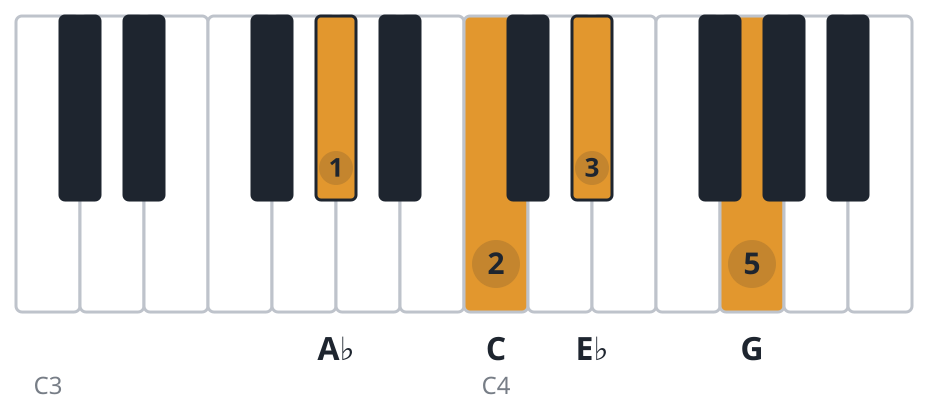
- Ab6the same root with a sixth instead of a seventh